Moment of Truth... Toward a Sustainable Economic Path
Monday 31/August/2026 - 01:12 PM

Dalia Abdel Rahim
Dr. Ahmed Kouchouk, Minister of Finance: Four Key Objectives Guiding the Ministry’s Work
Building Trust and Partnership with the Business Community and Taxpayers
Pursuing a Balanced Fiscal Policy that Supports Economic Growth
Improving Debt Indicators and Reducing Debt-Servicing Costs
Expanding Spending on Health, Education, and Social Protection
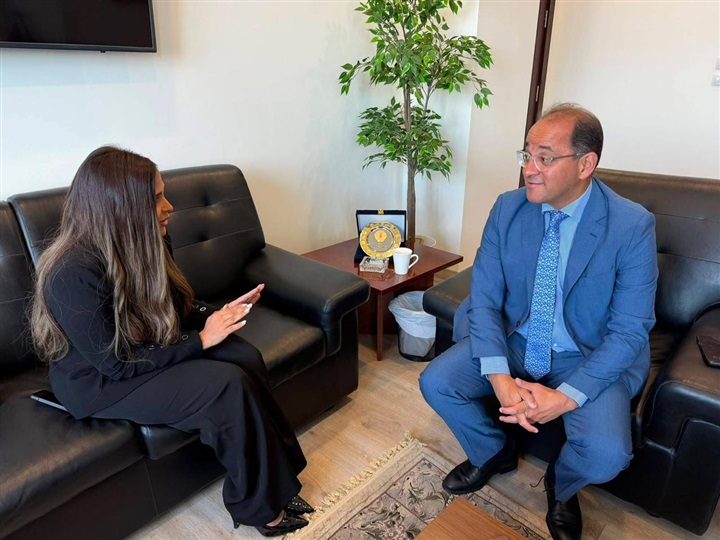
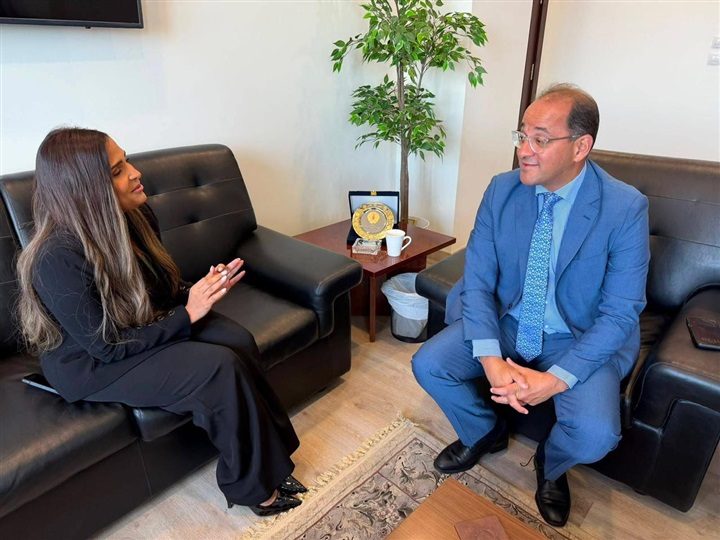
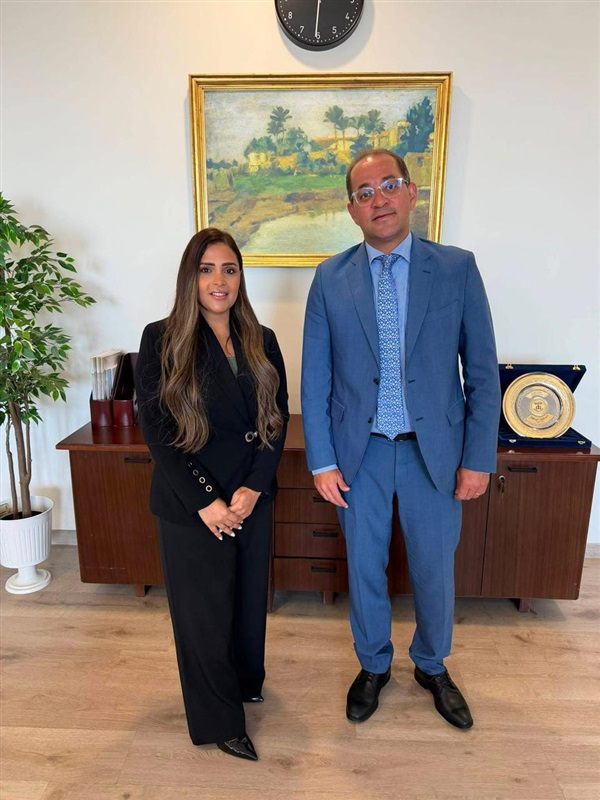
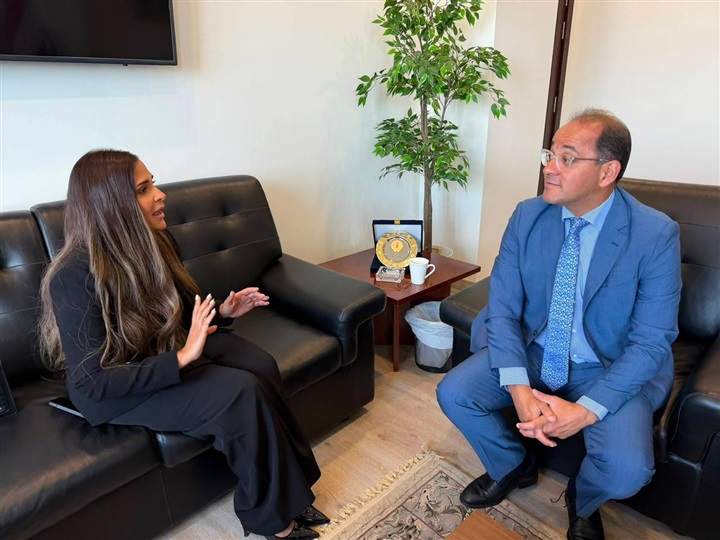
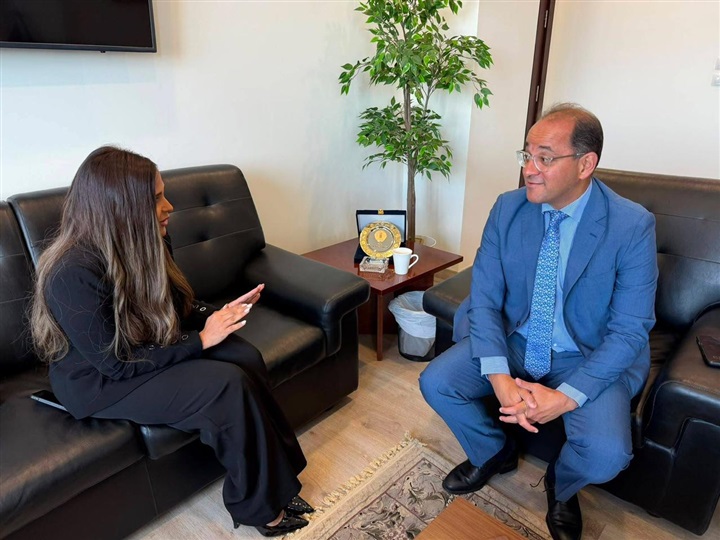
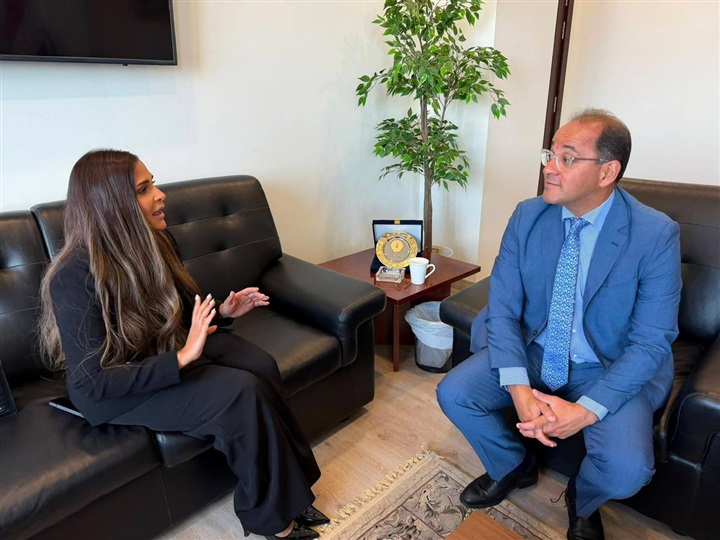
In New Alamein City, at the Cabinet headquarters, my meeting with Minister of Finance Dr. Ahmed Kouchouk was not merely a discussion about budget figures, growth rates, or the size of the debt. Rather, it was an attempt to answer a question that seems simple but may perhaps be the most difficult question in any discussion of the economy: When will ordinary citizens feel an improvement in their household finances? I entered the meeting carrying many of the questions I hear from people every day, and I left with an impression somewhat different from the image that reduces the economy to numbers rising and falling.
What was striking was that the minister did not try to evade the question by retreating into reassuring figures. Nor did he begin by showcasing growth indicators, the primary surplus, or declining deficit and debt levels, despite the importance of all these indicators. Instead, he began with the point that directly affects citizens: there is a difference between an economy improving on paper and citizens actually feeling that improvement in the details of their daily lives.
From there, the conversation began taking me beyond the question, “When will citizens feel the improvement?” to another, more important question: How is the journey of economic reform actually managed? Every answer opened another door—from prices, wages, and job opportunities to debt, investment, and taxes; from the state’s relationship with taxpayers to the future of the private sector; and from simplifying procedures to young people, content creators, and small businesses.
As I listened to the minister, it seemed to me that, for him, the issue is not simply about achieving better figures at the end of the fiscal year, but about building a path that can endure, withstand crises, leave greater room for the private economy to grow, and enable the state to direct its resources toward what matters to citizens.
Once again, I asked the minister directly: We hear a great deal about positive assessments of the Egyptian economy and continuous improvement in economic indicators, but when will citizens feel this improvement in their own homes?
His answer was striking because he did not treat the question as a challenge to those indicators. Rather, he acknowledged that there is a difference between the language of economics and the language of everyday life. A specialist may dwell at length on indicators such as the primary surplus, revenue growth, a declining deficit, or improving debt ratios. Citizens, however, have entirely different “indicators”: What has happened to prices? Has their income increased? Has their son found a job? Has healthcare improved? Have utilities reached the area where they live?
Here, the minister spoke about an effort to change the way the budget and final accounts are presented, so that figures are no longer confined to the language of experts but are instead transformed into indicators through which citizens can understand what has actually happened on the ground and how they and their families have benefited from this spending. This is a point worth pausing over, because we often celebrate a figure before explaining to people what it means. We say: the deficit has declined, growth has risen, the surplus has increased, indicators have improved—and then expect citizens to work out for themselves what all of this means in their lives.
Yet citizens do not live inside a statistical table. They live in homes, manage monthly budgets, and have children with needs and futures about which they want to feel reassured. That is why one of the most important things the minister said was that he knows citizens care about prices, salaries, income, job opportunities, the number of people receiving state-funded medical treatment, the number of homes connected to natural gas, private investment, and spending on health, education, and wages.
The meaning here is clear: improvements in indicators are not complete until they translate into results that people can see and feel. This transformation does not happen overnight. The economy requires continuity of effort and the accumulation of results that become visible across several sectors simultaneously.
This may explain part of the gap between what international institutions say about the Egyptian economy and what citizens experience in their daily lives. Citizens do not wait for an international report to decide whether their circumstances have improved.
They measure improvement through their income, the prices of what they need, the job opportunities available to their children, and the quality of the services they receive.
From there, I also asked him directly: How is the Ministry of Finance working to improve citizens’ overall sense of economic well-being, particularly with regard to prices, through the progress being made by the economy?
This time, he began with a concept that I see as key to understanding much of the ministry’s philosophy: trust and partnership. He spoke about four main objectives within which the ministry operates: building trust, certainty, and partnership with taxpayers and the business community; pursuing a balanced fiscal policy; improving debt indicators, including debt servicing, maturity, cost, and its ratios to income and revenues; and directing greater fiscal space toward health, education, and social protection targeted at eligible groups, alongside programs that can be implemented quickly and deliver strong results.
What caught my attention most, however, was the way he views the relationship with the business community. He said: “Ultimately, I am a partner to every individual and every company in Egypt. Any company that grows, I am a partner in it; and any individual who earns more revenue and achieves greater success, I am a partner in that success.” At first glance, the statement may appear to be directed at companies and investors, but in reality it directly affects citizens. The business community is not a world separate from the people. An employee working for a company is a citizen; a company that expands can create new jobs; and a sector that increases its productive capacity can open the door to higher incomes, greater investment, and better wages.
Improving the state’s relationship with the business community therefore becomes part of improving citizens’ lives, even if the link between the two is indirect. This idea explains his discussion of packages of tax, customs, and real estate tax facilitation measures, and the ministry’s intention to continue along this path. What is notable is that this vision is based neither on the idea that the state should relinquish its rights for the sake of investors, nor on the idea of putting pressure on taxpayers to collect the largest possible amount of revenue. Instead, it is based on a different equation: economic activity should grow first, thereby broadening the base, with revenues increasing as a result of that growth.
When I asked him whether the ministry aims to increase tax revenues or broaden the tax base, his answer was even clearer: “We want to broaden the base through willingness and consent,” so that citizens or taxpayers feel that it is in their interest to be part of the system; that the system helps them grow and expand; and that it is simple and clear, without disputes or problems.
Here, the real question becomes: Can the state actually achieve this balance? Can it collect what it is entitled to while, at the same time, avoiding suffocating the very economic activity from which it seeks to collect those revenues?
Perhaps there is no definitive answer that can be given at this stage, because the success of any economic reform is measured by the results it achieves on the ground, not merely by the direction of policies when they are first introduced. What caught my attention, however, was that the minister approaches this equation as a relationship of mutual interests: the larger a company grows, the more the state benefits; the more an individual’s income increases and the more successful that person becomes, the more the state benefits; and the more economic activity expands, the greater the state’s ability to finance services, social protection, and development.
The minister proceeded from an idea that appears simple but encapsulates the essence of the entire equation: a growing economy, an expanding private sector, and increasing investment ultimately mean greater resources for the state. In other words, fiscal policy should not be managed as a mathematical exercise whose sole objective is simply to spend less, but rather as a tool for stimulating the economy itself. This was the context for his discussion of economic initiatives: settling exporters’ outstanding dues, providing support to alleviate burdens, expanding natural gas connections to homes, initiatives to transition the industrial sector to solar energy, supporting production and tourism, and helping industry secure low-cost financing to establish new production lines.
All these areas move in one direction: getting the wheels of production turning. When exporters receive their outstanding dues, their ability to continue and expand improves. When industry obtains appropriate financing, it can add new production lines. When burdens are reduced, competitiveness improves. And when tourism, industry, and exports gain momentum, the economy becomes better able to create jobs and generate income.
Fiscal discipline, therefore, becomes part of a growth policy rather than its opposite.
But the minister did not stop at the concept of growth alone. It was clear that another concern featured prominently in his thinking: the sustainability of that growth. For this reason, he did not approach debt merely as a ratio that should be reduced by the end of the year. Instead, he discussed debt servicing, its maturity, its cost, and its ratios to income and revenues. This detail is important because debt, ultimately, is not an abstract figure. What matters is: How much does it cost the state? How much of the state’s resources go toward servicing it? And does the debt structure leave sufficient room for spending on other priorities?
From his remarks, it seemed clear that citizens will not be satisfied if they experience improvement today only to worry that it may not continue for their children and families tomorrow. Sustainability, therefore, was a fundamental element of his vision.
At the same time, there is fiscal space that he wants to direct increasingly toward health, education, and social protection targeted at eligible groups, alongside programs that can be implemented rapidly and achieve tangible results.
Here, the contours of the equation that the Ministry of Finance is trying to build become clearer: reducing debt without stifling growth; supporting the economy without compromising fiscal discipline; and directing greater resources toward services and social protection without placing heavier burdens on the future.
It is not an easy equation, and perhaps this is why the minister repeatedly emphasized continuity throughout the meeting. No single step can solve the economic problem on its own, nor can one decision compress years of reform into a single moment. If citizens are to feel the economy’s improvement, economic indicators must translate into genuine movement in the market and tangible opportunities. The information technology sector may be the clearest example of this.
When the sector grows, it is not merely a matter of a higher growth rate in GDP. It also means services that citizens use every day—from the internet and mobile networks to call centers and software—as well as the thousands of job opportunities the sector provides for young people.
More importantly, the minister pointed out that Egypt’s exports of information technology services have increased tenfold within just a few years. This means that the economy is not moving forward solely through traditional sectors; new areas are emerging that can become sources of growth, employment, and exports.
He also referred to industry. After recording negative growth for two years, the sector has begun growing at high rates, reflecting genuine momentum across productive sectors. Here, I paused at an important point: the new economy does not always wait for citizens to come to the factory or the company; sometimes, the opportunity comes to them through their phone or computer.
This led us to the issue of young people, entrepreneurs, small businesses, content creators, and freelancers. According to the minister, the Ministry of Finance has developed a simplified tax system serving these groups up to EGP 20 million, based on a simple fixed rate applied to total revenues, alongside value-added tax facilitation measures, simplified payment cycles, and the streamlining of certain procedures for those working in small enterprises.
Perhaps the most important aspect of this experience is not the figure or the procedure itself, but the idea behind it: small businesses should enter the system feeling that the state is helping them grow, rather than waiting for them to stumble so that it can hold them to account.
This idea becomes even more important when we talk about bloggers, content creators, and freelancers—groups that did not exist with this scale and influence in the traditional economy for which many of the old rules and procedures were designed. Clearly, the state is facing an economy that is changing rapidly, and therefore one of the signs of genuine reform is the ability of the rules themselves to keep pace with this change.
Here, I return to something the minister said during the meeting: “Reform does not necessarily mean difficult measures. Reform can be positive: I can remove burdens, reduce the time required, or simplify a procedure.”
He then went further, explaining that an employee should not have to wait for a new law before making things easier for people. An electronic link, a hotline, an application, a call center, a media campaign, or a database can all be tools for reform. He said clearly: “I want every employee to think every day: How can I make things easier for people?”
This may be one of the most important ideas in the entire conversation, because reform then ceases to be a seasonal event and becomes an everyday practice. Citizens and investors do not interact with the state only when a new law is enacted or a tax changes. They encounter the state in the details of everyday life: in the form they must fill out, the employee they deal with, the information they seek, the time they spend waiting, and the way they obtain a service. Facilitation therefore becomes more than a package of economic decisions; it becomes a way of thinking about public administration.
Why Egypt?
After most of our discussion had focused on what is happening within the economy and how citizens can feel its results, it was natural for me to turn the question outward: What does Egypt say to investors looking at it from afar? And why should they choose Egypt amid fierce regional and international competition? Here, the minister presented a comprehensive picture of Egypt’s strengths: a large and promising market, a broad labor base, young people capable of working, competitive costs, an important geographical location, and an extensive network of trade and investment agreements.
What was striking, however, was that the discussion did not stop at these traditional advantages. According to the vision presented by the minister, Egypt is not relying solely on the size of its market or its location, but also on sectors that have already begun demonstrating their ability to compete, foremost among them information technology, industry, and export-oriented activities.
This highlights an important point: the Egyptian economy does not depend on a single sector whose disruption could undermine the entire picture. The minister noted that no single sector accounts for more than 15% of GDP, arguing that this diversification gives the Egyptian economy a considerable degree of strength, flexibility, and resilience.
Perhaps this is one of its most important strengths in a world that is changing rapidly. Crises are no longer the exception; they have become part of the global economic landscape.
This is why the minister’s discussion of attracting investment was inseparable from his emphasis on continuing reform. The message he wants investors to receive, as I understood it from his remarks, is not that Egypt faces no challenges, but rather how it deals with those challenges and that it is a country that continues to build its capabilities.
He stated clearly that Egypt is “very open” to attracting investors and that it is continuously seeking to develop itself, simplify procedures, provide clarity and vision, and establish genuine partnerships with investors. He also noted that, over the past five years, Egypt has consistently ranked among the largest recipients of foreign direct investment on the African continent.
And here, the economy once again returns to the point where we began: the citizen.
An investor coming to Egypt does not build an economy separate from the people. A factory needs workers; a company needs employees; expansion requires services; production needs a market; and exports generate resources and opportunities. Attracting investment, therefore, is ultimately not an end in itself, but one of the ways through which the economy can become better able to create opportunities.
Continuity... The True Test of Reform
I left the meeting without a magic answer to the question with which I had begun: When will citizens feel all that is being said about the economy’s improvement? Nor did I hear a promise that the journey was over or that all difficulties were behind us. But I left with an impression that I believe is more important than that. What reassured me was not any particular figure, a single indicator, or even a positive assessment from an international institution. What reassured me was the way of thinking behind those figures: that officials view the economy as a continuous process, rather than a crisis we simply want to overcome and then close the file on; that investors are seen as partners, taxpayers as partners, the private sector as an engine rather than a burden, and young people as a source of opportunity rather than merely a group in need of support; that reducing debt is linked to the idea of sustainability rather than merely improving a figure at the end of a fiscal year; and that the question within the ministry, as the minister said, should not only be, “What does the law say?” but also, “How can I make things easier for people?”
Economic reform, as the minister explained, is not a phase that comes to an end, because the world changes, competition changes, and priorities change. Continuity, development, and keeping pace with the times are therefore not luxuries, but conditions for the survival of any reform. These details may not make dramatic headlines, but in managing an economy the size of Egypt’s, they may be precisely what separates a good policy on paper from one that gradually translates into results on the ground. Of course, the distance between the idea and the result remains the true test. Citizens will not judge reform from inside the Cabinet meeting room, but from the supermarket shelves, from their salary at the end of the month, from the job opportunity their son finds, and from the quality of the school, hospital, and services they receive.
And this is precisely what makes continuity the most important word.
Economic reform is not a moment to celebrate, but a long road. Some of its results appear quickly, some require time, and some can only be measured after years.
As I left the Cabinet headquarters in New Alamein, the first question remained in my mind, but in a slightly different form.
I was no longer asking only: When will citizens feel the improvement?
Instead, I found myself asking: Are the foundations being built today that will make that improvement both possible and sustainable tomorrow?