


Abdel Rahim Ali Reveals the Threads of the “20-Year Conspiracy”: Three Stages and Recordings from Inside Meetings of the “Opposition Front Abroad” and the “Midan” Movement
Sunday 06/September/2026 - 12:45 PM
Abdullah Gamal
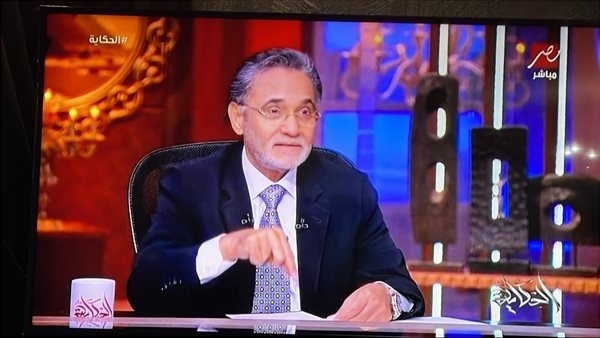
Journalist, writer, and political thinker Abdel Rahim Ali, head of the Center for Middle East Studies in Paris (CEMO), revealed, during his interview with media host Amr Adeeb on the program Al-Hekaya, broadcast on MBC Masr, details that he said concern the activities of a number of figures and entities associated with what is known as the Egyptian opposition abroad, as well as the sources of funding for a number of television channels, media platforms, and political activities.
Abdel Rahim Ali said that, two days before the interview, Mahmoud Wahba offered Ayman Nour the position of head of what he described as a “salvation government,” noting that Ayman Nour rejected the offer.
He explained that the proposal came within the framework of political activities that, he said, are intended to put forward new visions for managing the political landscape during the coming period.
He added that talk of forming a salvation government or proposing figures to head it comes, in his view, within the context of activities taking place outside the official political framework, through which certain parties seek to put forward fronts and figures through whom different political visions can be advanced.
Abdel Rahim Ali indicated that proposing Ayman Nour’s name to head the so-called “salvation government” reveals, in his view, the nature of the contacts and activities taking place among a number of figures abroad. He stressed that these activities require a careful examination of the nature of the parties involved and the objectives they seek to achieve.
“Midan” Activities and Sources of Funding
Abdel Rahim Ali addressed what he described as the activities of the “Midan” movement and its sources of funding, pointing to Reda Fahmy’s travel from Lebanon to Iran without a passport for the purpose of reaching an agreement on Iranian funding for the movement, according to what he stated during the episode.
He explained that Reda Fahmy traveled to Iran as part of efforts related to seeking support and funding for the movement, noting that these activities come, in his view, within a network of contacts conducted by figures associated with what is known as the Egyptian opposition abroad, with the aim of securing sources of support and funding for activities and events organized outside Egypt.
He added that there is a cell affiliated with the “Midan” movement that, he said, received funding from Iran. He maintained that tracing the channels of funding reveals, in his view, the nature of the relationships and contacts linking some entities and figures active abroad with regional actors.
The Netherlands Conference
Abdel Rahim Ali revealed details of a conference that, he said, will be held in the Netherlands on September 17, 18, and 19 of this month, with the participation of a number of figures and forces that he described as being associated with the Muslim Brotherhood and what is known as the Egyptian opposition abroad.
He explained that participants in the conference will appear under the designation of an “Egyptian Opposition Front” comprising political and civil entities, including the “Amal” Party. He noted that media figures Mohamed Nasser and Moataz Matar are among those invited, along with representatives of the “Technocrats” movement and a number of other figures.
He pointed out that the invitation comes at a time when the Dutch Parliament had previously witnessed a move to discuss banning the Muslim Brotherhood. He added that Mohamed Gamal Helal is among the figures associated with this effort and that he funds the Al-Shoub channel, where Moataz Matar works, according to his account.
Abdel Rahim Ali stressed that these figures are attending the conference under political and civil designations and capacities different from those associated with the Muslim Brotherhood.
Opposition Meetings and Their Infiltration
Abdel Rahim Ali revealed details of meetings that, he said, brought together forces belonging to what is known as the Egyptian opposition abroad during the period from March through September of this year.
He explained that these meetings were, according to his account, infiltrated by elements affiliated with the “Hasm” and “Midan” movements, noting that the presence of these elements inside the meetings led some forces and figures to withdraw as a result of disagreements that arose over the nature of the activities and the parties involved.
He added that the situation reflects, in his view, a state of divergence within what is known as the Egyptian opposition abroad, particularly given the multiplicity of participating entities and figures and the overlap among their orientations and alliances.
He stressed that monitoring these meetings reveals the nature of the conflicts and disagreements among the various forces based outside Egypt.
Recordings Concerning the Activities of Figures Associated with the Muslim Brotherhood
Abdel Rahim Ali said that he possesses audio recordings relating to meetings and activities involving a number of figures associated with the Muslim Brotherhood, explaining that these recordings form part of the information and analyses he presented during the episode concerning the activities of the group and its figures.
He indicated that the purpose of playing the recordings is to allow people to hear directly what took place during some of the meetings rather than relying solely on secondhand accounts or analysis. He stressed that the recorded audio can reveal the nature of the ideas and positions put forward during those meetings.
For his part, media host Amr Adeeb explained that Abdel Rahim Ali has dealt with the Muslim Brotherhood file through many years of study and monitoring and possesses extensive knowledge of the details concerning figures and activities associated with the group.
The Civil State Project
Abdel Rahim Ali discussed conversations that, he said, took place among a group of figures concerning a political project to be presented to Egyptians, based on the concept of a civil state that is neither military nor religious.
He explained that one participant raised concerns that the Muslim Brotherhood and Salafists would object to describing the state as non-religious, while, he said, Mahmoud Wahba proposed using only the expression “civil state” as a consensual formula.
He added that Wahba believed that referring to a non-military state might prompt the military to oppose the project from the outset, noting that the final form of the state could later be left to the balance of power on the ground.
Abdel Rahim Ali recalled what took place following the January 25 Revolution, noting that the Muslim Brotherhood secured the largest share of seats in Parliament while initially presenting itself as not seeking the presidency of the republic.
He added that the Muslim Brotherhood subsequently supported the presidential candidacy of Abdel Moneim Aboul Fotouh and then Mohamed Morsi, stressing that this experience represents, in his view, a model of what he described as a gradual progression toward power.
Disagreements over the Form of the State and the Constitution
Abdel Rahim Ali said that disagreements arose among a number of figures over the nature of the state that should be stipulated in the constitution. He explained that the discussions addressed the concept of a civil state and whether it should be explicitly stated that the state is neither military nor religious.
He noted that some participants feared provoking objections from the Muslim Brotherhood and Salafists or antagonizing the military establishment. He added that the discussions included talk of carrying out activities within committees and planning a revolution inside Egypt, followed by an agreement afterward on the form of the constitution and the political system.
He added that these proposals resemble, in his view, what took place following January 25, when the Muslim Brotherhood came to dominate the parliamentary scene despite initially presenting itself as not seeking control of the presidency.
He stressed that he possesses audio recordings that, he said, contain details of these discussions and the activities of various figures.
Hassan Ashry’s Initiative in the Netherlands
Abdel Rahim Ali said that Hassan Ashry, whom he described as a Muslim Brotherhood leader, began putting forward an initiative during his activities in the Netherlands.
He explained that the initiative includes, according to his account, an affirmation of respect for the Egyptian Constitution, the Egyptian political system, President of the Republic Abdel Fattah el-Sisi, Egyptian state institutions, and Egyptian values.
He added that Hassan Ashry is attempting, according to his account, to rally young people around this initiative under a civil guise, noting that the objective is what he described as “creating alternative entities” and rallying around them while avoiding their direct presentation as Muslim Brotherhood entities.
He pointed out that these activities are not confined to the Netherlands but extend, according to what he stated, to a number of European countries, including France, England, Germany, and Sweden. He stressed that presenting them in a civil form represents, in his view, a means of concealing the nature of the group and its activities within Europe.
Funding of Al-Shoub and Other Channels
Abdel Rahim Ali revealed information that, he said, concerns the sources of funding for the Al-Shoub channel, where media host Moataz Matar works. He explained that Mohamed Gamal Helal is the person funding the channel, according to what he stated during the episode.
He also spoke about Abdel Rahman Abu Diya, saying that, according to his account, Abu Diya is responsible for financing a number of Muslim Brotherhood media outlets based outside Egypt, most notably the Mekameleen and Al-Sharq channels and the Rassd network. He indicated that the amount of funding he was referring to reaches $1.6 million per month.
Abdel Rahim Ali explained that Abu Diya owns the British company “Nour Naji,” noting that his name appeared in the company’s records on November 7 and that the company’s capital was one pound sterling during the period from 2013 to 2015. Abu Diya remained its sole owner and held powers relating to its decisions and financing.
He added that the company was linked to financing the Mekameleen and Al-Hiwar Al-Arabi channels, noting that its capital remained unchanged until 2019, while its budget amounted to approximately £60,000.
He said that there are names and figures mentioned in this context that he does not name, noting that anyone who enters into a contract with these parties receives financial compensation from them and that the dealings take place within what he described as a legal framework.
Ibrahim Munir’s Relationship with Abdel Rahman Abu Diya
Abdel Rahim Ali discussed the origins of the relationship between Ibrahim Munir and Abdel Rahman Abu Diya, saying that it dates back to the establishment of “Noon Media” in 2005.
He added that Abu Diya founded the company at that time, describing him as having been an official agent of British intelligence, according to his account.
He explained that Ibrahim Munir had been experiencing pressures and problems with the British side before his relationship with Abdel Rahman Abu Diya developed, noting that the two subsequently held repeated meetings and visits.
He said that Abu Diya did not visit Ibrahim Munir’s office, according to his account, whereas Munir visited Abu Diya at his home dozens of times, considering this to have marked the beginning of a close relationship between them.
He added that after 2013, Abu Diya became involved in the media and political landscape and provided support for a number of activities and figures, including Azzam Tamimi and media institutions associated with him.
He pointed to the involvement of an Arab state with considerable weight in this sphere after 2013, stressing that details of this role and its relationship with media and political activities formed part of the landscape he discussed during the interview.
Funding of Muslim Brotherhood Channels
Abdel Rahim Ali said that a number of television channels and media platforms affiliated with, or considered sympathetic to, the Muslim Brotherhood abroad receive funding from Israel’s Mossad intelligence agency, according to what he stated during the episode.
He added that Iranian Jews working with Israel’s Mossad help Abdel Rahman Abu Diya finance a number of Muslim Brotherhood channels operating abroad, according to his account.
He noted that this information comes within the context of his discussion of the funding network that, he said, stands behind a number of media platforms active outside Egypt. He added that identifying the sources of funds and the entities providing support represents an important aspect of understanding how these channels operate.
Abdel Rahim Ali described Abdel Rahman Abu Diya as an agent of Mossad, pointing to his ownership of the British company “Nour Naji” and linking the company, according to his account, to the financing of the Mekameleen and Al-Hiwar Al-Arabi channels.
It should be noted that the allegation that Abdel Rahman Abu Diya is an agent of Mossad was made by Abdel Rahim Ali during the interview and has not been independently verified.
Wael Ghonim and Sources of Funding
Abdel Rahim Ali spoke about Wael Ghonim in the context of questions concerning the parties behind the funding and mobilization of a number of figures and channels associated with the Muslim Brotherhood.
He referred to an incident in which Wael Ghonim was asked which entity he worked with or which entity funded him. According to Abdel Rahim Ali’s account, questions of this kind are often met with silence and a refusal to disclose the supporting parties.
He added that there are figures operating in Europe who receive funding without clearly disclosing its sources or the entities behind it, noting that some of these activities are conducted through television channels and media outlets associated with the Egyptian opposition abroad.
He stressed that tracing funding channels and the relationships between figures and television channels reveals, in his view, a network of interests and connections that requires scrutiny and disclosure of its details.
Images of Mahmoud el-Sisi and the Recordings
In another context, Abdel Rahim Ali asserted that images recently circulated and published, which were said to show Mahmoud el-Sisi, were forged and fabricated.
He said that the circulated images do not reflect the truth, urging the public to listen to the recordings that, he said, reveal what actually happened.
He added that the recordings represent, according to what he presented during the episode, a more accurate means of verifying events, calling on the public not to rely solely on circulated images or material published on social media platforms without verifying its source.
Gaza Donations
Abdel Rahim Ali added that the Muslim Brotherhood organization seized 75% of the donations allocated to the Gaza Strip, describing what happened as a “scandal” concerning Gaza donations, during his interview with media host Amr Adeeb on the program Al-Hekaya on MBC Masr.
Disputes and Personal Recordings
Abdel Rahim Ali addressed the issue of attacking people’s honor and intruding into their personal lives, considering this an ethical transgression and warning that opening this door could prompt other parties to disclose recordings and information about one another.
He referred to the existence of audio recordings and images that, he said, are connected to figures based in the United States and Istanbul, arguing that the circulation of such material could lead to further disputes and accusations.
He also addressed statements attributed to Helmy El-Gazzar concerning the rejection of turning political disagreements into attacks on people’s honor, questioning what was meant by certain expressions that had circulated concerning the existence of personal disputes between particular parties.
He added that some rhetoric directed against the Egyptian state and society is intended, in his view, to gain acceptance from foreign entities, referring to Mossad and British intelligence and accusing those behind such rhetoric of lying despite knowing the truth of what they are saying.
He stressed the need to clarify the nature of the disputes and the people referred to in the expressions being circulated, rather than making broad accusations without revealing their details.
Message to the Egyptian Citizen
At the conclusion of his remarks, Abdel Rahim Ali addressed a message to the Egyptian citizen, saying during the interview: “There is a country called Egypt, and you have heard what is intended for it.”
He stressed that what he presented during the interview forms part of his account of the political contacts and activities taking place, alongside information that, he said, concerns sources of funding and relationships among various figures and entities. He emphasized the importance of examining the nature of these activities, the parties involved in them, and the objectives they seek to achieve.
