Ukraine Peace Talks: U.S. Urges Russia to Include Europe in Negotiations
Thursday 12/November/2026 - 02:01 PM
Ahmed Seif El-din
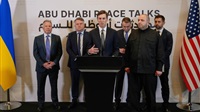
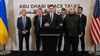
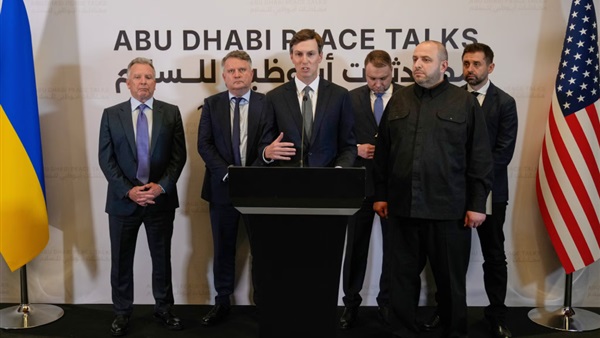
The latest Ukraine peace talks concluded in Abu Dhabi on Wednesday, November 11, 2026, without an agreement from Russia to include European representatives in negotiations. The United States is seeking to expand discussions beyond a ceasefire and Ukrainian territory to address Europe's broader security arrangements, as Washington attempts to overcome a prolonged diplomatic deadlock.
U.S. Pushes to Expand Ukraine Peace Talks
The two-day negotiations in the United Arab Emirates marked the first round of direct discussions between Ukrainian and Russian delegations in nine months.
The talks were led by U.S. President Donald Trump's envoys, Jared Kushner and Steve Witkoff, who are scheduled to meet Russian President Vladimir Putin in Moscow on Thursday before traveling to Dublin for discussions with Ukrainian President Volodymyr Zelensky.
American officials believe progress on territorial disputes may depend on addressing Russia's demands concerning Europe's postwar security structure.
Kushner said Washington was seeking a broader negotiating framework that would allow discussions about a ceasefire, territory and European security to advance simultaneously.
The American envoys also announced efforts to finalize what Kushner described as the largest humanitarian exchange of the war.
Russia Demands Changes to European Security Arrangements
A central obstacle in the Ukraine peace talks remains Moscow's insistence that any settlement address the wider European security order.
Before launching its full-scale invasion of Ukraine, Russia demanded restrictions on NATO military infrastructure and troop deployments in countries that joined the alliance after 1997.
Those proposals would affect NATO's presence in Central and Eastern Europe, the Baltic states, Finland and Sweden. Moscow also sought guarantees preventing Ukraine from joining NATO.
Although the Biden administration and European allies previously rejected such demands, the Trump administration has shown greater willingness to discuss Russia's security concerns.
However, it remains unclear whether Moscow is maintaining all its original demands in the current negotiations.
European Leaders Oppose Security Deals Without Their Participation
European governments have expressed concern that Washington and Moscow could negotiate arrangements affecting the continent without meaningful European involvement.
European Commission President Ursula von der Leyen reiterated that a ceasefire should precede negotiations over Europe's future security architecture.
Polish Foreign Minister Radoslaw Sikorski also rejected the possibility of major security decisions being made without European participation.
Representatives from Britain, France, Germany, the European Union and NATO attended meetings in Abu Dhabi, although they held separate consultations with American and Ukrainian officials rather than negotiating directly with Russia.
Their presence underscored Europe's determination to influence any settlement affecting regional security.
Russia Questions Europe's Role in Negotiations
Russian negotiator Vladimir Medinsky criticized European governments during the Abu Dhabi discussions, questioning their readiness to participate constructively.
Medinsky, who led Moscow's delegation, said Russia wanted a comprehensive European security framework comparable in historical significance to the post-World War II agreements reached at Yalta and Potsdam.
His comments reinforced concerns among European officials about potential attempts to reshape the continent's security arrangements through negotiations dominated by major powers.
Nevertheless, recent Kremlin statements suggest Moscow may be increasingly willing to engage directly with European governments.
Russian presidential adviser Yuri Ushakov acknowledged in October that negotiations involving only Washington and Kyiv would be insufficient because European countries remain central supporters of Ukraine.
European Governments Divided Over Direct Talks With Putin
The renewed Ukraine peace talks have exposed disagreements among European leaders over whether to engage directly with the Kremlin.
Some governments remain reluctant to negotiate with Putin while Russian attacks on Ukrainian cities continue and Moscow shows little indication of preparing to end the war.
Others increasingly support diplomatic engagement as a necessary step toward a broader settlement.
Emmanuel Bonne, a diplomatic adviser to French President Emmanuel Macron, said European representatives were prepared to engage collectively with Russian officials to establish a shared understanding of the requirements for lasting peace and security.
However, European governments have yet to agree on a single representative who could speak on the continent's behalf.
Kushner acknowledged those divisions while emphasizing that Russia could not secure an agreement on European security without European participation.
Humanitarian Exchange Offers Potential Progress
Despite disagreements over the negotiating framework, American officials identified a possible humanitarian breakthrough.
Kushner said the United States was working to finalize details of a major exchange involving people affected by the conflict.
Although the proposed exchange could represent progress, the negotiations ended without a confirmed agreement on European participation or a comprehensive ceasefire.
Meanwhile, Russia has continued attacks on Ukrainian cities, raising questions about Moscow's willingness to reach a near-term settlement.
Can Ukraine Peace Talks Break the Diplomatic Deadlock?
The renewed Ukraine peace talks reflect Washington's attempt to overcome nearly two years of unsuccessful diplomatic efforts by broadening the scope of negotiations.
The strategy rests on the belief that Russia may be more willing to compromise over Ukraine if its demands concerning Europe's security arrangements are considered alongside territorial and ceasefire issues.
However, the approach faces substantial obstacles, including distrust between Moscow and European governments, disagreements over NATO's future role and continued Russian military operations.
The upcoming meetings with Putin and Zelensky could help determine whether the expanded negotiating strategy gains momentum.
For now, the Ukraine peace talks remain at a critical diplomatic stage, with European participation, territorial disputes and the conditions for a ceasefire still unresolved.