China’s Trade Surplus Tops $1 Trillion as Exports Surge, Raising Global Economic Concerns
Tuesday 10/November/2026 - 04:12 PM
Ahmed Seif El-din
China's record export growth, driven by renewable energy products and artificial intelligence infrastructure, is strengthening its global trade position while intensifying concerns over industrial job losses in Europe.
China's trade surplus exceeded $1 trillion during the first 10 months of 2026, reaching a record $1.04 trillion as exports surged despite global economic uncertainty. Official customs figures released on November 10 showed that strong international demand for Chinese manufactured goods, particularly electric vehicles, solar panels, and artificial intelligence equipment, has accelerated the country's export-driven growth while exposing weaknesses in domestic consumption.
The figures highlight China's expanding influence in global manufacturing and trade, even as major trading partners express growing concern about the impact of Chinese competition on their industries and employment.
China's Exports Surge Amid Global Energy and AI Demand
According to China's General Administration of Customs, the country's trade surplus reached $1.04 trillion between January and October 2026, surpassing the pace of the previous year's record.
In October alone, exports exceeded imports by $105.3 billion, although the monthly surplus narrowed compared with September.
Chinese exports increased by 35.2% year over year in October, while imports rose by 41.6%, reflecting significant demand for electronics and equipment supporting China's domestic artificial intelligence infrastructure.
The export expansion has been supported by two major global developments.
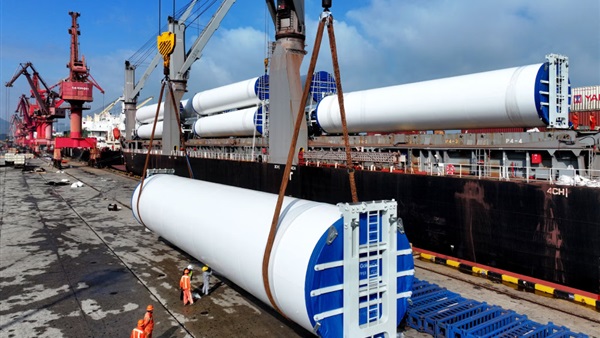
First, rising international oil prices, driven partly by Iranian attacks on shipping in the Strait of Hormuz, have increased demand for renewable energy technologies, including solar panels, wind turbines, and electric vehicles.
Second, the worldwide expansion of AI data centers has created substantial demand for Chinese-made cables, equipment racks, and related infrastructure components, although China does not manufacture the most advanced semiconductors used in these facilities.
Meanwhile, Beijing has restricted exports of diesel, jet fuel, and other refined petroleum products to neighboring countries to protect domestic supplies.
U.S.–China Trade Relations Show Signs of Easing
The latest figures on China's trade surplus emerged as Washington and Beijing moved to ease certain trade restrictions.
On November 9, both governments began implementing measures to reduce tariffs and limit the use of export controls through January 10, following an agreement reached by senior officials in late September.
The arrangement preceded a Washington summit between U.S. President Donald Trump and Chinese President Xi Jinping.
Although the measures signal a temporary easing of trade tensions, China's growing export advantage continues to present challenges for its international trading partners.
What Is Driving China's Record Trade Surplus?
China's export competitiveness reflects a combination of manufacturing efficiency, government support, and favorable production conditions.
Relatively low labor costs, extensive factory automation, and sophisticated transportation infrastructure enable Chinese companies to manufacture and ship goods at competitive prices.
A comparatively weak Chinese currency also makes exports more affordable in international markets.
Government tax rebates provide additional support to exporters, with the program now accounting for almost one-eighth of China's tax revenues.
However, the widening China trade surplus also reflects a more troubling domestic economic reality: weak household spending and reduced demand for imported products.
China's Property Crisis Weakens Domestic Consumption
China's prolonged housing downturn has significantly damaged household wealth, contributing to sluggish domestic demand.
Residential property prices have fallen approximately 40% nationwide over the past five years, according to the figures cited in the original report.
Chinese households had invested roughly 80% of their savings in apartments, traditionally viewing real estate as a safer investment than stocks, bonds, or mutual funds.
The collapse in property values has therefore undermined consumer confidence and encouraged families to reduce spending on automobiles, household appliances, and other goods.
At the same time, Beijing's industrial self-reliance strategy has reduced dependence on foreign components.
Deborah Elms, head of trade policy at the Singapore-based Hinrich Foundation, noted that China's increasingly integrated domestic supply chains have reduced its need for imported materials and equipment.
Consequently, China's trade surplus reflects not only strong exports but also structural weaknesses in its domestic economy.
Europe Faces Growing Pressure From Chinese Competition
China's expanding trade advantage has intensified economic concerns across Europe, particularly in manufacturing-dependent countries.
Official Chinese data showed that the country's trade surplus with Europe reached $33.4 billion in October and $320.8 billion during the first 10 months of 2026.
European manufacturers face increasing competition from lower-cost Chinese products, both in domestic markets and in developing economies where European companies previously enjoyed stronger positions.
Germany has been particularly affected, losing approximately 14,000 industrial jobs per month, according to the original report.
France has also experienced manufacturing employment losses as Chinese exports gain market share.
The contrasting employment trends highlight the uneven consequences of China's expanding industrial capacity.
While Chinese manufacturers have increased automation and production efficiency, domestic manufacturing employment has remained broadly stable at approximately 71 million jobs since 2020.
In Europe, however, greater competition has contributed to growing pressure on industrial employment.
Can China's Export-Led Growth Remain Sustainable?
The rapid expansion of China's trade surplus demonstrates the country's manufacturing strength but also raises questions about the sustainability of an economic model increasingly dependent on foreign demand.
Strong exports have helped offset weak domestic consumption, yet widening trade imbalances could intensify political pressure for tariffs, industrial protections, and other trade restrictions.
For Europe, the challenge is protecting industrial competitiveness without unnecessarily disrupting international commerce.
For China, the longer-term issue is whether policymakers can revive household spending and reduce reliance on exports while maintaining the advantages of advanced manufacturing.
As global demand for renewable energy technologies and artificial intelligence infrastructure continues to expand, China remains well positioned to benefit.
However, the record trade surplus also underscores a growing imbalance between China's production capacity and domestic purchasing power—one that could shape international trade relations well beyond 2026.