


Abdel Rahim Ali: The Drums of War Had Been Beating for Some Time… Red Lines Accelerated the Escalation
Sunday 01/March/2026 - 03:58 PM
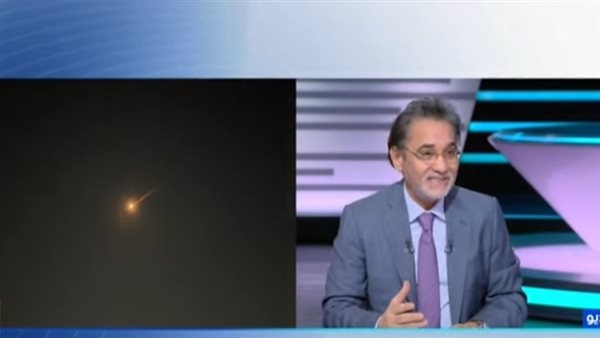
Dr. Abdel Rahim Ali, head of the Middle East Studies Center in Paris, stated that the drums of war had been beating for a long time and that talks between the two sides had been moving toward this tense situation. He noted that each side was fully aware that matters would reach this point due to the existence of fixed positions and red lines that could not be crossed.
He added, during his interview with Extra News channel, that the United States and Israel had three main issues considered red lines: first, Iran’s nuclear file and uranium enrichment; second, the long-range ballistic missile program, which poses a direct threat to Israel’s strategic depth; and third, Iran’s regional proxies, such as Hezbollah in Lebanon, the Houthis in Yemen, as well as armed factions in Iraq.
He explained that these files represented fundamental points of contention, particularly under the vision of the late Iranian Supreme Leader Ali Khamenei, who viewed these demands as an affront to the dignity of the Iranian state and believed that any negotiations should be limited solely to the nuclear file, excluding other issues.
Abdel Rahim Ali indicated that mutual pressure between the American and Iranian sides had continued for a long period, stressing that both parties were aware that maintaining this approach would ultimately lead to the escalation currently being witnessed.
Abdel Rahim Ali: The Goal of the U.S. Strikes Is Not to Deter Iran but to Overthrow the Regime and Reshape the Middle East
Dr. Abdel Rahim Ali, head of the Middle East Studies Center in Paris, stated that the strikes launched by the United States and Israel against Iran were not merely intended to weaken Iran’s military capabilities but primarily aimed at removing the Iranian regime from existence.
He explained, during his interview with Extra News channel, that this objective could be achieved through two paths. The first involves actual, physical removal by targeting regime leaders, as occurred in the assassination of Iranian Supreme Leader Ali Khamenei, and delivering strong, focused blows to the Iranian Revolutionary Guard Corps in order to fragment it and weaken its ability to maintain control.
The second path, however, involves dismantling the regime from within by creating a new reality that would compel any future leadership to accept settlements that the previous regime had been unwilling to accept.
He added that these settlements may include abandoning Iran’s regional proxies, such as Hezbollah and the Houthis, accepting restrictions on the long-range ballistic missile program, and reducing uranium enrichment to low levels, all within negotiations imposed under the pressure of military operations.
Abdel Rahim Ali noted that if a direct war between the two sides were to erupt, it would not be a limited conflict or a test of capabilities but rather a comprehensive, open war. He stressed that the objective, according to the American and Israeli vision, is to completely end what is known as the “mullahs’ regime” and to reshape the Middle East map without Iranian influence or its regional proxies.
He affirmed that the duration of the war would not be tied to a specific timeframe but to the achievement of the desired military and political objectives. He pointed out that the resilience of the Iranian Revolutionary Guard Corps would be a decisive factor in determining the course of events, especially during the transitional phase Iran is experiencing following Khamenei’s death. He added that expanding the strikes to include more strategic targets, or the emergence of internal divisions among factions of the regime, could accelerate its collapse or push some internal forces to reconsider their position.
The head of the Middle East Studies Center in Paris concluded his remarks by stressing that the region now faces an open war with all possible scenarios, and that its ultimate trajectory will depend on the Iranian regime’s ability to withstand pressure and the extent to which military and political pressure continues to be applied against it.
