


Abdel Rahim Ali Says Washington Seeks to Change Iran’s Behavior as Mojtaba Khamenei Emerges as “Shadow Man”.
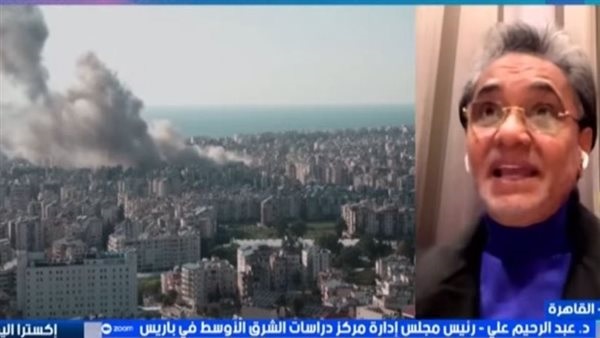
Political thinker Abdel Rahim Ali said the current confrontation between the United States and Israel on one side and Iran on the other represents a markedly different phase from the previous (12)-day conflict, pointing to unprecedented American military deployments that signal a significant escalation in regional tensions.
Speaking during a televised interview on Extra News, Ali explained that Washington has mobilized massive military assets to the region, including two aircraft carriers, frigates, nuclear submarines, and more than (300) aircraft. According to him, these deployments reflect the seriousness of the situation and the potential risks should the confrontation expand further.
He added that roughly (50%) of the United States’ strike power abroad is now directed toward Iran, underscoring the central importance of the Iranian file in American strategic calculations and highlighting concerns over the consequences of a broader conflict.
War Objectives
Ali noted that both the United States and Israel are seeking to modify the behavior of the Iranian regime, either by compelling it to submit to international pressure, forcing a change in its policies, or potentially pushing for broader systemic change.
He said these objectives include destroying Iran’s military capabilities, crippling its missile and drone programs, ending the enrichment of uranium, and compelling Tehran to withdraw support from its regional proxies such as the Houthis and Hezbollah. Such measures, he argued, would represent an attempt to impose new strategic rules on Iran and limit its regional influence.
Succession Question in Tehran
Addressing the potential succession of Mojtaba Khamenei as Iran’s next Supreme Leader following the death of Ali Khamenei in a reported US–Israeli strike last Saturday, Ali said Mojtaba has long served as a crucial link between Iran’s key power centers.
According to Ali, Mojtaba maintains connections with institutions such as the Islamic Revolutionary Guard Corps, intelligence bodies, and Iran’s regional networks, while also exerting influence over financial resources and economic channels tied to the state.
This position, he said, gives Mojtaba significant leverage in shaping both domestic and foreign policy within the Iranian political system.
Challenges Facing Mojtaba Khamenei
Despite the influence attributed to him, Ali argued that Mojtaba’s possible elevation carries several weaknesses. He noted that Mojtaba is not deeply rooted in Iran’s religious seminaries and lacks a broad popular base within Iranian society.
Ali also said that his appointment could be perceived as a form of hereditary succession, an issue likely to provoke criticism given that the Iranian Revolution was partly driven by opposition to dynastic rule.
He added that Mojtaba could face political resistance from factions inside Iran who question his religious credentials and scholarly authority compared with figures such as Ruhollah Khomeini and his father.
“The Shadow Man” of Iran
Ali described Mojtaba Khamenei as the “shadow man” during his father’s rule, noting that he rarely appeared in public yet played a central role in coordinating between the Supreme Leader’s office and the country’s security and economic institutions.
He argued that Mojtaba has effectively functioned as a key power broker in Iran over the past decade, influencing security, military, and economic policies behind the scenes.
According to Ali, there is an estimated (80%) likelihood that Mojtaba Khamenei could be officially announced as Iran’s next Supreme Leader within hours or days. However, he warned that such an announcement would likely trigger political and social tensions due to concerns over hereditary succession and the absence of clear religious or popular endorsement.
