Trump Family Business Deals Face Growing Scrutiny Over Conflicts of Interest
Friday 30/October/2026 - 01:52 PM
Ahmed Seif El-din
Trump family business deals are attracting increased scrutiny as President Donald Trump's relatives and political associates expand their investments across cryptocurrency, artificial intelligence, defense technology, and other industries affected by federal policy.
The growing overlap between political influence and private financial interests has prompted questions about government ethics, transparency, and the relationship between wealth and power in Washington.
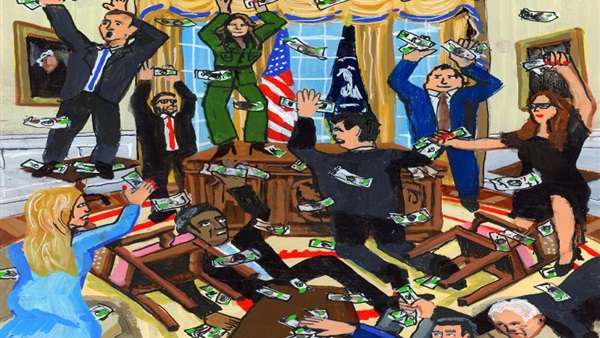
In an October 30, 2026, opinion essay published by The New York Times, journalist Noah Shachtman examined how business ventures connected to the president's family have expanded during his second administration, while highlighting concerns raised by lawmakers, investors, and political researchers.
Trump Family Wealth Expands Across Emerging Industries
The Trump family business deals described in the report extend well beyond the family's traditional real estate interests.
According to estimates cited by Shachtman, Trump's personal wealth has reached approximately $7 billion, supported partly by cryptocurrency ventures. Forbes also estimated that Eric Trump's net worth increased tenfold at one point.
Donald Trump Jr. has expanded his involvement in venture capital, particularly through 1789 Capital, an investment firm with interests in defense technology, aerospace, and other emerging industries.
The firm's assets under management reportedly increased from $150 million to more than $1.7 billion by the end of 2025.
Its portfolio has included investments in Anduril, SpaceX, and Axiom Space, although these were minority positions without direct operational control.
The rapid expansion has raised questions about whether political connections provide commercial advantages unavailable to competing businesses.
Pentagon Contracts Raise Questions About Political Influence
Several companies associated with Trump family members have pursued or received significant federal government funding.
Foundation Future Industries, a robotics company backed by Eric Trump, reportedly secured a $24 million Pentagon contract to develop artificial intelligence-powered military technology.
Meanwhile, Unusual Machines, a drone-components manufacturer that counts Donald Trump Jr. as an adviser, entered negotiations for a Pentagon loan.
According to the original report, its shares rose 65% following news of those discussions and increased another 26% after the administration announced tariffs on imported drone components.
The developments illustrate how federal procurement decisions and trade policies can affect businesses with connections to political leaders.
However, financial relationships and favorable policy outcomes do not, by themselves, establish improper influence or unlawful conduct.
Representatives of the Trump family have denied receiving preferential treatment, maintaining that their investments reflect legitimate commercial opportunities.
Dominari Holdings and Reverse Mergers Attract Attention
Among the most closely examined Trump family business deals are investments involving Dominari Holdings, a financial services company in which Donald Trump Jr. and Eric Trump reportedly hold a combined stake of approximately 11%.
Both brothers serve on the company's advisory board.
Dominari Securities has helped arrange several unconventional corporate mergers, including transactions involving drone manufacturers, cryptocurrency companies, and businesses operating in unrelated industries.
One example involved a Florida golf course business that merged with a military drone company to create Powerus.
Following the announcement, the golf course company's shares rose 24% during trading, while daily share volume increased from approximately 24,000 to more than 28 million.
Powerus subsequently received a potential funding commitment worth up to $90 million from the U.S. Air Force through one of its subsidiaries.
Despite the initial market enthusiasm, the company's share price later declined substantially.
Shachtman's report also described a Dominari-associated investment that reportedly increased roughly tenfold in value, illustrating the contrasting financial outcomes experienced by different investors.
Dominari executives have rejected suggestions of improper market manipulation, attributing stock-price movements to ordinary market conditions.
Cryptocurrency Ventures Extend Trump's Business Network Overseas
The Trump family's growing cryptocurrency interests have also attracted attention because of their connections to foreign investors and governments.
World Liberty Financial, a cryptocurrency venture involving Trump family members and the sons of presidential envoy Steve Witkoff, has developed international business relationships.
In 2025, company representatives visited Pakistan, where they received an official welcome and participated in discussions concerning financial technology.
The company's representatives later returned to Islamabad for an agreement involving the Pakistani government.
World Liberty Financial has denied having any role in U.S. foreign policy or government decision-making.
Other prominent relationships described in the report include Jared Kushner's investment dealings with Saudi Arabia's sovereign wealth fund and business arrangements involving individuals connected to senior administration officials.
These activities have intensified debate over whether proximity to government leadership creates an appearance of conflicts of interest.
White House Rejects Allegations of Improper Financial Benefits
The Trump administration and family representatives have strongly disputed allegations that political influence has improperly benefited their businesses.
Alan Garten, executive vice president of the Trump Organization, emphasized that the family had pursued investments and commercial relationships long before Trump's presidency.
White House principal deputy press secretary Anna Kelly similarly rejected allegations of conflicts of interest, arguing that the president acts in the public interest.
Supporters of the family's investment strategy describe its emphasis on manufacturing, national security technology, and emerging industries as a form of patriotic capitalism.
Critics, however, question whether close relationships between investors and policymakers undermine public confidence in fair competition and independent government decision-making.
Congressional Investigations Target Trump-Connected Companies
The Trump family business deals have attracted attention from lawmakers in both major political parties.
Democratic Representatives Ro Khanna and Jamie Raskin have raised questions about financial transactions and the rapid expansion of Trump-associated investment firms.
Republican Senator John Curtis has also called for scrutiny of Donald Trump Jr.'s business activities, citing concerns about private enrichment involving individuals close to the presidency.
Separately, Republican Representative John Moolenaar joined Khanna in requesting information about Dominari-related transactions involving Chinese companies.
Their concerns included allegations that some companies experienced sharp stock declines after going public, leaving investors with substantial losses.
Dominari disputed the implications of those allegations and stated that the relevant Chinese transactions represented only a small portion of its business.
Congressional scrutiny does not establish wrongdoing, but it reflects growing interest in financial transparency and potential conflicts involving politically connected investments.
Public Concern Over Government Corruption Intensifies
Public attitudes toward political corruption have become another important dimension of the debate.
According to polling cited in the original essay, a late-October CNBC survey identified corruption as a leading concern among midterm voters.
A separate Gallup poll reportedly found that 89% of surveyed Americans believed government corruption was widespread.
Political scholar Jeffrey Winters compared the growing concentration of political and economic influence to historical forms of oligarchy, in which access to powerful leaders can significantly affect private fortunes.
Shachtman also drew comparisons with the late 19th century, when public concern over concentrated wealth contributed to reforms involving taxation, antitrust enforcement, and political representation.
These historical parallels are interpretations rather than evidence that contemporary business relationships necessarily involve unlawful conduct.
Could the 2026 Midterms Bring Greater Oversight?
The approaching congressional elections could influence the extent of future scrutiny surrounding Trump family business deals.
Democratic lawmakers have indicated that they would pursue additional investigations if their party gains greater congressional authority.
Potential areas of examination include cryptocurrency transactions, federal defense contracts, investment arrangements, and financial relationships involving foreign governments.
The broader debate concerns the standards applied when private businesses connected to elected officials benefit from government policies or public spending.
While the Trump family maintains that its ventures operate legitimately and without special treatment, critics argue that stronger disclosure and oversight are necessary to distinguish ordinary commercial success from potential conflicts of interest.
The long-term significance of these developments may extend beyond Trump's presidency, particularly as politically connected investment networks become increasingly involved in industries dependent on government regulation and procurement.