US Strikes on Qeshm Island Escalate Iran Tensions as Vance Rejects ‘Forever War’
Thursday 19/November/2026 - 03:31 PM
Ahmed Seif El-din
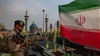
US strikes on Qeshm Island have intensified tensions with Iran following a series of military exchanges near the strategically important Strait of Hormuz, raising fresh concerns about the possibility of renewed large-scale hostilities. The escalation comes as Vice President JD Vance insists that President Donald Trump's administration will not allow the conflict to become another prolonged American war in the Middle East.
According to a report by Chad de Guzman published in TIME on November 18, 2026, American warplanes targeted an Iranian missile launch facility on Qeshm Island on Tuesday, November 17, following reported Iranian threats against US military personnel and installations in the Gulf.
The latest confrontation occurred despite diplomatic efforts involving Oman and Qatar and growing political pressure in Washington to end the conflict.
US Warplanes Target Iranian Missile Facility on Qeshm Island
American aircraft carried out strikes against an Iranian missile launch site on Qeshm Island, located near the Strait of Hormuz, one of the world's most strategically significant maritime routes.
An unidentified US official cited by CNN and other media outlets described the operation as an act of self-defense in response to alleged aggression by Iran's Islamic Revolutionary Guard Corps (IRGC) against American personnel and military assets.
Iranian authorities offered a different account of the incident's consequences.
Ahmad Nafisi, deputy governor of Iran's southern Hormozgan province, told Iranian state media that the attacks caused no damage to residential, commercial or infrastructure facilities.
The reported exchange reflects continued military friction between Washington and Tehran despite the absence of a full-scale resumption of hostilities.
Iranian Drone Attacks Target US Military Positions in Bahrain
Before the American strikes, Iran reportedly attempted to attack US military targets in Bahrain, which hosts the US Navy's Fifth Fleet.
US Central Command (CENTCOM) announced that Iranian one-way attack drones had been intercepted successfully.
According to CENTCOM, the attempted strikes caused no injuries to American personnel and no damage to US military equipment.
The incident highlighted the continuing vulnerability of American installations across the Gulf to drone and missile threats.
Kuwait Reports Drone Attacks on Military Facilities
The confrontation extended beyond Bahrain and Iran.
Early Wednesday, November 18, Kuwait's armed forces announced that air-defense systems were responding to incoming drone attacks.
Iran subsequently claimed responsibility for strikes targeting Ali Al Salem Air Base, a Kuwaiti military installation hosting US forces.
The incidents demonstrated how the continuing confrontation between Washington and Tehran could affect multiple Gulf countries hosting American military personnel.
However, the supplied report did not establish the extent of any damage resulting from the attacks on the Kuwaiti facility.
Qeshm Island Emerges as a Major Flashpoint in the Iran War
The latest US strikes on Qeshm Island followed earlier American operations against Iranian military positions in the same area.
US forces conducted an attack on the island shortly before the November 3 midterm elections, while Trump confirmed additional strikes on November 6.
The Wall Street Journal reported on November 2 that American forces had been conducting smaller, previously undisclosed strikes against Iranian targets for several weeks.
Unnamed officials described those operations as defensive actions intended to prevent potential Iranian attacks on commercial shipping in the Strait of Hormuz.
Although Washington has avoided restarting a major military campaign, the repeated strikes suggest that limited military engagements remain part of its approach to managing the confrontation.
Strait of Hormuz Remains Central to the Conflict
The Strait of Hormuz continues to play a critical role in the tensions between Iran and the United States.
Washington has maintained a blockade of Iranian ports aimed at restricting Tehran's oil exports and increasing economic pressure.
The maritime restrictions have also complicated diplomatic efforts to reduce hostilities.
Despite ongoing discussions involving Iran and regional mediators Oman and Qatar, prospects for an immediate agreement to end the war remain uncertain.
Trump has repeatedly warned that broader military operations could resume if Tehran refuses to meet American demands.
On November 12, the president stated on Truth Social that Washington no longer needed an agreement with Iran, emphasizing the economic and strategic leverage he believed the United States possessed.
JD Vance Says Iran Conflict Will Not Become a ‘Forever War’
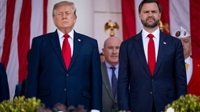
Vice President JD Vance has sought to reassure Americans that the conflict will not develop into another open-ended military commitment.
Speaking to Fox News on Monday, November 16, Vance said Trump intended to conclude the war before leaving office in January 2029.
"He is not going to let this become a forever war," Vance said.
The vice president argued that the administration had been elected on a commitment to avoid prolonged military interventions abroad.
His comments came amid growing domestic criticism of the Iran conflict and its political consequences for the Republican Party.
Iran War Weighs on Republican Midterm Election Results
Vance acknowledged that public frustration over the war contributed to Republican losses during the November 3 congressional midterm elections.
The Democratic Party secured major electoral gains, increasing pressure on the administration to prioritize domestic economic concerns and seek a diplomatic resolution.
Vance, who has been discussed as a potential Republican presidential contender in 2028, was previously assigned a leading role in negotiations with Iran.
However, Trump reassigned him on November 12 to focus on domestic investigations into alleged fraud in Democratic-led jurisdictions.
The shift leaves questions about the administration's negotiating structure and its immediate diplomatic priorities.
US Reinforces Military Presence as Trump Warns Iran
Despite political pressure to end the conflict, the United States continues to maintain substantial military capabilities in the Middle East.
According to an assessment by Israel's Institute for National Security Studies, a third American aircraft carrier, the USS Theodore Roosevelt, arrived in the region on November 15.
Its deployment reinforced Washington's ability to respond to further military developments.
Trump also warned Iran against additional escalation.
Speaking in Manila on November 17, the president responded to questions about reports alleging that Tehran was considering deploying a radiological "dirty bomb" in Washington.
Trump threatened an exceptionally severe response if such a threat materialized.
The allegations concerning a possible radiological attack were not independently substantiated in the supplied report.
Trump-Putin-Xi Summit Could Address Iran War
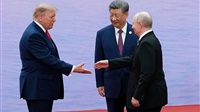
Diplomatic attention is also turning toward China, where Trump is scheduled to meet Chinese President Xi Jinping and Russian President Vladimir Putin on Thursday, November 19.
The planned trilateral summit is expected to include discussions about the Iran war.
Both Moscow and Beijing maintain important relationships with Tehran, making the meeting potentially significant for wider diplomatic efforts.
However, the report does not establish whether the summit will produce a specific proposal or agreement concerning the conflict.