Rohingya Genocide: UN Court Rules Myanmar Responsible in Historic Judgment
Friday 20/November/2026 - 02:59 PM
Ahmed Seif El-din
The Rohingya genocide has received a landmark legal judgment after the International Court of Justice (ICJ) ruled that Myanmar committed genocide against its Rohingya Muslim minority during a brutal military campaign in 2017. The decision marks the first time the United Nations' highest court has held a state responsible for committing genocide under the 1948 Genocide Convention.
Delivered in The Hague on November 19, 2026, the judgment found Myanmar responsible by a vote of nine judges to six, bringing a significant legal victory to Rohingya survivors who have waited nearly a decade for international accountability.
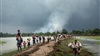
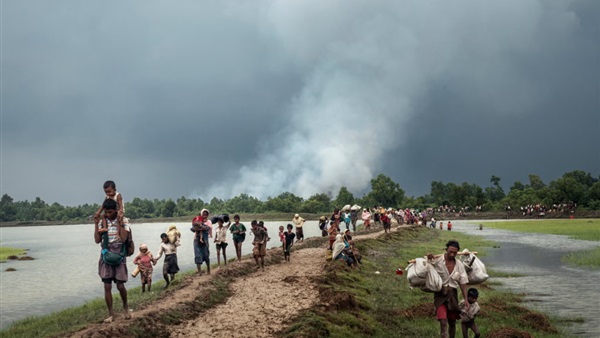
The ruling concerns military operations in Myanmar's northern Rakhine State that killed at least 10,000 people within weeks and forced approximately 750,000 Rohingya to flee into neighboring Bangladesh in 2017.
The court also ordered Myanmar to provide reparations, including restitution where possible and compensation where restoring victims' rights and circumstances is no longer feasible.
ICJ Finds Myanmar Responsible for Rohingya Genocide
ICJ President Judge Yuji Iwasawa announced that Myanmar had violated its obligations under the Genocide Convention through military operations directed against the Rohingya population.
The court determined that Myanmar's security forces carried out widespread killings, sexual violence, attacks against children, and the systematic destruction of Rohingya villages.
It also found that soldiers fired at civilians attempting to escape the violence, exposing refugees to further danger during their flight toward Bangladesh.
The judges concluded that the pattern and scale of the atrocities demonstrated the specific intent required to establish genocide under international law.
The judgment also found that Myanmar failed to prevent and punish genocide. However, it did not establish that Myanmar had incited private individuals to commit the crime.
This distinction is legally significant because genocide requires evidence of intent to destroy a protected national, ethnic, racial or religious group, in whole or in part.
The ruling establishes state responsibility rather than the criminal guilt of individual officials, which would require separate proceedings before an appropriate criminal court.
How the Rohingya Genocide Case Reached the World Court
The legal proceedings began in November 2019, when The Gambia filed a case against Myanmar before the ICJ.
Although the West African country is geographically distant from Southeast Asia, the Genocide Convention allows states that are parties to the treaty to seek accountability for violations, even when their own citizens are not directly affected.
The Gambia argued that Myanmar's military campaign constituted genocide and violated the country's international treaty obligations.
The case centered on violence that intensified in 2016 and 2017, when Myanmar's armed forces launched operations they described as security clearance measures.
United Nations investigators and human rights organizations documented mass killings, sexual assaults, destruction of villages and the forced displacement of Rohingya civilians.
Myanmar repeatedly denied committing genocide, arguing that its military operations were intended to address security threats.
Former civilian leader Aung San Suu Kyi defended Myanmar before the ICJ, rejecting accusations of genocidal intent.
Her government was subsequently overthrown in a military coup in 2021, after which Myanmar descended into a continuing civil war.
The November 2026 judgment represents the culmination of years of legal proceedings examining whether Myanmar's actions met the strict definition of genocide.
Decades of Discrimination Against Rohingya Muslims
The atrocities examined by the court followed decades of discrimination and persecution against the Rohingya.
The predominantly Muslim community has longstanding historical ties to Myanmar's western Rakhine State but has faced increasing marginalization from successive governments and sections of the country's Buddhist majority.
A restrictive citizenship law introduced in 1982 effectively deprived most Rohingya of citizenship, leaving them stateless.
Myanmar authorities have frequently refused to recognize the Rohingya as a legitimate ethnic group, instead portraying them as migrants from Bangladesh.
This position has contributed to restrictions on movement, access to education, employment and essential public services.
The violence of 2017 transformed an already severe human rights crisis into one of the world's largest refugee emergencies.
More than a million Rohingya eventually fled into Bangladesh, where many remain dependent on humanitarian assistance and face limited prospects for safe repatriation.
Rohingya Refugees Celebrate Historic Genocide Ruling
The ICJ judgment prompted emotional scenes in refugee camps near Cox's Bazar, Bangladesh, where approximately 1.2 million Rohingya currently live in overcrowded conditions.
At the Jamtoli refugee camp, residents gathered to watch the court's decision broadcast live.
Some cheered and wept as judges announced Myanmar's responsibility, while others displayed messages thanking The Gambia for pursuing the case.
For many refugees, the ruling represented long-awaited international recognition of atrocities they had witnessed or survived.
Dawda Jallow, The Gambia's attorney general, welcomed the decision outside the Peace Palace in The Hague, describing genocide as the gravest category of international crime.
He pledged that his country would continue supporting the Rohingya in their pursuit of justice.
Legal scholar Juliette McIntyre of Adelaide University described the judgment as particularly important for a community that had spent years waiting for accountability.
However, the celebrations were accompanied by uncertainty over whether the ruling would translate into compensation, security or the possibility of returning home.
Myanmar Ordered to Provide Restitution and Compensation
The judgment goes beyond officially recognizing the Rohingya genocide by establishing Myanmar's obligations to provide remedies.
The court directed Myanmar to pursue restitution, including measures that could help restore victims' rights, facilitate family reunification and support the conditions necessary for return.
Where restitution is impossible, Myanmar must provide compensation.
The precise amount and arrangements for compensation remain unresolved and will be determined through further proceedings.
The ruling also requires Myanmar to report to the court within two years on measures taken to implement restitution and address compensation.
These obligations are significant because they move the case beyond establishing legal responsibility toward addressing the consequences experienced by victims.
Nevertheless, implementation presents considerable difficulties.
The ICJ has no independent enforcement mechanism, meaning compliance may depend on political pressure and action through the United Nations system.
The UN Security Council has a potential role in addressing noncompliance, although divisions among its permanent members could complicate enforcement.
China and Russia, both important suppliers of military equipment to Myanmar, may resist measures that significantly increase pressure on its government.
Myanmar Rejects Ruling as International Pressure Grows
Myanmar's authorities have disputed the genocide accusations throughout the proceedings. Following the judgment, a government spokeswoman described the ruling as unfair, underscoring the difficulties surrounding implementation.
Human Rights Watch urged governments to pressure Myanmar to comply with the court's decision and create conditions for the safe, voluntary return of Rohingya refugees.
The United States had previously formally determined, during the Biden administration, that Myanmar's military committed genocide against the Rohingya.
The ICJ judgment now provides a binding judicial determination of state responsibility, strengthening the legal basis for international demands for reparations and accountability.
Implications for Gaza and International Genocide Cases
The ruling could influence other proceedings under the Genocide Convention, including South Africa's case alleging that Israel committed genocide against Palestinians in Gaza.
Although the cases involve different circumstances and evidence, the Myanmar judgment provides an important explanation of how the ICJ evaluates genocidal intent, systematic violence and state responsibility.
It does not determine the outcome of any other case, which must be assessed independently.
The decision also arrives amid broader pressure on international judicial institutions, including the Trump administration's proposed sanctions against the International Criminal Court, a separate tribunal responsible for prosecuting individuals rather than states.
James Goldston, executive director of the Open Society Justice Initiative, welcomed the judgment as a demonstration of the continuing importance of international law and institutions.
Justice for Rohingya Survivors Remains Unfinished
Despite the historic ruling, the humanitarian crisis affecting Rohingya communities remains unresolved.
Myanmar's ongoing civil war has further complicated prospects for repatriation, while an armed group representing the ethnic Rakhine population has also faced allegations of violence against Rohingya civilians.
One refugee, Mohammed Yeasin, said his wife and sister were killed in a drone attack in August 2024, illustrating how violence against the community has continued beyond the atrocities addressed in the court's judgment.
For survivors, legal recognition offers an important measure of justice but cannot immediately restore lost relatives, homes or livelihoods.
The Rohingya genocide ruling establishes a historic precedent in international law, but its lasting significance will depend on whether Myanmar is compelled to fulfill its obligations and whether displaced Rohingya can eventually return home safely and with dignity.
The challenge now shifts from proving state responsibility to securing meaningful remedies for a community that has endured decades of persecution, displacement and insecurity.