Ukraine’s Steppe Wolves: The Aging Volunteers Who Refused to Stop Fighting
Tuesday 24/November/2026 - 03:49 PM
Ahmed Seif El-din
Rejected by military recruiters because of their age, a group of older Ukrainian volunteers formed their own fighting unit, turning decades of professional experience, personal sacrifice and determination into military service.
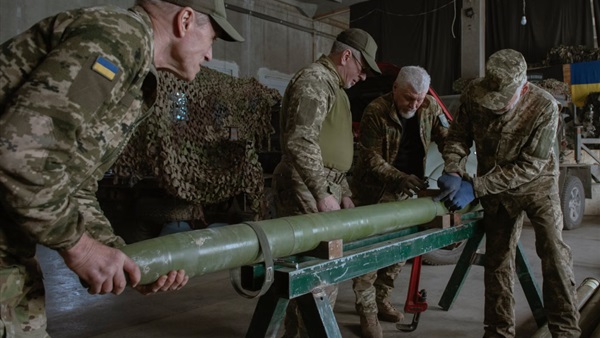
Ukraine’s Steppe Wolves are challenging conventional assumptions about age and military service. Initially rejected by the Ukrainian armed forces for exceeding the enlistment age limit, a group of older men established an independent partisan unit to defend their country against Russia’s full-scale invasion.
Calling themselves pioneers rather than pensioners, the volunteers refused to allow age to prevent them from contributing to Ukraine’s war effort.
Their story, documented by The New York Times in the Zaporizhzhia region, illustrates the determination of older Ukrainians, the importance of practical experience and the personal sacrifices underlying military service.
Too Old to Enlist, but Determined to Serve
The Steppe Wolves were founded by a man known by his military call sign, Grandpa, who was 65 when Russia launched its full-scale invasion of Ukraine in February 2022.
At the time, Ukrainian military recruitment regulations restricted enlistment to individuals aged 60 or younger, leaving him unable to join the armed forces through conventional channels.
Rather than abandon his determination to defend his country, he established an independent partisan group.
“No one can forbid me, at any age, from defending my country, my land, and my family,” he told The New York Times.
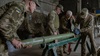
The group subsequently operated near Melitopol, Vasylivka and Kamianske. Today, it comprises approximately a dozen members and is primarily based in the Zaporizhzhia region.
Despite their initially unofficial status, the volunteers established working relationships with regular Ukrainian military units, contributing their technical expertise and participating in military operations.
Steppe Wolves Turn Professional Experience Into Military Support
Many members of the Steppe Wolves brought decades of professional and technical experience to their military activities.
Their work has included restoring damaged military equipment and supporting regular Ukrainian forces, demonstrating how civilian skills can remain valuable during wartime.
A Ukrainian artillery commander serving in a special operations unit, identified by his call sign Bush, said he had worked with the volunteers since 2022.
He described the group as effective and highly motivated, emphasising that its members provided practical military assistance rather than simply moral support.
The commander expressed his willingness to formally integrate the volunteers into his unit, arguing that motivation and ability should carry greater weight than age alone.
Like other military personnel interviewed for the report, he requested identification by his call sign in accordance with military protocol.
Older Volunteers Challenge Perceptions of Age
For Dnipro, a 64-year-old member of the unit, age represents experience rather than an obstacle.
Drawing on years of mechanical work, he contributes technical knowledge and teamwork skills to the group. Although he requires glasses while driving, he said he experiences no other physical limitations.
“We don’t feel old,” he said. “Not young, of course — but not old either.”
His perspective reflects a sentiment shared by several members of the Steppe Wolves, who believe their professional backgrounds, discipline and accumulated experience strengthen their ability to contribute.
Life at the group's base also reflects the camaraderie that has developed among its members. The volunteers share meals and have adopted a cat they discovered during a mission in Izium.
A Father Finds Purpose After Losing His Son
For Arsen, a 66-year-old former welder from Kharkiv, joining the Steppe Wolves was driven by deeply personal circumstances.
When Russia invaded Ukraine in 2022, he approached a military recruitment office but was told that his services were not required.
His son subsequently enlisted in January 2024. Although concerned for his safety, Arsen was proud of his decision to defend Ukraine.
Six months later, his son was killed.
Arsen spent approximately half a year grieving and withdrawing from social life before deciding that he needed to find a renewed sense of purpose.
That decision eventually led him to the Steppe Wolves.
His wife initially opposed his involvement but later came to understand his determination to serve.
“My son fought for me. Now I fight for him,” Arsen said.
He intends to remain with the group for as long as his health permits. Apart from requiring reading glasses, he reported having no physical limitations.
For Arsen, the unit has provided not only an opportunity to serve his country but also companionship and a renewed sense of belonging following an immense personal loss.
Unpaid Military Service Leaves Volunteers Without Protection
Petro, 68, a former professional weightlifter and coach, continues to exercise regularly to maintain the physical fitness required for his responsibilities.
Outside his military activities, he and his wife operate an animal shelter in Zaporizhzhia.
Despite performing duties alongside regular Ukrainian soldiers, Petro explained that the volunteers' unofficial status initially left them without salaries, military benefits or social protection.
He expressed particular concern that his family would receive no financial compensation if he were killed while serving.
Nevertheless, Petro maintained that his motivation was a sense of duty rather than financial reward.
What he wanted, he acknowledged, was greater recognition of the group's contribution and a formal arrangement that reflected the responsibilities its members had undertaken.
Their circumstances highlighted a significant gap between voluntary military participation and the institutional protections available to officially enlisted personnel.
Ukraine Opens Military Service to Volunteers Over 60
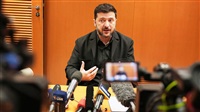
Against the backdrop of continuing troop shortages, Ukrainian President Volodymyr Zelensky signed a decree allowing individuals over the age of 60 to serve under one-year military contracts, with the possibility of renewal.
The measure created a pathway for older volunteers who had previously been excluded from formal military service.
However, delays in implementing the new arrangements initially left the Steppe Wolves uncertain about their future status.
Petro expressed disappointment that the group’s years of service had not immediately translated into formal recognition, while emphasising that defending Ukraine remained his primary concern.
Eventually, the volunteers received the recognition they had sought: one-year contracts with the Ukrainian armed forces.
After years of operating outside conventional military structures, the Steppe Wolves officially became members of Ukraine’s military.
Their experience highlights both the determination of older volunteers and the institutional challenges of accommodating them during a prolonged conflict. It also raises broader questions about how military organisations assess individual capabilities, recognise unconventional contributions and provide appropriate protections to those who serve.