Taiwan’s Silicon Shield: Turning Technological Supremacy Into National Security
Tuesday 24/November/2026 - 03:57 PM
Ahmed Seif El-din
Taiwan is leveraging its dominance in semiconductors, artificial intelligence and drone manufacturing to strengthen its national defence, deepen international partnerships and deter potential Chinese aggression.
Taiwan’s silicon shield is evolving beyond semiconductor manufacturing as the island seeks to transform its technological supremacy into a broader national security strategy. Facing mounting geopolitical pressure from Beijing, Taipei is integrating its advanced electronics industry, artificial intelligence capabilities and emerging drone sector into an asymmetric defence framework designed to protect its autonomy.
The transformation is particularly visible in Chiayi, a southern Taiwanese city historically renowned for its turkey rice, a culinary tradition introduced by American soldiers after World War II.
Eight decades later, Chiayi is developing a different military legacy. More than 50 companies and research institutions have established operations nearby, transforming the county into Taiwan’s leading hub for uncrewed aerial vehicles (UAVs), according to TIME.
Taiwan’s Drone Industry Gains Momentum From the Ukraine War
Taiwan’s drone industry gained renewed strategic importance following Russia’s full-scale invasion of Ukraine in February 2022, which demonstrated the growing role of commercial drone technology in modern warfare.
The widespread use of drones manufactured by China’s DJI raised cybersecurity concerns after reports emerged that the company’s AeroScope system could track operators’ real-time locations.
Against the backdrop of Beijing and Moscow’s declared “no-limits” partnership, Taiwan has sought to capitalise on growing international demand for technology supply chains independent of Chinese manufacturers, commonly described as “non-Red” supply chains.
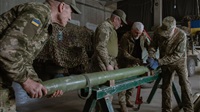
Chiayi-based Kunway Technology exemplifies this industrial transformation. Originally established as a manufacturer of agricultural drones more than a decade ago, the company shifted towards defence applications following the outbreak of the Ukraine war.
Kunway now supplies more than 2,000 UAVs to Ukraine each month.
David Liu, the company's chief executive, told TIME that Taiwan’s geographical isolation made domestic military manufacturing capabilities particularly important in the event of a conflict.
The company's transition reflects Taipei’s broader ambition to strengthen domestic defence production rather than depend entirely on overseas suppliers.
International Partnerships Strengthen Taiwan’s Defence Industry
After assuming office in May 2024, President Lai Ching-te designated drones as one of Taiwan’s five strategic “trustworthy industries”, intended to strengthen economic and technological cooperation with democratic partners.
Taiwan has subsequently signed memorandums of understanding with France, Poland, the Czech Republic and the United States as these countries seek alternatives to Chinese manufacturing, which accounts for approximately 70% to 80% of global drone production.
Puma Shen, a lawmaker from the ruling Democratic Progressive Party (DPP) who visited Ukraine in 2023, emphasised the importance of international cooperation among democratic countries.
Taiwan’s state-run National Chung-Shan Institute of Science and Technology (NCSIST) has also partnered with nine foreign software companies, including Anduril, Auterion and Shield AI, to advance autonomous systems and artificial intelligence applications in defence.
The country's rapidly expanding drone exports illustrate the scale of this industrial shift:
2024: 3,472 drones exported.
2025: 122,726 drones exported.
January–July 2026: 210,000 drones exported, valued at $238 million.
These figures reflect Taiwan’s growing role in international drone supply chains and its efforts to establish itself as an alternative manufacturing centre.
Taiwan’s Silicon Shield Extends Beyond Semiconductors
Although drones are becoming increasingly important, the foundation of Taiwan’s silicon shield remains its indispensable position within global technology supply chains.
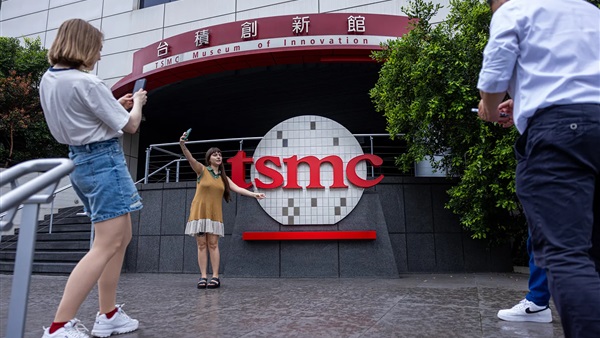
Taiwan Semiconductor Manufacturing Company (TSMC) produces more than 90% of the world’s most advanced semiconductor chips.
According to Taiwan’s Market Intelligence and Consulting Institute, Taiwanese manufacturers also assemble approximately 90% of global AI servers.
The island holds a dominant position in essential data centre infrastructure, including high-efficiency power supplies and liquid-cooling systems.
Major technology companies, including Apple, Nvidia, AMD and Qualcomm, depend extensively on Taiwanese manufacturing and semiconductor capabilities.
Taiwan’s central role in the artificial intelligence revolution has also strengthened its financial markets. In October 2026, the Taiwanese stock exchange briefly became the world’s fourth-largest by market capitalisation.
Qualcomm Chief Executive Cristiano Amon highlighted the semiconductor industry’s reliance on TSMC, noting that the company manufactures AI accelerators used by leading technology businesses.
By embedding itself deeply within global supply chains, Taiwan hopes to increase the economic consequences of a potential conflict across the Taiwan Strait, strengthening international incentives to preserve regional stability.
Global Technology Investment Reinforces Taiwan’s Strategic Importance
Taiwan’s technological influence was prominently displayed at COMPUTEX 2026, held under the theme “AI Together”.
The international technology exhibition attracted a record 111,312 buyers and industry representatives from 152 countries, bringing together 1,500 exhibitors across approximately 6,000 booths.
The event showcased developments in robotics, physical artificial intelligence and next-generation semiconductor technology.
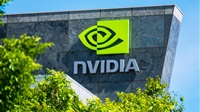
In late May, Nvidia also began construction of a $1.3 billion global headquarters in northern Taipei, designed to accommodate more than 10,000 engineers and researchers.
Taipei Mayor Chiang Wan-an attended the groundbreaking ceremony, reflecting the relatively broad political consensus surrounding the importance of maintaining Taiwan’s technological competitiveness.
Shen, the DPP candidate in Taipei’s November 28 mayoral election, stressed that attracting international investment requires not only technological capabilities but also skilled professionals and a supportive business environment.
Political Divisions Complicate Taiwan’s Defence Modernisation
Despite the strategic importance of Taiwan’s silicon shield, efforts to expand domestic defence manufacturing have encountered significant political resistance.
Opposition lawmakers repeatedly delayed the Lai administration’s proposed $40 billion special defence budget before approving a reduced package worth $25 billion.
Although the revised budget authorised two separate purchases of American weapons, it removed funding intended to strengthen Taiwan’s domestic defence industry.
The decision has created uncertainty surrounding indigenous projects, including the Strong Bow anti-ballistic missile programme, intended to form a central component of Taiwan’s proposed T-Dome air defence system.
Opposition leaders argue that their resistance reflects concerns about transparency and insufficient oversight of public spending.
The ruling DPP, meanwhile, accuses its political rivals of weakening national security in ways that benefit Beijing.
Cheng Li-wun, chairperson of the opposition Kuomintang (KMT), maintained that her party supported strengthening national defence but opposed authorising expenditure without sufficiently detailed proposals and oversight.
Domestic drone manufacturers also fear that their emerging industry could lose momentum if the KMT regains the presidency in 2028.
Chinese Supply Chain Dependence Remains a Major Challenge
Beyond political disagreements, Taiwan’s defence manufacturers face substantial commercial and industrial obstacles.
Taiwanese-produced drones cost approximately twice as much as comparable Chinese products, creating challenges for manufacturers seeking to compete internationally.
Supply chain dependencies present another significant difficulty.
Kunway, for example, regularly exports drones to Ukraine without batteries, which Ukrainian buyers purchase separately from China. The Taiwanese manufacturer also continues to import certain connector cables from Chinese suppliers to maintain hardware compatibility.
Industry representatives hope that expanding domestic manufacturing and developing alternative international supply chains will gradually reduce production costs and dependence on Chinese components.
Nevertheless, these challenges expose a fundamental contradiction in Taiwan’s strategy: building technological independence remains difficult while parts of its manufacturing ecosystem continue to rely on Chinese suppliers.
Can Taiwan’s Silicon Shield Guarantee Its Security?
Taiwan’s technological dominance represents both a strategic advantage and a potential vulnerability.
Its central position in semiconductor manufacturing, artificial intelligence infrastructure and advanced electronics increases the global economic consequences of any military confrontation involving the island.
However, concerns remain that the same technological capabilities could make Taiwan an increasingly valuable strategic objective for Beijing.
Despite these uncertainties, several technology executives remain confident that Taiwan’s economic importance provides substantial protection.
KS Pua, the Malaysian-born chief executive of Taiwanese memory technology company Phison, argued that the island’s strategic significance remains firmly established.
“The world needs Taiwan,” he told TIME.
Ultimately, Taiwan’s silicon shield reflects an ambitious effort to combine industrial competitiveness, technological innovation and international economic interdependence with national defence.
Its long-term effectiveness, however, will depend on more than technological supremacy. Domestic political cooperation, resilient supply chains, international partnerships and credible defence capabilities will remain essential to protecting the island’s 23 million residents.