TrumpCare Proposal Sparks Debate as Democrat Seeks Bipartisan Health Care Reform
Monday 23/November/2026 - 03:46 PM
Ahmed Seif El-din
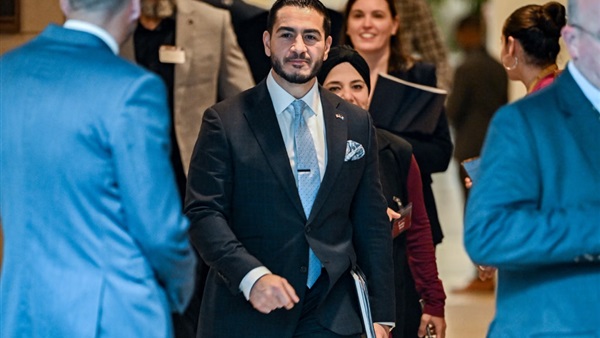
The TrumpCare proposal, introduced by Michigan Senator-elect Abdul El-Sayed, has sparked a political debate after President Donald Trump shared the progressive Democrat's suggestion to establish universal health care under the president's name. The unconventional initiative reflects an emerging strategy among newly elected Democrats to seek cooperation with Trump by appealing to his interest in political recognition and major legislative achievements.
According to a November 22, 2026, report by The New York Times, the proposal has attracted attention across party lines, although substantial ideological disagreements continue to stand in the way of comprehensive health care reform.
Abdul El-Sayed Introduces TrumpCare Proposal
El-Sayed, a progressive Democrat elected to represent Michigan in the U.S. Senate, unveiled the idea on November 12 through a social media post featuring mock-ups of gold-colored health insurance cards bearing Trump's name.
The concept was straightforward: Trump could receive public recognition for helping establish a system that guarantees health care coverage for all Americans.
El-Sayed presented the offer as an opportunity for bipartisan cooperation rather than a conventional political confrontation.
The president subsequently shared the proposal on his Truth Social platform without providing an explanation or publicly endorsing its policy details.
The White House has previously rejected the Medicare for All approach supported by El-Sayed, leaving uncertainty over whether Trump's response signals genuine interest or simply political engagement.
Medicare for All Remains Central to the Health Care Debate
The TrumpCare proposal is built around El-Sayed's support for expanding government-funded health insurance.
His preferred Medicare for All framework, as described in the report, would allow Americans to opt into publicly funded health coverage.
The broader objective is to guarantee access to medical care while reducing the financial barriers faced by individuals and families.
However, the proposal faces substantial opposition from Republicans who question whether expanded federal involvement would improve affordability or efficiency.
Some Democratic leaders also remain reluctant to embrace Medicare for All, favoring more incremental changes to the existing health insurance system.
These divisions suggest that political branding alone would be insufficient to secure congressional approval.
Democrats Explore New Strategy for Working With Trump
El-Sayed's approach reflects a wider shift among some newly elected Democrats who campaigned against Trump but are now considering unconventional ways to advance their policy priorities.
Rather than focusing exclusively on confrontation, these lawmakers are attempting to appeal to the president's desire for recognition and his reputation as a dealmaker.
During an interview on NBC's Meet the Press, El-Sayed emphasized that his primary responsibility was to improve health care access, regardless of who received political credit.
His strategy resembles an earlier initiative by New York Mayor Zohran Mamdani, who presented Trump with a mock newspaper front page promoting cooperation on city development.
Texas Senator-elect James Talarico has similarly suggested that Trump could establish a lasting legislative legacy comparable to that of former President Lyndon B. Johnson.
The common theme is an effort to connect Democratic policy objectives with the president's interest in historic achievements.
Progressive Democrats Signal Support for TrumpCare Branding
Minnesota Senator-elect Peggy Flanagan has expressed support for El-Sayed's willingness to compromise on the name of a universal health care initiative.
Speaking on CNN's State of the Union, Flanagan indicated that she would accept the TrumpCare label if doing so helped secure passage of meaningful health care legislation.
Her remarks highlight a distinction between political branding and policy substance.
For supporters, the name attached to a health care program matters less than whether it expands coverage and improves access to medical services.
Nevertheless, the TrumpCare proposal has not yet developed into a detailed bipartisan legislative agreement, and there is no indication that Republican leaders have accepted its central policy framework.
Republicans Challenge Government-Funded Health Care Expansion
Republican opposition remains one of the most significant obstacles facing the initiative.
Louisiana Senator John Kennedy dismissed the idea that attaching Trump's name to Medicare for All would make the proposal more acceptable to conservatives.
Kennedy argued that transferring greater responsibility for health insurance to the federal government would not necessarily reduce costs or improve the health care system.
His criticism reflects longstanding Republican concerns about government spending, federal administration and the potential consequences of expanding public insurance programs.
Trump himself previously supported efforts to repeal the Affordable Care Act, commonly known as Obamacare, although those efforts ultimately failed.
That history underscores the substantial distance between El-Sayed's policy objectives and the president's established positions on health care.
Political Strategists Divided Over El-Sayed's Approach
Political analysts have offered contrasting assessments of the senator-elect's strategy.
Democratic strategist Michael Ceraso described El-Sayed's approach as politically intelligent, suggesting that the proposal could create an opportunity to engage the president on an issue traditionally associated with partisan disagreement.
Republican strategist Matt Gorman was more skeptical, questioning El-Sayed's political judgment and ability to influence the administration.
The disagreement reflects broader uncertainty about whether symbolic appeals to Trump can overcome deep policy divisions.
The political environment also remains confrontational, with congressional Democrats preparing investigations into the administration and Trump signaling his willingness to veto legislation.
El-Sayed's Election Adds Significance to Bipartisan Outreach
El-Sayed's political profile has attracted national attention beyond his health care agenda.
As the first Muslim elected to the U.S. Senate, he faced Islamophobic attacks from Trump and other Republicans during his campaign.
He also criticized the president sharply throughout the midterm elections, portraying him as a divisive political figure.
His willingness to explore cooperation after winning office therefore represents a notable change in political tactics, though not necessarily in his underlying policy positions.
El-Sayed has argued that presidential support for Medicare for All could encourage additional Republican lawmakers to consider the proposal.
Whether that calculation is realistic remains uncertain.
Trump Signals Openness to Health Care Cooperation
Despite the political disagreements, Trump suggested during a Fox News interview on November 21 that Republicans and Democrats could potentially achieve significant results on health care and immigration.
His comments provided a limited indication that the administration might be open to discussing major domestic policy initiatives.
However, Trump did not endorse El-Sayed's Medicare for All framework or announce negotiations over the TrumpCare concept.
Political observers remain cautious about the prospects for substantial bipartisan legislation.
Republican strategist Gorman expressed pessimism that meaningful agreements would emerge from the current political environment.
TrumpCare Proposal Faces Uncertain Legislative Future
The TrumpCare proposal illustrates how some Democrats are attempting to navigate a divided political landscape by combining progressive policy ambitions with unconventional political messaging.
El-Sayed's initiative has succeeded in attracting presidential attention and generating debate over universal health coverage.
However, significant obstacles remain, including Republican resistance to government-funded insurance expansion, divisions within the Democratic Party and the absence of a negotiated legislative framework.
The central question is whether the president's interest in political recognition could translate into genuine support for health care reform.
For now, the proposal remains an attention-grabbing political overture rather than an agreed policy initiative, highlighting both the possibilities and limitations of bipartisan cooperation in Washington.