Europe Pension Crisis Fuels Youth Protests Over Rising Costs and Public Spending
Saturday 14/November/2026 - 01:41 PM
Ahmed Seif El-din
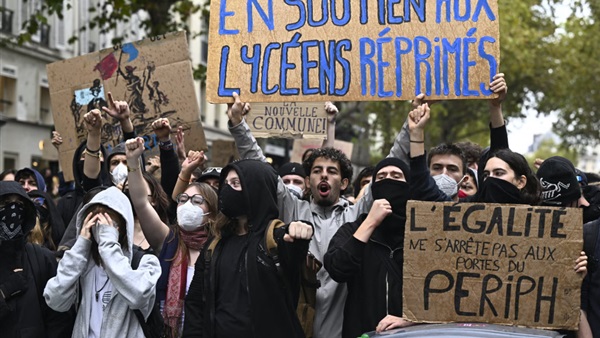
Europe's pension crisis is intensifying tensions between younger and older generations as governments struggle to finance retirement benefits while maintaining spending on education, housing and other public services. The growing divide has contributed to demonstrations across Europe, including major anti-government protests planned in France this weekend.
As Europeans live longer and retiree populations expand, younger workers increasingly question whether public budgets adequately reflect their economic needs.
Europe Pension Crisis Deepens Generational Divide
The Europe pension crisis has become a central issue in debates over government spending, particularly as younger generations face rising housing costs, stagnant wages and pressure on public services.
Pensions account for approximately 40% of social protection spending in the European Union, placing substantial demands on national budgets.
In France, 36-year-old data analyst Sébastien Ducros argues that pension expenditure limits investment in deteriorating schools. Meanwhile, 72-year-old retired postal worker Laurent Grinwald opposes reducing benefits after decades of employment, particularly amid rising living costs.
Jorge Galindo, director of Spain's EsadeEcPol think tank, described the growing disagreement as a "generational clash."
Youth Protests Spread Across European Countries
The Europe pension crisis is contributing to broader frustration among young people in France, Belgium, Germany, Greece, Italy and Portugal.
A recent European Union survey found that only 38% of people aged 15 to 30 believe policymakers consider the long-term consequences of their decisions.
Just one-third believe today's young people have opportunities comparable to those available three decades ago.
Increasing defence expenditure, higher borrowing costs and expensive housing markets have further strained public finances, intensifying competition over government resources.
However, pensions are not the sole cause of the demonstrations, which also reflect concerns about wages, education and living standards.
European Governments Face Difficult Pension Reforms
Governments have attempted to contain retirement spending by gradually increasing pension eligibility ages rather than directly reducing payments.
Denmark plans to raise its retirement age to 70 by 2040, while Spain adopted reforms in 2011 to increase its standard retirement age to 67 in most cases.
In France, President Emmanuel Macron's attempt to raise the retirement age from 62 to 64 in 2023 triggered widespread protests, and the measure was subsequently frozen.
France's substantial public debt has also constrained additional education spending, contributing to student dissatisfaction.
Britain, meanwhile, plans to reduce future expenditure by slowing the growth of pension payments.
Spain's Pension Spending Expected to Rise Sharply
Spain illustrates the long-term financial pressures behind Europe's pension crisis.
Its government has linked pension increases to inflation, protecting retirees' purchasing power while raising budgetary costs.
To support the system, Spain has expanded its workforce through immigration, with more than 1.7 million foreign workers entering the labor market since 2018.
Nevertheless, economists warn that these workers will eventually retire, creating additional future obligations.
According to the Organization for Economic Cooperation and Development, Spain's pension expenditure could reach 17.3% of GDP by 2050, approximately four percentage points above current levels.
That increase would represent an additional $67 billion annually in today's terms, compared with Spain's current education expenditure of approximately $79 billion.
Young Workers Question Retirement Spending Priorities
Some younger Europeans argue that pension benefits should be reassessed, particularly for wealthier retirees.
Alejandro Rojano, a 28-year-old bank employee in Madrid, said his grandparents receive considerably more in retirement benefits than his monthly salary of less than €2,000.
Yet many demonstrators hesitate to blame older generations directly.
Left-wing protesters often advocate higher taxes on wealthy individuals and corporations to fund public services, while some right-wing groups favor immigration restrictions and reductions in welfare spending.
Political analysts also note that retirees represent an influential voting bloc, making substantial pension reductions politically difficult.
Retirees Provide Financial Support to Younger Families
Despite growing concerns about intergenerational inequality, pension payments frequently support younger relatives struggling with low wages and expensive housing.
Daniel Ramo, a 46-year-old teacher in Madrid earning approximately €2,100 monthly after taxes, said he sometimes relies on financial assistance from his retired father.
Similarly, 72-year-old Encarna Matilla explained that her husband's €2,700 monthly pension helps support their great-grandchildren.
"We are the safety net," Matilla said.
These examples illustrate how retirement benefits can redistribute financial resources within families, complicating arguments that pension spending exclusively benefits older citizens.
Europe's Pension Crisis Presents Long-Term Political Challenge
Europe's pension crisis highlights the difficulty of balancing retirement security with investment in younger generations.
With ageing populations expanding and younger voters representing a shrinking demographic, governments face mounting pressure to reform pension systems without weakening the social protections on which millions depend.
The central challenge remains finding sustainable funding for pensions, education, housing and public services while maintaining fairness across generations.