Iran-Linked Attacks in Europe Target Jewish Sites and US Military Bases, Prosecutors Say
Saturday 14/November/2026 - 02:38 PM
Ahmed Seif El-din
Iran-linked attacks in Europe targeted Jewish institutions, American interests and military facilities during the US-Israeli war against Iran, according to newly disclosed allegations from US federal prosecutors. The investigation describes a network of Iranian-linked operatives and criminal associates accused of organizing arson attacks and attempted assaults across several European countries.
A federal indictment filed in New York this week provides details of alleged operations in Britain, France and the Netherlands, including plots against military installations used by American forces.
Iran-Linked Attacks in Europe Raise Security Concerns
According to prosecutors, the Iran-linked attacks in Europe began shortly after the US-Israeli military campaign against Iran earlier this year.
Investigators allege that operatives connected to Iran's Islamic Revolutionary Guard Corps (IRGC) and the Iraqi armed group Kataib Hezbollah recruited criminal associates to attack vulnerable civilian and military targets.
Authorities say the strategy was intended to impose costs on Western governments supporting military operations against Iran.
Security analyst Adrian Shtuni, an associate fellow at the International Center for Counter-Terrorism, described the alleged operations as part of a longstanding Iranian approach involving proxy organizations, criminal networks and cyber capabilities.
Prosecutors attribute the attacks to individuals associated with Iranian networks, although the precise extent of direction from Tehran has not been publicly established.
London Synagogues and Jewish Organizations Targeted
Britain experienced seven attacks attributed to the alleged network, more than any other country identified in the investigation.
US prosecutors say Iraqi national Mohammad Ali al-Hassani directed several operations remotely, using video calls to communicate with perpetrators in London.
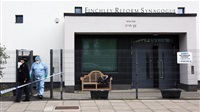
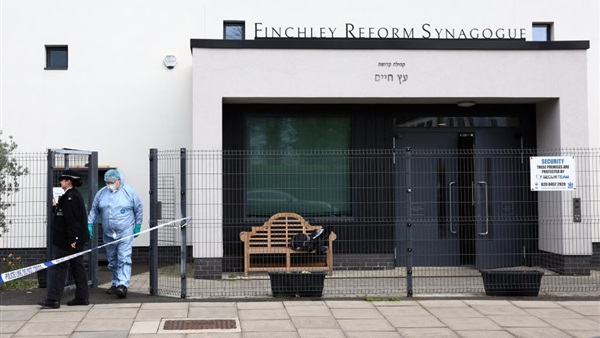
In an April 15 incident, investigators allege that al-Hassani instructed an attacker during an attempted arson at a synagogue in Finchley.
Two days later, prosecutors say he joined two associates on a video call while another perpetrator attacked a Jewish charity organization.
During a separate synagogue attack in late April, a 17-year-old threw an incendiary device through a broken window while receiving instructions remotely, according to investigators.
The teenager later pleaded guilty, saying he had not known the building was a synagogue and did not harbor hatred toward Jewish people. No injuries were reported, and the damage was limited.
The alleged network was also linked to the destruction of four ambulances belonging to a Jewish volunteer emergency service in London's Golders Green neighborhood.
US Prosecutors Identify Alleged Iranian-Linked Network
At the center of the investigation is Mohammad Baqer Saad Dawood al-Saadi, described by prosecutors as a senior Kataib Hezbollah commander with close connections to Iran's Revolutionary Guard.
Al-Saadi was arrested in Turkey and charged in May with organizing attacks in Europe and plotting violence against Jewish targets in the United States.
He is currently detained in Brooklyn.
Investigators identified two alleged associates: al-Hassani, an Iraqi national with criminal contacts in Britain, and Mohsen Mohajeri, an Iranian national described as an IRGC operative.
According to court documents, the men discussed acquiring drones and missiles through Iranian contacts shortly after the war began.
Prosecutors allege that Mohajeri subsequently traveled to Iraq to coordinate operations with al-Saadi.
The three men were also allegedly associated with a group calling itself HAYI, which claimed responsibility for approximately 18 attacks or plots across Europe and the United States during the spring.
Those claims have not all been independently established as completed attacks.
Alleged Plots Extend to France and the Netherlands
The Iran-linked attacks in Europe were not confined to Britain.
Investigators allege that al-Saadi directed explosions targeting branches of American banks in Amsterdam and Paris before his arrest in May.
Prosecutors say the network continued operating after his detention, with al-Saadi allegedly communicating coded instructions through relatives in Iraq.
According to court filings, conversations recorded during the summer indicated that his associates remained involved in planning further operations.
These allegations suggest that the network retained operational capabilities despite the arrest of one of its alleged senior organizers.
RAF Fairford Attack Plot Disrupted by British Police
One of the most serious alleged plots targeted RAF Fairford, a British military installation used by American bombers conducting operations against Iran.
Prosecutors say al-Hassani recruited at least five accomplices in Britain during August.
The group allegedly obtained vehicles and fuel and investigated materials intended for an attack on the base.
Investigators say the suspects prepared disguises for their vehicles to resemble legitimate commercial suppliers.
According to prosecutors, al-Saadi authorized the operation through family intermediaries on September 24.
The suspects reportedly approached the installation several nights later, but security checkpoints disrupted their movements.
British police arrested five men early on September 27 and recovered the vehicles before they entered the base.
The incident highlighted concerns about the vulnerability of military facilities supporting operations abroad.
US Aircraft Relocated Following RAF Mildenhall Threat
The security concerns continued this week when US officials reportedly detected an Iran-backed drone threat involving RAF Mildenhall in Suffolk, approximately 70 miles northeast of London.
According to three American officials cited in the original reporting, as many as 12 US military aircraft were moved to other European bases, including facilities in Germany, as a precaution.
RAF Mildenhall supports American aerial refueling and special operations activities and hosts approximately 1,000 military personnel.
Officials characterized the intelligence as a general warning rather than confirmation of an imminent attack.
Meanwhile, Iranian national security adviser Mohsen Rezaei warned in a television interview that American military bases in Europe could become targets if used to launch attacks against Iran.
Iran-Linked Attacks in Europe Highlight Wider Security Risks
The allegations surrounding Iran-linked attacks in Europe illustrate the security challenges facing governments supporting US military operations in the Middle East.
Investigators describe a network capable of targeting civilian institutions, Jewish organizations, financial interests and military facilities through relatively inexpensive operations.
However, the allegations remain subject to judicial proceedings, and responsibility for individual incidents must be distinguished from claims made by the alleged perpetrators.
As European authorities strengthen security around sensitive locations, analysts warn that proxy networks and criminal intermediaries could remain a persistent threat even if conventional military operations diminish.
The investigation underscores how conflicts in the Middle East can generate security consequences far beyond the immediate battlefield.