Congo Ebola Outbreak Worsens as Islamic State-Linked Violence Disrupts Aid
Saturday 14/November/2026 - 02:16 PM
Ahmed Seif El-din
The Congo Ebola outbreak is spreading across eastern Democratic Republic of Congo, where deadly attacks by Islamic State-affiliated militants are obstructing emergency medical assistance and leaving vulnerable communities struggling to contain the disease.
Six months after the outbreak began in May, infections have spread across eight provinces, with more than 5,000 deaths reported. Health officials warn that escalating violence, shortages of medical supplies and limited access to affected communities threaten containment efforts.
Congo Ebola Outbreak Spreads Across Eight Provinces
The Congo Ebola outbreak initially concentrated in several towns before expanding into multiple infection hotspots across a rainforest region approximately the size of Britain.
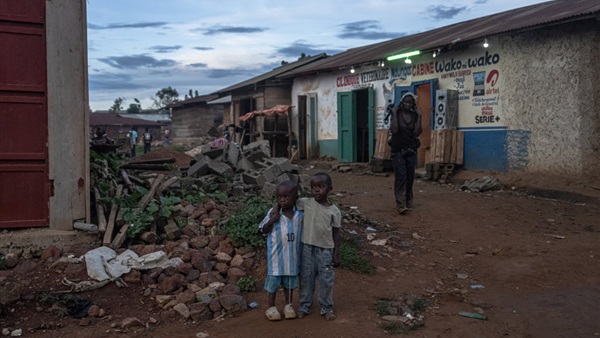
Biakato, a small town in Ituri province, has emerged as a major center of transmission, accounting for as much as one-quarter of newly reported cases nationwide.
Local health workers recorded approximately 300 infections in one month, compared with just 20 the previous month.
Despite the surge, Biakato's hospital had only two doctors, both reportedly unpaid for months. Shortages of protective equipment, intravenous fluids and essential medicines contributed to a reported 75% fatality rate among local Ebola patients.
Dr. Jean-Jacques Muyembe, who helped identify Ebola in 1976, criticized repeated failures in outbreak preparedness.
“We see the same mistakes as before,” he said.
Islamic State-Linked Militants Threaten Ebola Response
The Congo Ebola outbreak has become increasingly difficult to control because of violence by the Allied Democratic Forces (ADF), an armed group that pledged allegiance to Islamic State in 2019.
United Nations officials reported that militants recently killed 106 people in attacks across the region.
One major assault occurred approximately 25 miles south of Biakato, where fighters burned homes, businesses and healthcare facilities, forcing patients and thousands of residents to flee.
The displacement threatens to spread infections into previously unaffected communities.
Eastern Congo has experienced armed conflict for three decades, with ADF militants accused of killings, abductions and attacks against civilians.
In May, fighters attacked Biakato itself, killing 21 people. Ugandan troops subsequently began patrolling the town alongside Congolese forces under a bilateral security arrangement.
Medical Shortages Leave Ebola Patients at Risk
Conditions inside Biakato's hospital illustrate the severity of the public health emergency.
Patients were isolated behind inadequate barriers, while relatives sometimes entered treatment areas without protective equipment.
Unsafe contact with infected bodily fluids and difficulties arranging secure burials increased transmission risks.
Red Cross volunteer Jean-Lefranc Sakara described the pressure facing burial teams, which lacked sufficient training and frequently encountered hostility from grieving families.
Four members of his 12-person team reportedly resigned within a week because of safety concerns.
The challenges are especially serious because Ebola remains highly transmissible through direct contact with infected bodily fluids, including those of deceased patients.
Aid Organizations Struggle to Reach Affected Communities
Security threats have discouraged humanitarian organizations from establishing adequate treatment facilities in Biakato.
Doctors Without Borders operates a better-equipped Ebola treatment center in Beni, approximately 40 miles away, employing more than 200 staff members and maintaining strict infection-control procedures.
However, similar resources have been largely unavailable in Biakato.
Previous attacks against humanitarian workers have intensified security concerns. Four Doctors Without Borders employees were abducted in North Kivu in 2013, while three Ebola responders were killed during an attack on a World Health Organization guesthouse in Biakato in 2019.
Aid organizations have increasingly relied on helicopters to reach dangerous areas.
WHO Expands Emergency Response in Biakato
The World Health Organization has begun strengthening its response after local leaders appealed for urgent assistance.
Following an October 12 visit by senior health officials, the WHO deployed additional personnel and improved conditions at the town's treatment facilities.
The Congolese government established a diagnostic laboratory, while Swiss humanitarian organization Medair sent medical teams.
Nevertheless, health experts warn that contact tracing remains extremely difficult in rural areas controlled or threatened by armed groups.
Dr. Muyembe has suggested exploring communication with ADF militants to explain the health risks posed by Ebola, despite the government's longstanding refusal to negotiate with the organization.
Without access to affected communities, he warned, containment could become impossible.
Ebola Survivors Face Trauma and Community Distrust
Beyond the rising death toll, the Congo Ebola outbreak has exposed deep distrust between local residents, authorities and international aid organizations.
Decades of conflict, corruption allegations and repeated security failures have weakened confidence in government institutions.
Some residents accuse medical responders of exploiting the epidemic, complicating safe burial procedures and treatment efforts.
The human consequences are severe.
Moïse Kalindera, 27, died after experiencing worsening Ebola symptoms at Biakato's hospital. His roommate, 31-year-old farmworker Germain Kanyungu, survived after receiving two negative test results.
Kalindera's burial took place in a makeshift cemetery where more than 100 graves had already been dug among palm trees.
For families and healthcare workers, the expanding cemetery reflects the growing human cost of the emergency.
Congo Ebola Outbreak Raises Regional Health Concerns
The Congo Ebola outbreak has already claimed more than 5,000 lives, while health experts fear it could eventually surpass the 2014–2016 West African epidemic, which killed more than 11,000 people.
The Beni-Mambasa corridor remains particularly concerning, with reported transmission rates approximately twice the national average.
Although international assistance is expanding, ongoing militant violence, population displacement and limited healthcare infrastructure continue to undermine containment efforts.
Health authorities face the challenge of protecting medical teams while reaching infected communities before the disease spreads further.