Russia’s Shadow War in Germany Raises Security Fears Near Leipzig Airport
Wednesday 18/November/2026 - 02:46 PM
Ahmed Seif El-din
Russia’s shadow war in Germany is raising security concerns among residents living near Leipzig/Halle Airport, where suspected sabotage operations have brought geopolitical tensions closer to everyday life. German authorities have linked an attempted drone attack on a Ukrainian cargo aircraft to Russia, while Moscow denies involvement. The incidents have prompted tighter airport security and growing debate among nearby communities about the risks associated with supporting Ukraine.
Leipzig/Halle Airport Becomes a Focus of Security Concerns
For decades, residents of villages surrounding Leipzig/Halle Airport in eastern Germany have lived alongside busy runways, cargo operations and constant aircraft noise.
However, suspected acts of sabotage have transformed the airport into a focal point of Germany's response to potential Russian hybrid warfare.
Helmut Rost, a retiree from the nearby village of Freiroda, experienced the changing security environment when police warned him to remain at least nine feet from the airport fence while collecting dandelions for his rabbits.
The activity had previously attracted little attention, but heightened security measures now reflect concerns about possible attacks.
State police patrol the airport's exterior, while federal officers monitor internal facilities and operate systems designed to disrupt unauthorized drones.
Explosive Drone Attack Raises Fears of Russian Sabotage
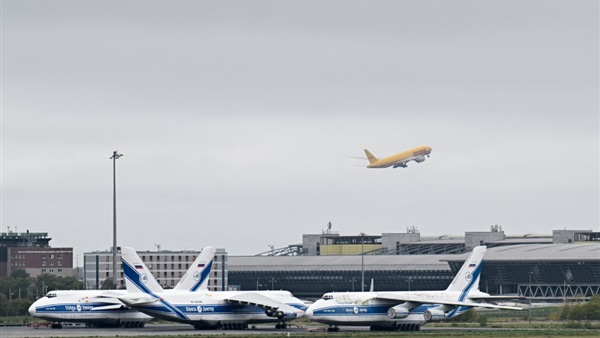
The most serious incident associated with Russia’s shadow war in Germany occurred in August 2026, when a bus driver discovered a drone carrying explosives near a Ukrainian Antonov cargo aircraft.
Security camera footage reportedly showed that the drone had struck the aircraft's wing before falling to the ground.
German security officials said that, had the explosive device detonated as intended, it could have ignited fuel stored in the wing and potentially destroyed the aircraft.
Weeks later, Germany's interior minister announced that authorities had obtained evidence linking the attempted attack to Russia.
Moscow rejected accusations of involvement.
In November, German federal police requested public assistance in identifying a suspected participant in the incident. Authorities distributed notices and displayed large wanted posters featuring an AI-generated image of a hooded man riding an electric bicycle.
The investigation remains a major concern for security officials and nearby communities.
DHL Parcel Fire Exposes Earlier Suspected Sabotage Attempt
The August incident followed another alarming episode at Leipzig/Halle Airport in July 2024.
A DHL parcel containing an incendiary device caught fire before being loaded onto an aircraft.
A flight delay meant that the package ignited while still on the ground, preventing what could have become a catastrophic incident during flight.
Western intelligence officials subsequently assessed that the operation was a Russian test of an aviation sabotage method.
The incident became one of several suspected clandestine operations targeting European countries supporting Ukraine.
German authorities have also investigated unexplained drone activity, threats against defense industry executives and weapons caches allegedly connected to Russian operations.
These developments have intensified attention on infrastructure security across Germany.
Ukrainian Cargo Operations Increase Airport's Strategic Importance
The significance of Leipzig/Halle Airport extends beyond regional passenger transportation.
The facility has become Germany's second-busiest cargo airport after Frankfurt, hosting operations by DHL, Amazon Air and Ukrainian cargo company Antonov Airlines.
Its role in international logistics has made it an important transportation hub during the war in Ukraine.
Some residents believe the airport's connection to Ukrainian operations has increased its vulnerability.
Michael Walde, a 65-year-old local teacher, described the facility as an increasingly important military transit point.
He argued that restricting the movement of military equipment through the civilian airport could reduce potential security threats.
However, his proposal reflects a local opinion rather than an announced policy by airport authorities.
Residents Divided Over Russia’s Alleged Hybrid Warfare
Despite growing attention to Russia’s shadow war in Germany, residents living around Leipzig/Halle Airport remain divided about the scale of the threat.
Sven Hösel, 55, who operates the Gasthof Ennewitz restaurant in Glesien, said people recognize the security risks but generally attempt to continue their daily routines.
His restaurant has become a gathering place where residents discuss airport incidents and local safety.
Recent concerns intensified after two men accidentally drove through the airport perimeter fence and fled without immediately reporting the incident.
Authorities discovered a large opening in the barrier before the men eventually turned themselves in.
The episode raised questions among residents about surveillance and the effectiveness of airport security systems.
An airport spokesperson maintained that the facility complies with applicable national and international perimeter security regulations.
Local Communities Balance Security Risks With Everyday Life
Approximately 20,000 people live in villages surrounding the airport's runways.
Many have spent decades in the area and value its open spaces, access to nature and convenient transportation connections to Leipzig.
For some residents, the noise from nightly DHL cargo flights remains a more immediate concern than geopolitical threats.
Others complain about declining passenger services, which have reduced the airport's economic contribution to the surrounding communities.
Residents have also expressed disappointment over reduced community support initiatives, including programmes that previously helped fund soundproof windows.
Sylvia Schimpf, 54, who heads the local council, said security incidents typically dominate conversations for a week or two before most residents return to their normal routines.
Nevertheless, she acknowledged that some people remain persistently worried.
Historical Ties Influence Local Attitudes Toward Moscow
Public opinion about the alleged sabotage incidents is also shaped by eastern Germany's political history.
Many residents grew up when the region belonged to East Germany, a Soviet-aligned state during the Cold War.
Some retain sympathetic views toward Moscow, contributing to skepticism about official accusations of Russian involvement.
Hösel acknowledged that local opinions remain divided over responsibility for the incidents.
Other residents believe the danger has been overstated.
Helmut Lehmann, for example, said he was not frightened by the security warnings, arguing that airport infrastructure could be vulnerable to simpler forms of attack.
Such reactions illustrate the different ways communities interpret security threats, particularly when intelligence assessments are not fully available to the public.
Russia’s Shadow War in Germany Highlights Wider European Security Challenges
The suspected attacks at Leipzig/Halle Airport demonstrate how allegations of Russia’s shadow war in Germany are affecting civilian infrastructure and communities far from the battlefield in Ukraine.
German authorities are responding through increased police patrols, drone countermeasures and investigations into suspected sabotage networks.
At the same time, local residents are confronting questions about airport security, military logistics and the consequences of Germany's support for Ukraine.
Although Russia denies responsibility for the alleged operations, the incidents have intensified European concerns about hybrid threats involving covert sabotage, drone technology and critical transportation infrastructure.
For the villages surrounding Leipzig/Halle Airport, the challenge is maintaining ordinary life while living beside a facility that has become increasingly significant in Europe's broader security confrontation.