Knesset Advances Bill on Prime Minister Term Limits That Could Block Netanyahu From Forming Government
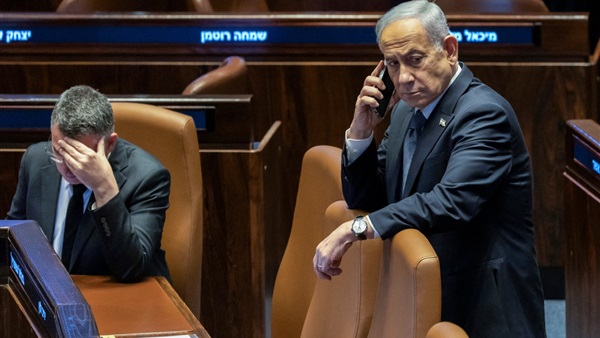
Israel’s Knesset has advanced a bill imposing prime minister term limits and restricting lawmakers facing certain criminal indictments from forming a government, a legislative move that could prevent Benjamin Netanyahu from returning to power as he stands trial in three corruption cases.
The proposed amendment to Basic Law: The Government passed its preliminary reading on Wednesday, November 25, 2026, with 65 lawmakers voting in favor and 48 against, reflecting the growing parliamentary influence of the political bloc led by former military chief Gadi Eisenkot.
The legislation was sponsored by Yisrael Beytenu lawmaker Oded Forer and other members of the Eisenkot-led bloc. It must undergo further committee deliberations and pass three additional parliamentary readings before becoming law.
Israel Proposes Eight-Year Prime Minister Term Limits
The proposed legislation would introduce an eight-year limit on consecutive service as prime minister, followed by a mandatory eight-year cooling-off period outside the government before an individual could return to the position.
The amendment would also prevent anyone with fewer than two years remaining before reaching the maximum term limit from being appointed prime minister.
Introducing prime minister term limits was among the principal campaign commitments made by Eisenkot’s political alliance ahead of Israel’s October 27 parliamentary election.
If enacted, the legislation would directly affect Netanyahu, Israel’s longest-serving prime minister, who has held the position for more than 19 non-consecutive years and began his current term in 2022.
Under the proposal, the provisions would take effect after the next Knesset is formed and would apply retrospectively to previous periods in office.
Criminal Indictments Could Prevent Netanyahu From Forming Government
Beyond prime minister term limits, the bill seeks to introduce legal restrictions on members of the Knesset facing pending felony indictments.
Under the proposed amendment, an indicted lawmaker would be prohibited from receiving a mandate to form a government unless the chairman of the Central Elections Committee determines that the alleged offense would not constitute moral turpitude, even if the accusations were proven.
The legislation would also empower Israel’s High Court of Justice to remove a sitting prime minister if it determines that the offense for which the individual has been indicted involves moral turpitude.
These provisions could have significant implications for Netanyahu, who faces charges of fraud and breach of trust in three corruption cases, as well as bribery in Case 4000.
Netanyahu denies all wrongdoing.
Under existing legislation, Netanyahu could still receive a mandate to form a government if Eisenkot fails to establish a governing coalition.
Eisenkot-Led Bloc Strengthens Parliamentary Influence
The preliminary approval follows the October 27 election, in which the Eisenkot-led bloc secured a parliamentary majority over Netanyahu’s political alliance.
Last week, lawmakers voted to remove Likud’s Amir Ohana as Knesset speaker and replace him with Matan Kahana, a member of Eisenkot’s Yashar party.
The leadership change has strengthened the bloc’s control over parliamentary proceedings, allowing it to advance legislative initiatives with support from Arab parties while Netanyahu continues to lead a caretaker government.
Assaf Shapira, head of the Political Reform Program at the Israel Democracy Institute, indicated that the bloc’s parliamentary majority could facilitate legislative action even before a new government is established.
Eisenkot received the mandate to form Israel’s next government on November 8. He has approximately two weeks remaining to complete coalition negotiations, with the option of requesting an additional 14-day extension.
Israel’s Political Transition and Judicial Reform
The proposed amendment comes amid broader legislative efforts to reverse key elements of the controversial judicial overhaul introduced by Netanyahu’s outgoing coalition.
Several bills seeking to repeal components of those reforms passed preliminary readings last week and were subsequently referred to parliamentary committees for further consideration.
Although the proposed prime minister term limits and indictment restrictions represent a significant development in Israel’s political transition, their implementation remains dependent on completing the legislative process.
Until the amendment receives final parliamentary approval and takes effect, the existing legal framework governing eligibility for the premiership and government formation remains unchanged.