Nvidia Stock Surge Fades as Trump’s Economic Policies Face Renewed Scrutiny
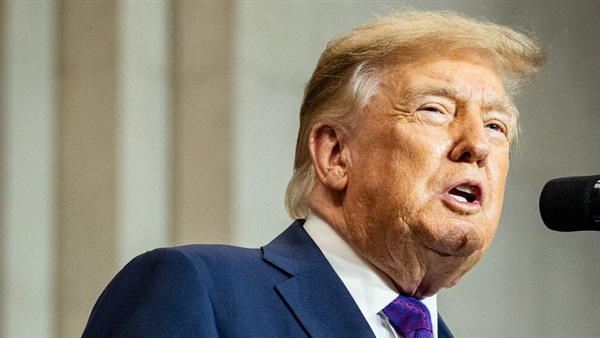
The Nvidia stock surge celebrated by US President Donald Trump following the reinstatement of Jensen Huang as the company’s chief executive has quickly lost momentum, exposing the limits of presidential influence over financial markets amid mounting concerns about artificial intelligence valuations, inflation, trade tariffs, and the economic consequences of the war with Iran.
Trump initially portrayed Nvidia’s dramatic market rally as evidence of his ability to influence corporate decisions and strengthen investor confidence. However, subsequent losses have highlighted the risks of interpreting short-term market gains as proof of lasting economic success.
Nvidia’s Market Rally Proves Short-Lived
Trump celebrated his success in persuading Nvidia’s board of directors to reinstate Huang, despite national security concerns surrounding the executive’s reported relationship with a suspected Chinese intelligence asset.
Nvidia shares surged more than 30 percent on Monday morning following the announcement, prompting Trump to describe the company’s trajectory enthusiastically during an interview with CNBC.
“Now it’s a rocket ship going in the right direction,” the president declared.
However, the Nvidia stock surge proved temporary. Shares declined by 5.9 percent on Tuesday and another 5 percent on Wednesday, reflecting renewed uncertainty surrounding the company’s long-term prospects.
The reversal suggests that investors may remain concerned about the implications of Huang’s resignation and subsequent reinstatement, alongside broader fears of a potential artificial intelligence investment bubble.
The initial market enthusiasm also appears to have been overshadowed by uncertainty surrounding Trump’s international trade policies and the continuing economic consequences of the conflict with Iran.
Trump Blames Democratic Election Victory for Market Decline
Throughout both presidential terms, Trump has frequently cited stock market performance as evidence of his economic leadership, while attributing market declines to factors beyond his administration’s control.
Following the reversal of the Nvidia stock surge, Trump blamed falling share prices on the November 3 election results, which returned Democrats to control of both chambers of Congress.
“Stocks are down sharply because of the November Third Election results,” Trump wrote on social media.
The president argued that the outcome would have been different had he personally appeared on the ballot and claimed that financial markets and Americans’ retirement investments would otherwise have performed strongly.
However, during the final weeks of the election campaign, Trump had encouraged voters to behave as though he were on the ballot. Exit polling suggested that many voters had assessed the election partly through their views of his presidency.
Although presidents routinely seek credit for economic achievements while distancing themselves from unfavourable developments, Trump’s reliance on immediate market reactions as validation of his policy decisions has made subsequent reversals particularly significant.
Iran War Continues to Weigh on Energy Markets
The economic consequences of the Iran war represent another example of the difficulties facing Trump’s market expectations.
Following his decision to launch military operations against Iran on February 28, Trump expressed confidence that disruptions to global energy markets would be temporary.
He anticipated that oil and gasoline prices would initially rise before declining as political changes in Iran potentially enabled renewed oil production.
On March 9, Trump also addressed speculation about the possibility of the United States acquiring Iranian oil resources, acknowledging that the idea had been discussed.
The president subsequently maintained that Iran had lost the war and repeatedly predicted that American fuel prices would decline, including assurances that prices would fall by Labor Day.
Those expectations failed to materialise.
Vice President JD Vance later attributed Republican electoral losses to the conflict, declaring that the war was responsible for the party’s loss of control over the House of Representatives and Senate.
Trump also attempted to ease domestic fuel costs by ordering purchases of Russian diesel, arguing that sanctions against Moscow were responsible for elevated diesel prices rather than developments in the Persian Gulf.
However, the volume purchased amounted to approximately one day of US consumption, making it insufficient to produce a meaningful market impact.
Trump’s Tariff Policies Add to Inflationary Pressure
Beyond the energy crisis, Trump’s trade policies have contributed to uncertainty across financial markets.
The president has repeatedly argued that foreign companies, rather than American consumers, bear the financial burden of import tariffs.
On Wednesday, his administration introduced another series of tariffs targeting imports from dozens of countries.
However, tariffs have contributed to inflationary pressures, with a key inflation indicator showing continued increases in October.
Persistent inflation has prompted the Federal Reserve to raise interest rates, producing an outcome contrary to the favourable market conditions Trump had anticipated.
Higher borrowing costs, trade uncertainty, and concerns about artificial intelligence valuations have complicated the economic environment in which the administration is seeking to demonstrate the success of its policies.
Nvidia’s Performance Highlights the Limits of Presidential Market Influence
Despite recent market losses, Trump continues to regard the Dow Jones Industrial Average and Nasdaq as important indicators of the effectiveness of his economic decisions.
Speaking to The New York Times, he defended his intervention in Nvidia’s leadership, arguing that highly talented American technology executives should be allowed to continue innovating despite personal mistakes.
Trump also maintained that financial markets would ultimately demonstrate that Huang’s reinstatement was beneficial to the company.
Nevertheless, Nvidia shares closed ahead of the Thanksgiving holiday at $149, approximately $100 below their peak at the beginning of October.
The reversal of the Nvidia stock surge illustrates the broader challenge confronting Trump’s economic agenda: presidential interventions may generate immediate investor enthusiasm, but sustained market performance depends on a wider range of economic, corporate, and geopolitical factors.
As inflation, trade tensions, energy prices, and uncertainty surrounding the artificial intelligence sector continue to influence investor sentiment, short-term stock market rallies remain an unreliable measure of long-term policy success.