Trump’s Iran Strategy: Seven Experts Outline Paths Toward Ending the War
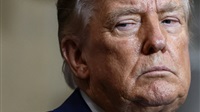
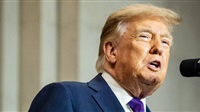
Trump’s Iran strategy faces a critical turning point nearly nine months after the United States and Israel launched Operation Epic Fury against Iran. With American military strikes largely suspended, the US naval blockade of the Strait of Hormuz continuing, and diplomatic negotiations apparently stalled, Washington faces mounting pressure to determine its next course of action.
In an analysis published by the Atlantic Council on November 25, 2026, seven foreign policy and national security experts presented competing recommendations for President Donald Trump, ranging from an immediate end to hostilities and renewed diplomatic engagement to sustained economic pressure and further military intervention.
Their assessments highlight fundamental disagreements over the effectiveness of military force, the future of Iran’s nuclear program, regional security, global energy markets, and the growing influence of Congress over US foreign policy.
Ending the Iran War and Lifting the Naval Blockade
Nate Swanson, director of the Atlantic Council’s Iran Strategy Project and former director for Iran at the National Security Council, argues that Trump should immediately end the war and lift the maritime blockade.
According to Swanson, renewed military operations are unlikely to produce substantially different results from previous confrontations. Although the United States and Israel possess considerable military capabilities, Iran has demonstrated its ability to retaliate asymmetrically against Washington’s Gulf allies and disrupt the global economy.
Swanson also questions the effectiveness of prolonged economic pressure, warning that Tehran is more likely to escalate tensions than accept unconditional surrender.
Iran’s reported preparations to challenge the blockade, alongside threats against Gulf energy infrastructure, illustrate the risks associated with maintaining the current confrontation. Swanson suggests that Tehran’s actions could reflect either economic desperation or a calculated attempt to determine the timing of another confrontation.
Public opposition to the conflict presents another challenge. According to recent Reuters/Ipsos polling cited in the analysis, 71 percent of Americans want the incoming Congress to end the Iran war.
Swanson maintains that ending hostilities would not require Washington to abandon its objectives concerning nuclear nonproliferation or freedom of navigation through the Strait of Hormuz. Instead, Trump’s Iran strategy should prioritize diplomatic negotiations, conditional sanctions relief, and realistic concessions.
He further argues that the war has strengthened the Islamic Republic’s domestic position by allowing its leadership to mobilize public support around national defense, despite the severe economic, environmental, and political legitimacy challenges Iran faced before the conflict.
Ending the war, he suggests, could expose Iranian authorities to renewed domestic pressure over governance and economic performance.
Increasing Pressure on Tehran to Secure a Strategic Victory
Matthew Kroenig, a senior fellow at the Atlantic Council’s Scowcroft Center for Strategy and Security and former US defense and intelligence official, advocates a substantially more confrontational approach.
Kroenig identifies three potential outcomes to the conflict:
- The collapse of the Islamic Republic.
- A negotiated settlement restricting Iran’s nuclear program and reopening the Strait of Hormuz.
- An American withdrawal that leaves Tehran’s nuclear activities unconstrained and Iran in control of the strategic waterway.
He considers the first outcome preferable, the second acceptable, and the third incompatible with US and allied interests.
Kroenig also rejects the indefinite continuation of the current blockade as an ultimately sustainable solution.
In his assessment, Iranian leaders would accept meaningful nuclear concessions only if they believed the survival of their government was under serious threat. He argues that the memorandum of understanding reached during the summer failed to establish sufficient restrictions on Tehran’s nuclear activities or its claimed authority over the strait.
Kroenig recommends that Trump clearly communicate his objectives to the American public through a presidential address, strengthen international diplomatic coordination, intensify economic sanctions, and maintain military pressure.
He identifies Germany as a potential starting point for building international support, citing German Chancellor Friedrich Merz’s assessment that the Iranian government could be approaching its final days.
His recommendations also include international planning for Iran’s eventual reconstruction, stronger regional defense cooperation, and support for Iranian opposition movements.
Kroenig believes that ending the Islamic Republic would represent the most significant long-term achievement of Trump’s Iran strategy, although such an outcome remains uncertain.
Maintaining the Strait of Hormuz Blockade
Andrew Peek, director of the Adrienne Arsht National Security Resilience Initiative and the GeoStrategy Initiative, recommends maintaining the naval blockade for another one or two months to determine whether economic pressure can produce more favorable negotiating conditions.
Peek points to previous diplomatic developments following international sanctions imposed in 2010 and restrictions targeting Iran’s banking sector in 2012.
He argues that Tehran’s current negotiating position seeks to connect sanctions relief primarily to reopening the Strait of Hormuz rather than nuclear concessions, alongside demands for ceasefires in Lebanon and elsewhere.
Accepting such conditions, he maintains, would represent a departure from three decades of American policy toward Iran.
Peek also identifies a temporary domestic political opportunity following the US midterm elections. He estimates that Trump has a four-to-six-month window before inflationary pressures and economic concerns become increasingly influential in the approaching presidential primary season.
Maintaining the blockade during this period could provide Washington with additional negotiating leverage. However, Peek acknowledges that Iran may respond by escalating tensions with American forces or neighboring countries.
An immediate withdrawal could ease inflationary pressures in the short term, but he warns that Iran might subsequently attempt to introduce fees on maritime traffic through the strait, increasing global energy costs and establishing a precedent for future restrictions on international navigation.
Renewed military escalation remains another possibility, although Peek warns that Iranian retaliation against Gulf energy infrastructure could increase inflation and impose further political costs on Washington.
Establishing a Ceasefire for the Next US Administration
Jennifer Gavito, a nonresident senior fellow at the Atlantic Council’s Scowcroft Middle East Security Initiative, argues that the deterioration of trust between Washington and Tehran has made a comprehensive agreement increasingly difficult.
Gavito criticizes Trump’s inconsistent positions following the midterm elections, noting that the president has alternated between threatening renewed military action, suggesting withdrawal, and expressing interest in a long-term diplomatic settlement.
She believes the administration missed an earlier opportunity to pursue a durable agreement when Washington appeared more willing to offer meaningful economic and political concessions.
Under current circumstances, Gavito recommends establishing a sustainable ceasefire that reduces tensions and allows the next US administration to negotiate a more comprehensive settlement.
Such an arrangement could resemble the April ceasefire and include the mutual removal of maritime restrictions, partial sanctions relief, the gradual release of frozen Iranian assets, moderate nuclear concessions, and a separate commitment to suspend missile production.
Gavito acknowledges that this arrangement would not necessarily prevent future confrontations. Nevertheless, it could reduce immediate economic pressures, restore a minimum level of diplomatic trust, and create more favorable conditions for future negotiations.
Reviving Nuclear Diplomacy Through an Expanded Agreement
Nicholas Hopton, a former British ambassador to Iran, Qatar, Yemen, and Libya, advocates renewed diplomatic engagement supported by coordinated international economic pressure.
Hopton describes the February 28 military intervention as a strategic miscalculation and argues that preventing Iran from developing nuclear weapons should remain Washington’s central objective.
He proposes a gradual diplomatic process involving confidence-building measures, agreement on the scope of negotiations, and the eventual establishment of a sustainable long-term settlement.
His preferred approach involves an expanded version of the Joint Comprehensive Plan of Action (JCPOA), the 2015 nuclear agreement from which Trump withdrew during his first presidential term.
Hopton identifies the June 17 memorandum of understanding negotiated in Islamabad and signed by Trump and Iranian leaders as a potential foundation for renewed negotiations.
An expanded Islamabad Agreement addressing Iran’s nuclear capabilities, combined with the removal of primary US sanctions, could potentially transform relations between Washington and Tehran and encourage economic and political changes within Iran.
However, Hopton remains skeptical about the prospects for an immediate breakthrough, citing deep mutual distrust and uncertainty over Trump’s willingness to prioritize diplomacy.
Despite extensive damage to its military capabilities, infrastructure, and leadership, Iran remains resilient and considers itself capable of negotiating from a position of strength, according to Hopton.
He argues that sustainable political transformation should emerge internally rather than through foreign military intervention. A ground invasion, he warns, could provoke civil war and further destabilize the Middle East.
His proposed diplomatic framework would therefore accept the continued existence of the Islamic Republic in the near term while creating conditions for peaceful political evolution, regional trade, and greater international investment.
Congressional Opposition Could Reshape Trump’s Iran Strategy
Tressa Guenov, senior director for programs and operations at the Atlantic Council’s Scowcroft Center for Strategy and Security, emphasizes the growing domestic political constraints facing the Trump administration.
The Democrat-led 120th Congress, scheduled to take office in January 2027, is expected to increase pressure on the president to end the war and restrict its funding.
Guenov anticipates that Democratic lawmakers could introduce a joint resolution seeking to terminate hostilities and potentially use the National Defense Authorization Act (NDAA) as leverage against continued military operations.
Congressional scrutiny is also expected to focus on the billions of dollars already spent on the conflict, damage to American military infrastructure, depleted equipment and munitions, troop welfare, prolonged deployments, and broader US defense readiness.
Lawmakers could additionally investigate civilian casualties, including the February 28 strike on a school in Minab, Iran. Guenov also suggests that opposition to the war could delay the confirmation of presidential nominees in the Senate.
Beyond military spending, she highlights continuing security concerns involving Iranian-linked activities abroad.
Federal prosecutors in New York charged alleged Iranian operatives earlier in November with planning attacks in the United States. French authorities also accused Iran’s Islamic Revolutionary Guard Corps (IRGC) in October of conducting cyberattacks that damaged freezer systems in France.
Guenov argues that Washington lacks an apparent comprehensive interagency strategy to address these threats.
She also expects increasing bipartisan scrutiny of military and intelligence cooperation between Russia and Iran, particularly reports alleging Russian assistance to Tehran in identifying American military positions.
Trump has dismissed concerns surrounding those reports and expressed confidence in Russian President Vladimir Putin’s denials.
As the presidential primary season approaches, Guenov expects lawmakers from both parties to intensify pressure on the administration to address the broader security implications of Russian-Iranian cooperation.
Securing Bipartisan Support for US Defense Spending
Nic Adams, a nonresident senior fellow at the Atlantic Council’s Scowcroft Middle East Security Initiative, recommends maintaining the blockade while securing bipartisan congressional support for defense funding.
With Democrats set to control both chambers of Congress in January 2027, Adams argues that Republicans and Democrats should work toward an outcome consistent with long-term American foreign policy objectives.
He interprets Tehran’s increasingly confrontational statements regarding the naval blockade as evidence that economic pressure is affecting Iran, despite its continued public defiance.
Adams also highlights the blockade’s implications for China’s energy security, arguing that disruptions to Iranian oil exports place additional pressure on Washington’s principal strategic competitor in the Pacific.
Rather than immediately resuming offensive military operations or accepting Iranian control over the Strait of Hormuz, Adams recommends using sustained pressure to secure a negotiated settlement.
Such an agreement, he argues, should address both Iran’s nuclear ambitions and its support for regional proxy forces.
He also advocates greater investment in advanced defense technologies, including autonomous systems and counter-drone capabilities, to protect American infrastructure, support naval operations, and reduce pressure on US military readiness.
Adams maintains that Washington retains significant leverage in the Strait of Hormuz and should use it through coordinated action between the White House and Congress.
Washington Faces a Defining Decision Over Iran
The seven Atlantic Council experts offer sharply contrasting assessments of how the United States should resolve its confrontation with Iran.
While some advocate an immediate ceasefire and renewed diplomacy, others favor maintaining economic and military pressure to secure stronger concessions or fundamental political change within the Islamic Republic.
Their recommendations nevertheless reveal several common concerns: preventing Iranian nuclear proliferation, protecting international maritime navigation, safeguarding regional allies, limiting economic disruption, and preserving American military readiness.
The central challenge facing Trump’s Iran strategy is determining whether continued pressure can produce meaningful concessions without triggering another destructive confrontation or whether diplomatic compromise offers a more sustainable path toward regional stability.
With congressional opposition growing, public support for the war weakening, and global energy markets remaining vulnerable, the administration’s next decision could have lasting consequences for US foreign policy, Middle Eastern security, and the international economy.