Gadi Eisenkot Warns Against New Iran Strikes as Netanyahu Battles to Retain Power
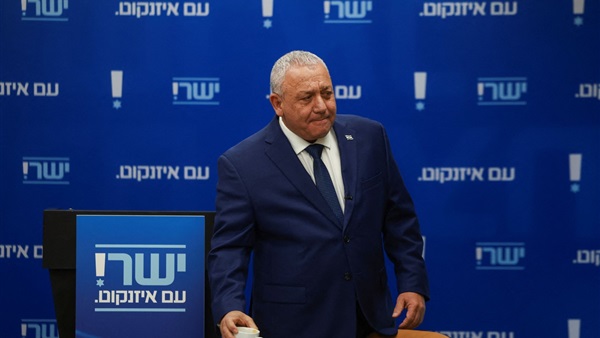
Gadi Eisenkot has intensified his warnings against renewed military strikes on Iran as negotiations over Israel’s next government enter a decisive stage, exposing deep divisions between the former military chief and interim Prime Minister Benjamin Netanyahu over national security, political leadership, and the future of the conflict with Tehran.
The prospect of renewed Israeli and American military operations against Iran has emerged as a central point of contention between the two leaders following Israel’s October 27 parliamentary election, which deprived Netanyahu of his governing majority.
While Eisenkot is working to establish a new governing coalition by December, Netanyahu has continued pressing US President Donald Trump to resume military action against Iran, prompting concerns among political opponents and members of Israel’s security establishment.
Eisenkot Warns Against Politically Motivated Military Escalation
Gadi Eisenkot has accused Netanyahu of increasingly blurring the distinction between Israel’s national security interests and his personal political survival.
“We are in very dangerous territory,” Eisenkot said on Friday, criticising the outgoing prime minister’s conduct.
Speaking at a parliamentary party meeting on Monday, Eisenkot maintained that Iran currently poses no direct or immediate threat requiring Israeli military intervention before a new government is formed.
Netanyahu rejected that assessment during a meeting of his Likud party, accusing those who minimise Iranian threats of acting for political reasons.
The interim prime minister also renewed his call for a national unity government, an arrangement that could allow him to remain in office through a power-sharing agreement.
Netanyahu’s critics argue that his increasingly confrontational position towards Iran could be intended to pressure Eisenkot into accepting a unity coalition or undermine negotiations and trigger another parliamentary election.
Gayil Talshir, a political scientist at the Hebrew University of Jerusalem, suggested that renewed tensions with Iran could provide Netanyahu with a means of altering the current political situation in his favour.
Netanyahu Intensifies Efforts to Secure US Military Support
Supporters of Netanyahu maintain that his calls for renewed military action are primarily driven by strategic security considerations rather than domestic political calculations.
According to a person familiar with discussions within Netanyahu’s office, the prime minister believes Iran is attempting to replenish its missile capabilities and restore its air defences, making the current period particularly significant for Israeli security objectives.
The individual, speaking anonymously because of the sensitivity of the discussions, also described the outcome of the confrontation with Iran as an important component of Netanyahu’s political legacy.
Israeli and international media reports have detailed Netanyahu’s repeated communications with Trump and diplomatic efforts involving the White House, the Central Intelligence Agency (CIA), and US Central Command to secure American support for renewed military operations.
The Washington Post previously reported, citing four individuals familiar with the matter, that Netanyahu had instructed Mossad Director Roman Gofman before the October election to prepare a covert operation against Iran without informing his cabinet or Israel’s military chief of staff.
An Israeli security official rejected the report, describing it as a false accusation.
Gofman subsequently travelled to Washington for discussions with CIA Director John Ratcliffe and White House envoy Steve Witkoff.
According to Axios, the Mossad director presented Israeli intelligence concerning alleged Iranian efforts to develop chemical weapons and advocated renewed military action.
However, Netanyahu’s assessment of the urgency of further strikes has reportedly received limited support within Israel’s own intelligence establishment.
Officials from Mossad’s research division told Haaretz on Monday that several recent security discussions had identified no immediate requirement for military intervention against Iran.
Iran’s Enriched Uranium Stockpile Remains a Major Concern
Despite opposing immediate military escalation, Gadi Eisenkot acknowledged that Iran continues to present serious security challenges for Israel.
The former military chief identified Tehran’s remaining stockpile of approximately 440 kilograms of enriched uranium as the most pressing concern, noting that the material apparently survived weeks of Israeli and American military operations.
Eisenkot argued that addressing the unresolved nuclear issue should take priority over launching another round of military strikes.
Meanwhile, Trump has not ruled out further military action, despite pressure from US Vice President JD Vance and Persian Gulf leaders to pursue an end to the conflict.
The American president has repeatedly claimed victory in the war and maintained that Iran is approaching economic collapse.
Speaking to Reuters on Thursday while returning to Washington from China, Trump indicated that discussions concerning potential renewed strikes could resume after the beginning of the new year, suggesting that an immediate decision was not necessary.
Eisenkot Explores Three Paths to Forming Israel’s Next Government
The dispute over Iran coincides with a critical phase in Israel’s coalition negotiations.
Eisenkot received the presidential mandate to form a government on November 8, granting him an initial 28-day negotiating period. A possible 14-day extension would move the final deadline to December 20.
His four-party opposition bloc controls 48 of the Knesset’s 120 seats, leaving it 13 seats short of the 61 required for an outright parliamentary majority.
Eisenkot is currently considering three principal coalition options:
- A national unity government with Netanyahu’s Likud party.
- A coalition involving ultra-Orthodox religious parties, potentially requiring a compromise over military conscription exemptions for yeshiva students.
- A minority government supported by Arab political parties, which secured an unprecedented 19 parliamentary seats.
Eisenkot has emphasised his intention to establish a stable government capable of securing broad public confidence as quickly as possible.
Ultra-Orthodox Parties Could Hold the Balance of Power
Political analysts have identified growing prospects for an agreement between Eisenkot and one or more ultra-Orthodox parties traditionally aligned with Netanyahu.
Several religious political leaders have become increasingly dissatisfied with Netanyahu over his failure to preserve and expand military conscription exemptions for ultra-Orthodox religious students.
At the same time, some members of Eisenkot’s political alliance who previously opposed such exemptions have indicated greater willingness to consider a compromise.
Among them is former Defence Minister Avigdor Liberman, leader of the Yisrael Beiteinu party.
Late Tuesday, Eisenkot’s party announced that it had reached a coalition agreement with Yisrael Beiteinu, marking the first publicly announced agreement in his efforts to establish a government. Details of the arrangement were not disclosed.
Speaking to Israel’s public broadcaster Kan on Wednesday, Liberman rejected the possibility of a minority government, insisting that the next administration would have a Jewish parliamentary majority.
He also suggested that a broader coalition agreement could be reached soon.
Kan separately reported significant progress in negotiations between Eisenkot and the ultra-Orthodox United Torah Judaism party.
However, the left-wing Democrats party, which holds eight parliamentary seats, announced on Tuesday that it was suspending negotiations with Eisenkot, citing progress in discussions over a potential unity government with Netanyahu.
Netanyahu’s Political Future Complicates Unity Government Talks
A coalition between Eisenkot and Likud would establish a substantial parliamentary majority but conflict with the opposition’s declared objective of removing Netanyahu from power.
Netanyahu has served as Israel’s prime minister for approximately 19 of the past 30 years.
Negotiators representing the two sides met on Monday evening for the third time in two weeks to discuss possible power-sharing arrangements.
Israeli unity governments typically involve a rotation agreement under which political leaders alternate in the premiership. Eisenkot’s allies have insisted that he should serve first, a condition that Talshir believes Netanyahu is unlikely to accept.
The disagreement over leadership remains a major obstacle to establishing a unity coalition, despite its potential parliamentary strength.
Arab Parties Remain a Controversial Coalition Alternative
If negotiations with Likud and the religious parties fail, Eisenkot could seek parliamentary approval for a minority government.
Under Israeli law, a government can take office without controlling 61 seats, provided that more lawmakers vote in favour than against its formation.
Such an arrangement would almost certainly require Arab political parties to support the government or abstain during the parliamentary vote. However, several of Eisenkot’s political allies have expressed opposition to this option.
Netanyahu has intensified his rhetoric against Arab parties, accusing them of positions incompatible with Israel’s national security interests.
His remarks come amid allegations that Likud orchestrated the arrests of Arab political activists on election day. Those allegations remain unproven in the supplied reporting.
The controversy surrounding Arab parliamentary participation further complicates Eisenkot’s efforts to assemble a viable governing coalition.
Renewed Iran Conflict Could Reshape Israel’s Political Landscape
If Gadi Eisenkot fails to establish a government, Israel would most likely face another parliamentary election, with Netanyahu continuing to serve as caretaker prime minister.
However, renewed military confrontation with Iran could significantly alter the political calculations surrounding coalition negotiations.
Following the Hamas-led attacks of October 7, 2023, Eisenkot agreed to join Netanyahu’s emergency war cabinet despite their political differences.
Some Netanyahu supporters believe that another major national security crisis could persuade Eisenkot to participate in a similar emergency arrangement.
The competing positions on Iran have therefore become inseparable from Israel’s leadership contest, with decisions concerning military escalation carrying potentially significant consequences for both regional security and domestic political stability.
As coalition negotiations approach their deadline, the central question remains whether Eisenkot can establish an alternative government before renewed regional tensions reshape Israel’s political landscape.