Jared Kushner Faces Criticism Over Echoing Putin’s Narrative on the Ukraine War
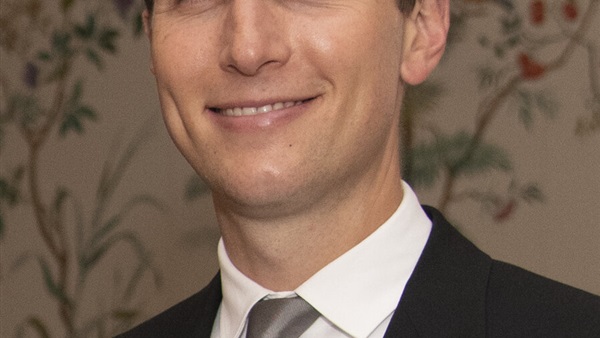
Donald Trump’s envoy risks shifting responsibility for Russia’s invasion of Ukraine and encouraging a peace settlement that rewards aggression, argues foreign affairs commentator David Blair.
Jared Kushner has come under criticism for remarks that appear to echo Russian President Vladimir Putin’s interpretation of the Ukraine war, raising concerns about the direction of U.S.-led peace negotiations and the future of European security.
Writing in The Telegraph, Chief Foreign Affairs Commentator David Blair argues that Kushner’s four visits to Moscow as President Donald Trump’s envoy have left him increasingly receptive to the Kremlin’s narrative about the origins of the conflict.
Blair warns that shifting responsibility away from Moscow could undermine Ukrainian sovereignty, reward Russian aggression and establish a dangerous precedent for future international conflicts.
Jared Kushner and the Kremlin’s Narrative on Ukraine
At the center of Blair’s criticism is Russia’s attempt to portray the war as a consequence of European security arrangements rather than a deliberate decision by Moscow to invade its neighbor.
Russia initially attacked Ukraine in 2014, seizing approximately 10,000 square miles of Ukrainian territory before launching its full-scale invasion in February 2022.
According to Blair, Putin seeks to redirect international attention toward what the Kremlin describes as the conflict’s underlying causes, particularly its longstanding objections to NATO expansion and Europe’s security architecture.
Under this interpretation, ending hostilities requires more than a ceasefire. Moscow argues that a broader restructuring of European security arrangements is necessary to address Russian concerns.
Blair contends that accepting this premise risks obscuring Russia’s responsibility for initiating and escalating the conflict.
During a podcast interview with Mathias Döpfner, chief executive of Axel Springer, which owns The Telegraph, Jared Kushner identified the establishment of a postwar security architecture as a central priority, linking it directly to the underlying causes of the conflict.
For Blair, these remarks demonstrate how closely the American envoy’s assessment resembles the Kremlin’s diplomatic position.
NATO Expansion and the Origins of the Russia-Ukraine War
Putin has repeatedly portrayed NATO’s eastward expansion as a threat to Russian national security.
However, Blair emphasizes that countries including Estonia, Poland and the Czech Republic pursued NATO membership after emerging from Soviet domination or occupation between 1989 and 1991, seeking protection against future aggression.
Their decisions, he argues, must be understood within the historical context of Russian expansionism and repeated violations of their sovereignty.
Although Kushner acknowledged NATO’s defensive character during the interview, he also suggested that former U.S. President George W. Bush initiated the alliance’s eastward expansion and that President Joe Biden subsequently invited Ukraine to join NATO.
Blair challenges this account, arguing that Biden did not extend a formal membership invitation to Kyiv. Instead, he reiterated the commitment made at NATO’s 2008 Bucharest summit that Ukraine would eventually become a member.
Ukraine did not receive the Membership Action Plan that would have advanced its accession prospects.
Furthermore, Russia’s military intervention in Ukraine began in 2014, more than six years before Biden assumed the presidency.
Blair also criticizes Kushner’s description of how the conflict began, arguing that his language minimizes the deliberate political and military decisions made by Putin.
Kushner’s Relationship With Senior Russian Officials
Another concern raised in the commentary is Jared Kushner’s openly favorable assessment of senior Russian officials involved in diplomatic negotiations.
During the interview, Kushner described Kirill Dmitriev, head of Russia’s sovereign wealth fund, as “an incredible friend of mine” and a strong supporter of peace.
He also praised Yuri Ushakov, Putin’s foreign policy adviser, and characterized the Russian president as a “grand master of politics” with a deep understanding of international affairs.
Blair questions whether Kushner’s close relationships with Russian negotiators have influenced his interpretation of the conflict.
However, the commentary does not establish whether Russian officials directly supplied Kushner with the historical account he presented during the interview.
The distinction is significant because maintaining diplomatic relationships with opposing parties is a necessary component of peace negotiations, but it does not require accepting their interpretation of disputed events.
Different Standards for Russia and Ukraine
Blair also identifies what he considers an imbalance in Kushner’s assessment of Russian and Ukrainian military conduct.
Kushner praised Putin for exercising restraint by refraining from using nuclear weapons. Blair argues that presenting nuclear non-use as evidence of restraint establishes an exceptionally low standard for evaluating Russian behavior.
Meanwhile, Kushner appeared critical of Ukrainian President Volodymyr Zelensky over Ukrainian strikes targeting Russian oil refineries.
According to Blair, this contrast suggests that the American envoy applies different standards when assessing Moscow’s military actions and Kyiv’s efforts to defend itself.
The commentator argues that such an approach could weaken Ukraine’s negotiating position and complicate efforts to achieve a durable peace settlement.
European Security and the Helsinki Final Act
Blair further challenges the argument that Europe requires an entirely new security architecture to resolve the Ukraine war.
He points to the Helsinki Final Act of 1975, which established 10 fundamental principles governing relations between participating states.
These principles include sovereign equality, the prohibition of threats or the use of force, the inviolability of national borders and respect for territorial integrity.
In Blair’s assessment, the fundamental problem is not the absence of an established European security framework but Russia’s violation of commitments it previously accepted.
He therefore argues that a sustainable settlement should prioritize compliance with existing international obligations rather than replace them with arrangements designed primarily to accommodate Moscow’s demands.
Peace Negotiations Risk Rewarding Russian Aggression
The central dilemma facing international peace negotiators is how to end the bloodshed without legitimizing territorial conquest or undermining the principles of national sovereignty.
Blair warns that an excessive focus on securing an immediate agreement could encourage concessions that reward military aggression and increase the likelihood of future conflicts.
His criticism ultimately centers on Kushner’s declaration that ending the killing takes precedence over determining fairness or responsibility.
While stopping hostilities remains an essential humanitarian objective, Blair argues that the terms of any agreement will determine whether it establishes lasting peace or merely postpones another confrontation.
From this perspective, the challenge facing Jared Kushner and the Trump administration is not simply to negotiate an end to the Russia-Ukraine war, but to ensure that the resulting settlement does not undermine the international principles intended to prevent future wars.