Children of North Korean Defectors Face Growing Threat to Their Educational Sanctuary in Seoul
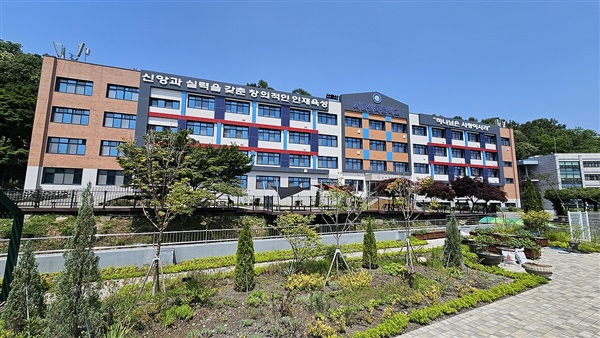
Yeomyung School provides education, emotional support and a sense of belonging to students from North Korean refugee families. Opposition to its proposed permanent campus has exposed deeper challenges surrounding discrimination and social integration in South Korea.
For the children of North Korean defectors, Yeomyung School in western Seoul offers more than an education. It provides a refuge from discrimination, social exclusion and the lasting consequences of displacement. Now, opposition from neighborhood residents to the construction of a permanent campus threatens the future of an institution that many vulnerable students consider their only educational sanctuary.
Kang Il-kwon, 17, barely remembers North Korea. He was a toddler when his parents fled the country and eventually settled in South Korea.
At his previous school, classmates singled him out because of his North Korean origins, challenging him to insult North Korean leader Kim Jong-un as though his loyalty to South Korea needed to be proven.
When he enrolled at Yeomyung in 2023, he believed he had finally escaped that prejudice. However, a growing neighborhood campaign against the school has renewed his concerns about acceptance.
Residents have placed posters at nearby bus stops demanding that Yeomyung relocate and calling for the property to accommodate facilities serving the local community.
“It’s unpleasant,” Il-kwon said. “I hope things will improve once they truly understand what kind of students we are.”
Children of North Korean Defectors Struggle for Social Acceptance
South Korea officially promotes the integration of North Korean refugees as part of its longstanding commitment to eventual Korean reunification.
However, eight decades of separation have widened the political, economic and emotional divisions between the two Koreas.
Many South Koreans, particularly younger generations, have grown increasingly concerned about North Korea’s nuclear threat while prioritizing domestic challenges such as unemployment and rising living costs.
A government survey conducted in 2025 found that South Koreans were less accommodating toward North Korean defectors than toward migrant workers from other countries.
For refugee families who have risked their lives escaping North Korea, resettlement in the South can bring unexpected difficulties, including social prejudice, economic hardship and limited opportunities for advancement.
Their children frequently encounter additional challenges, ranging from interrupted education and language barriers to bullying and difficulties establishing friendships.
Although Yeomyung’s students are South Korean citizens with a constitutional right to education, the opposition to their school highlights the gap between formal citizenship and social acceptance.
Yeomyung School Offers Education and Emotional Recovery
Yeomyung is one of five schools of its kind in South Korea, providing specialized educational opportunities for children from North Korean refugee families.
Daily life resembles that of an ordinary school. Students attend lessons, practice musical instruments, participate in physical activities and gather for lunch.
However, many carry the physical and psychological consequences of experiences that preceded their arrival in South Korea.
During art therapy sessions, some students have depicted executions and severe deprivation in North Korea. One drawing portrayed orphaned children waiting for food scraps near a table occupied by police officers.
A medical examination also found that more than half of the school's approximately 100 students needed dental implants.
“They bear the pains of North Korean refugees,” said Cho Myung Sook, the school's principal, who helped establish Yeomyung in 2004.
The institution provides an environment where students can address educational disadvantages, recover from traumatic experiences and develop a sense of belonging without concealing their family backgrounds.
A Humanitarian Mission Born During North Korea’s Famine
Cho’s commitment to supporting North Korean refugees began in 1997, when she traveled to China for her honeymoon and encountered people escaping widespread famine.
Among them was a severely malnourished 16-year-old boy who was barely four feet tall. Having lost his parents, he was responsible for supporting two younger siblings.
Cho provided him with several hundred dollars before he returned across the Tumen River into North Korea. She never learned what happened to him.
The encounter strengthened her determination to assist vulnerable North Korean children.
During her time in China, Cho witnessed the devastating circumstances facing undocumented refugees. Many feared deportation to North Korea, where they risked torture, forced labor or execution.
Women and girls were particularly vulnerable to human trafficking, with some sold to men in rural Chinese communities.
Cho subsequently became one of the earliest activists helping North Korean refugees reach South Korea through Southeast Asia.
More than 34,000 North Korean defectors have since reached South Korea, where the government provides citizenship, financial assistance and affordable housing as part of its integration policy.
While some employers have praised refugees for their work ethic and determination to save money and support relatives, others have expressed resentment over the perceived burden on public welfare, healthcare and education services.
Language Barriers and Discrimination Complicate Refugee Integration
The children of North Korean defectors often experience educational disruption during prolonged and difficult migration journeys.
Some were born in China to North Korean women who had been trafficked or forced into relationships with Chinese men. Many grew up speaking only Chinese.
In some cases, their mothers reached South Korea alone, remarried and were reunited with their children years later.
These circumstances frequently leave young people struggling to adapt to unfamiliar family arrangements, educational systems and social environments.
At mainstream schools, some have faced derogatory references to their North Korean or Chinese backgrounds.
Il-kwon said he previously avoided revealing his origins whenever possible to protect himself from discrimination.
Another Yeomyung student, identified only by her surname, Han, to protect relatives remaining in North Korea, recalled being rejected for employment because of her North Korean accent.
Despite obtaining South Korean citizenship, she said she continued to feel socially disadvantaged.
At 31, Han is Yeomyung’s oldest student. She spends three hours commuting daily between her home south of Seoul and the school, where she is pursuing the high school diploma needed to qualify for employment as an assistant nurse.
She said Yeomyung offered her an educational opportunity that other institutions had denied because of her age.
Residents Oppose Yeomyung School’s $12 Million Campus
Since its establishment, Yeomyung, whose name means dawn, has operated from successive rented properties.
In 2023, the school relocated to its current premises, a former elementary school that had closed because of declining enrollment.
With its lease scheduled to expire in February 2027, Yeomyung reached a temporary agreement with government authorities in July 2026 to construct a permanent campus on part of the property.
The proposed development is expected to cost the equivalent of $12 million. Funding was raised through donations, including contributions from Hyundai Motor Group and former students who donated their first paychecks.
However, the proposal encountered immediate opposition from neighborhood residents.
During a community meeting in September, residents demanded that the institution relocate. Cho knelt before attendees, pleading with them to recognize that her students had nowhere else to go.
Opponents subsequently directed complaints toward government agencies, politicians and social media platforms. One online comment questioned the Korean identity of students with Chinese fathers.
Nevertheless, several residents interviewed by The New York Times maintained that their objections concerned government planning decisions rather than the students’ ethnic or family backgrounds.
The neighborhood’s original elementary school closed in 2020 after enrollment declined to 170 students. Residents questioned why authorities would approve a new educational facility for Yeomyung’s 103 students, who primarily come from outside the neighborhood.
Winnie Lee, a resident of 45 years, said officials had previously promised to transform the former school into a preschool facility that could attract families with young children.
Government authorities, however, maintained that most of the property would still be allocated to the promised preschool center.
The dispute has exposed competing concerns over neighborhood development, public resources and educational access for vulnerable students.
A School That Restores Hope and Belonging
For 14-year-old Heo Seong-hun, Yeomyung represents an opportunity to overcome years of isolation.
Born in China in 2012 to a North Korean refugee mother, he arrived in South Korea four years later.
Before enrolling at Yeomyung in 2025, he attended three elementary schools, where he struggled to establish friendships.
His mother’s illness and limited memories of his Chinese father have added to the emotional difficulties he has experienced growing up.
At Yeomyung, however, he says he has discovered a supportive community and developed ambitions for his future.
“I feel loved and changed here,” he said. “I now have a dream: to one day become a teacher and take care of my mom myself.”
As Yeomyung faces uncertainty over its permanent campus, the experiences of its students illustrate the broader challenges confronting the children of North Korean defectors.
Their stories raise an important question for South Korea: whether granting citizenship and providing financial assistance can achieve meaningful integration without addressing the social prejudice and educational barriers that continue to affect refugee families.
For students like Seong-hun, the hope is that their school will eventually be accepted as what he believes it should be — just another school.