The Trilogy of the City, the
River, and Life
The City:
Was it you whom the city loved,
or someone else entirely?!
You walk alone along its roads at
night, recalling the sun of Abib (July), the courtyard of the old house, the
river, the Ibrahimiya Canal, and your companions. You stagger under a moment of
longing and await the final farewell.
The old man appears on the house
steps, his white beard trembling as he weeps. Grandmother has died. When I came
to her, she would seat me on her lap, knead for me from wheat flour and honey
enough to sate my craving for sweets, and tell me about him and his horse at
night—that bond that kept teasing my imagination.
I always wondered: why doesn’t my
father ride the horse like my grandfather?!
Those first innocent questions
vanished when my grandfather burst into tears. My father stood there, his arms
hanging loose, while I clutched his hand, fixing my eyes on the sight of the
men carrying my grandmother’s coffin, then rushing toward her room, crying.
Fifty-five years or more… I was
six years old, and my father forty-one. The three of us sat together at night
after the crowd had dispersed, wrapped in the silence of pain; in the evening I
collapsed into my mother’s arms and fell asleep.
The River:
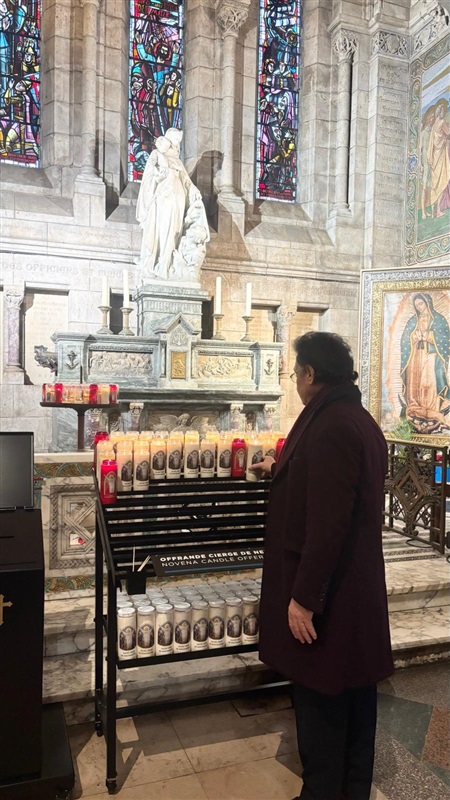
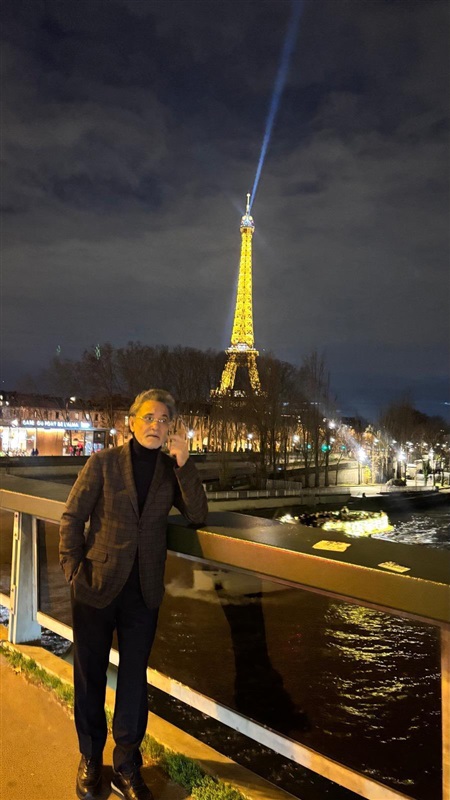
On the banks of the Seine, Paris
opens her arms to me every evening; she welcomes me laughing as usual and asks:
Where have you been, stranger?!
I was sitting at Café “La Paix,”
my lady,
where the greats convene—Victor
Hugo, Marcel Proust, Émile Zola.
Do you still frequent cafés at
this age?!
After the friends departed,
nothing remained for me but the café, the fools, and the rain spilling through
gaps in the clouds, my lady!
She laughs, then moves on,
staring ahead.
I search for you in every image
that appears before me—in the shops, in the cafés. I travel after you…
I enter every airport and ask at
every hotel; perhaps it happens that you are there. How can I fight fifty years
on two fronts? How can I scatter my flesh across two continents and keep
staring at distant dates, seeing no one but you?
In Paris evenings, wishes
abound—as does sorrow.
A fierce anger seizes me: the
atmosphere is inspiring, and I am incapable of writing. Nothing defeats me like
my inability to write when the doors are wide open, the air is favorable, and
autumn tears the horizons apart.
There is my youngest daughter
calling from afar: write about our childhood with you—about buying toys,
listening to songs, and traveling across seas.
And the river whispers to me: why
not trespass the distances between the seasons and write of the downpour, the
dawning of day, the silence of fields, and the murmur of grapes?
Once the Bedouin said to her:
pour—every year the grapes ripen!
The streets of the Champs-Élysées
are crowded with passersby; all glances hurry past—no one stares at anyone in
this city but me.
Perhaps I was searching for a
melody I had lost.
From which wind-defying sea does
it come?
Perhaps I was seeking a day on
the bank of the Seine that the suns had forsaken!
In Paris evenings, everything is
clear.
The streets, the shops, the
fashions, the flowers, the flute—everything is clear, like daylight.
“Édouard,” the flutist, comes to
me smiling, blowing another piece for the Lady of Arab Song:
You and I wronged love with our
own hands; we turned against it and wounded it until it melted around us…
Neither of us wanted to be more merciful than the other, or to sacrifice for
the other.
Nothing remains of the memories
of long years but it, he tells me, pointing to the flute, and continues to
play.
He asks with manufactured
astonishment: where have the great ones gone?!
I do not turn to his question. He
ambushes me with names: Sabah, Warda, Abdel Halim, Wadih El Safi—then adds:
they were here, lighting up Paris evenings, and I was with them, playing the
most beautiful melodies… then he goes.
There I realize that distances
have withered, that the city can no longer bear my sorrow, and that separation
is inevitable.
Life:
On this earth there is what
deserves life: my mother’s prayers; my father’s bones in his grave; the cries
of the mothers of martyrs demanding vengeance; the love of beautiful girls for
soldiers’ caps; a hymn of love at Ismail Pasha Opera; Alexandria’s Corniche; an
old zār procession at the thresholds of the Household of the Prophet; the
longing of the possessed; the tears of old women at the funerals of loved ones;
the narrow streets of our village; Downtown; Café Riche; the Automobile Club;
the Grian; Madbouly Bookstore; and Merit Publishing House.
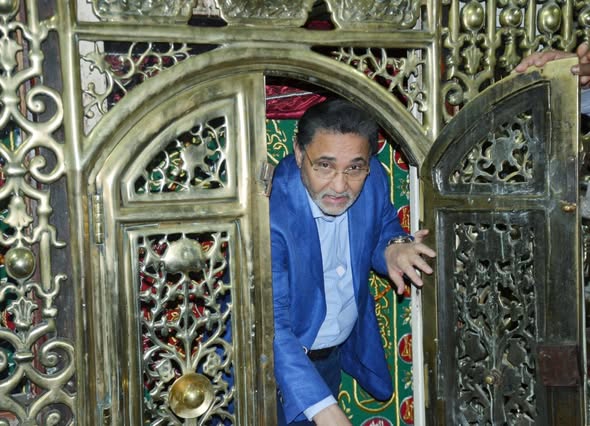
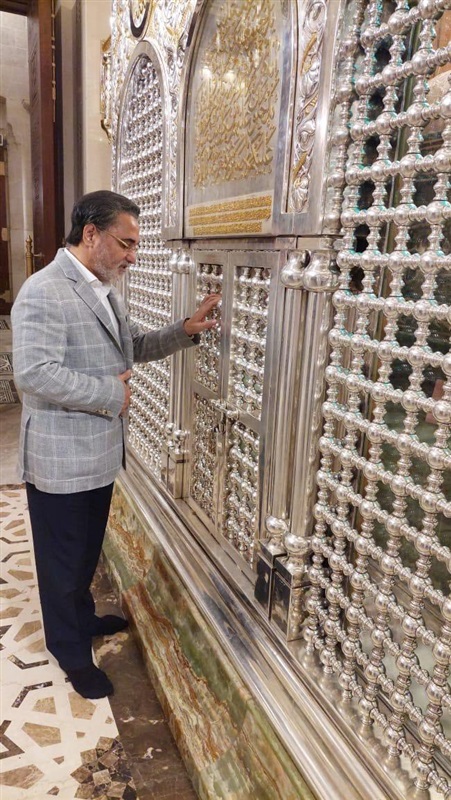
The vicinity of Sayyid al-Badawi,
Sidi Ibrahim al-Desouqi, and Imam Abu al-Hasan al-Shadhili; the thresholds of
the Household of the Prophet; dawn prayer at Sayyidina al-Hussein; supper at
the shrine of Lady Nafisa; and the recitation of the wird at the head of the
dīwān…
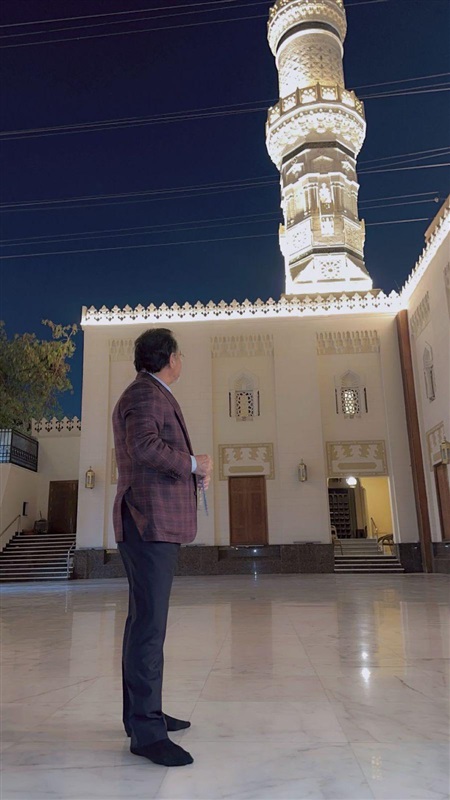
The Marqasiya Church and al-Azhar
Mosque; papyrus; the pyramids; the head of the steadfast Sphinx for thousands
of years; the recitations of Mustafa Ismail, Abdel Basit Abd al-Samad,
al-Minshawi, and Muhammad Rifaat; the fragrant life of Pope Kyrillos; Sheikh
Abd al-Ghani al-Nabulsi; Muhammad Abduh; and Imam Abd al-Halim Mahmoud.
Monasteries and mosques steeped
in our tears, longing, joy, and sorrow for four decades—the Monastery of the
Virgin Mary, Deir al-Muharraq, and Saint Catherine; streets and cities; our
love for their sands, their greenery, their scent, their air, and their water;
their villages and quarters—this eternal truth dwelling in the three letters:
“Egypt,” and the trilogy of the city, the river, and life.
Paris: five o’clock
in the evening, Cairo time.