At moments of major transformation within closed political systems, the real leaders do not always appear at the forefront.
Rather, their influence is shaped in the “gray zones” that connect the security apparatus, the religious establishment, and the political economy of the state.
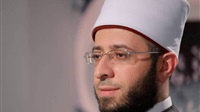
In Iran—where religious legitimacy intersects with the structure of a complex security-military state—the name Mojtaba Khamenei emerges as one of the most enigmatic and influential figures within the architecture of the regime.
Not because he holds a prominent official position, but because he represents—according to many within decision-making circles—the link between the “Leader’s household” and the deep state that forms the backbone of the Iranian system.
As war and regional tensions escalate, the question surrounding Mojtaba Khamenei is no longer merely a personal one concerning the Supreme Leader’s son. It has become a structural question related to the future of the regime itself:
Does his rise represent a guarantee of the system’s continuity?
Or does it carry within it a legitimacy dilemma that could accelerate the erosion of Iran’s governing structure?
From the Shadow to the Center of the Equation
Mojtaba Khamenei was born in 1969 in the city of Mashhad. He is the second son of Supreme Leader Ali Khamenei.
He studied religious sciences in the Qom seminary and apprenticed under several prominent jurists. Yet his real trajectory did not take shape within jurisprudence as much as it did within the Office of the Supreme Leader and the networks of power associated with it.
Over the past two decades, his name has increasingly circulated inside Iran as one of the most influential figures in several sensitive files within the regime, including:
• Managing the network of the Supreme Leader’s Office
• Relations with the Islamic Revolutionary Guard Corps (IRGC)
• Political and economic financing networks
• Coordination between security and political institutions
Although his public media presence is almost nonexistent, his influence within the regime’s structure has been exercised from behind the scenes.
For this reason, he has acquired within Iranian political circles an unofficial title that reflects the nature of his position:
“The Shadow Man in the Leader’s House.”
The Network of Influence
To understand Mojtaba Khamenei’s role, one must first understand the nature of real power in Iran.
Authority is not concentrated solely in constitutional institutions such as:
• The Presidency
• The Parliament
• The Government
Rather, it lies within a deeper system that can be described as the deep state of the Islamic Republic, composed of four main circles.
1. The Office of the Supreme Leader
The Office of the Supreme Leader constitutes the true center for coordinating decision-making within the Iranian system.
It is not merely an administrative office but a complex network that includes:
• Influential clerics
• Security advisers
• Former IRGC commanders
• Directors of economic institutions affiliated with the Leader
In recent years, Mojtaba Khamenei has played an increasing role in managing this sensitive network, particularly as the Supreme Leader has grown older and faced health challenges.
2. Economic Institutions Affiliated with the Leader
These institutions represent one of the pillars of the Iranian regime’s economic power. Among the most prominent are:
• The Foundation of the Oppressed (Bonyad Mostazafan)
• The Astan Quds Razavi Foundation
• The Execution of Imam Khomeini’s Order (EIKO)
The Astan Quds Razavi Foundation is one of the largest religious and economic institutions in Iran. It administers the shrine of Imam Ali ibn Musa al-Reza in Mashhad and controls an extensive network of investments.
The Execution of Imam Khomeini’s Order is a massive economic institution established to implement the directives of Imam Khomeini after the 1979 revolution. It also manages a wide network of companies and investments inside Iran and abroad.
Influence within these institutions provides the ability to:
• Finance political activities
• Support the regime’s social networks
• Fund the Revolutionary Guard
• Finance the regime’s regional proxies such as Hezbollah, the Houthis, and several Iraqi Shiite organizations
3. The Religious Establishment in Qom
The Iranian system constantly requires a religious cover that grants legitimacy to political authority.
For this reason, relations with the clerical authorities of the Qom seminary play a decisive role in any transfer of power.
Over the past years, Mojtaba Khamenei has worked to build relations with some circles within the seminary, although his jurisprudential standing remains the subject of debate within the religious establishment.
4. The Revolutionary Guard
Today, the Islamic Revolutionary Guard Corps represents the most important center of power within the Iranian regime.
It is not merely a military institution but a multi-functional entity that includes:
• A massive military force
• A wide-reaching security apparatus
• An economic empire
• A major regional actor
Over the past decade, the Revolutionary Guard has become the real guarantor of the regime’s stability.
Therefore, no new Supreme Leader can come to power without the support or acceptance of this institution.
In recent years, Mojtaba Khamenei has successfully built close relations with several leading commanders and cadres of the Revolutionary Guard, leveraging his role as the link between the Leader’s household, the Leader’s Office, and the Guard.
He is seen not merely as a cleric, but as a guarantor of the system whose continuity protects their interests.
The Equation of the Assembly of Experts
Article 111 of the Iranian constitution stipulates that the Supreme Leader is selected by the Assembly of Experts, a council composed of elected clerics.
However, Iran’s political experience indicates that the final decision is not made within the council alone.
Rather, it is shaped through delicate balances among several centers of power:
• The Revolutionary Guard
• The Office of the Supreme Leader
• The religious establishment
• The conservative political elite
Thus, the selection of the next Supreme Leader depends on a complex equation combining:
Religious legitimacy + security balance + endorsement by the deep state.
In this context, Mojtaba Khamenei’s name emerges as someone capable of representing the element of continuity within this equation.
Yet the core problem lies in a highly sensitive point: the dilemma of hereditary succession.
The Legitimacy Crisis and the Risk of Becoming a “Hereditary Republic”
The Islamic Republic was established in 1979 on the idea of overthrowing a hereditary monarchy.
Therefore, the transfer of power from father to son could raise an extremely sensitive question within Iranian society:
Has the Islamic Republic become a hereditary system?
This question could generate challenges on two levels.
First: the popular challenge
Segments of Iranian society may view hereditary succession as a deviation from the spirit of the revolution that rose against monarchy.
Second: the challenge within the religious establishment
Some clerical authorities may refuse to grant jurisprudential legitimacy to a transfer of power that appears close to political inheritance.
Here lies the paradox:
Mojtaba Khamenei may be the safest option for the system’s continuity, yet at the same time he may be the most sensitive choice in terms of political and religious legitimacy.
The Impact of His Rise on the Ongoing War
If Mojtaba Khamenei were to assume the position of Supreme Leader amid war or regional escalation, Iran could move toward one of three major scenarios.
1. The Escalation Scenario
The new Supreme Leader might seek to consolidate his legitimacy through a confrontational discourse, unifying the domestic front around an external threat and raising the cost of war for adversaries.
If this is combined with the idea of avenging the Leader—his father—one can imagine the scale of the anticipated confrontation.
2. The Deterrence Balance Scenario
This is the most realistic scenario.
In it, the Iranian leadership attempts to preserve regional deterrence without sliding into a full-scale war, relying on indirect warfare tools—most notably its regional proxies such as Hezbollah in Lebanon, the Houthis in Yemen, and armed Shiite groups in Iraq.
3. The Forced Settlement Scenario
If the regime faces severe military and economic pressure, it may seek to reduce tensions, open indirect negotiation channels, and rearrange its internal priorities.
This would aim at reaching a formula that preserves the survival of the regime in exchange for concessions related to:
• Halting uranium enrichment
• Dismantling the ballistic missile program
• Ending support for Tehran’s regional proxies
Such proposals had already been raised in negotiations that preceded the war directly.
Mojtaba Khamenei is not merely a name proposed for succession to the Supreme Leader.
He is a mirror reflecting the nature of the Iranian system itself.
A system based on a complex balance between:
• Religious legitimacy
• Military power
• Deep-state networks
At a moment of war and regional tensions, the real question becomes not only:
Who will become the Supreme Leader?
But rather: What form of the Islamic Republic will remain after this stage?
Will it continue as a closed ideological state led by the Revolutionary Guard from behind a religious façade?
Or will it transform—under the pressure of war and sanctions—into a more pragmatic system seeking survival at any cost?
At the heart of this question stands Mojtaba Khamenei—
The shadow man who may suddenly find himself in the position of the most powerful man in Iran.