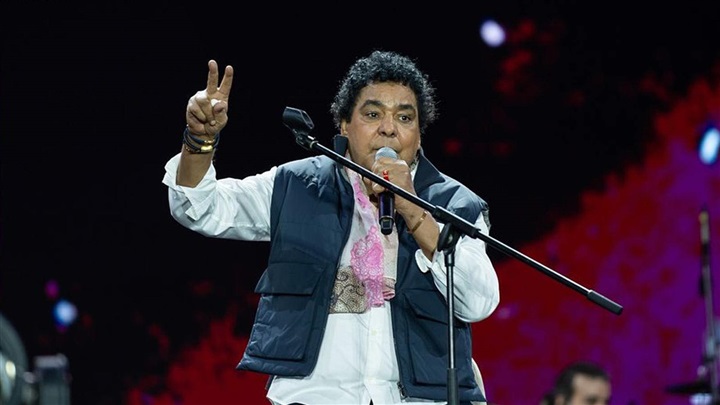
A Morning Like a Promise
A day like a promise.
Tomorrow, a new day will rise,
and a new year;
children slip their hands into
their mothers’ hands without resistance,
and the shuttle begins its motion
in the poultry yards.
Church bells ring out with joy,
and mosques resound with the call
of a new dawn…
A feast day, and an ordinary one…
yet it is a morning that
resembles a promise.
So the evening soothsayer told
me,
and whispered to me in silence:
Raise your voice with song… songs
are still possible,
and even if one day you break,
you must rise standing,
like the palm trees gazing at the
sky…
No defeat… no fracture… no fear…
no… no dream sprouting in the wilderness…
This meaning has enveloped my
life, and still does. Many battles I have fought under this banner, weaving
through it my own legend: no breaking, no defeat.
The dream is planted in the open
land, watered by the Nile;
the soil is black silt, and the
crops are vigorous.
Pitchers of honey, and varieties
of the soul’s delicacies,
we laid them beside what we
planted in the expanse;
and the horizon yielded dreams
and tales
that drifted along the banks of
the soul
and wrapped the heart in a
permitted love…
I, the undersigned, hereby
confess that I am utterly and of my own free will entangled in that tale, that
beautiful predicament that has possessed me for forty years or more, since I
was twenty.
Of forty years of honey I write; of
the windows of our lives that we opened early onto Munir and Abdel Rahim
Mansour, so our visions widened, we touched the dream, and wonder filled us, as
if we were being born from the very first touch…
Of an innocent one, brown like
chocolate, who came from the warm Nubia of Egypt and burst into our lives with
steadiness, confidence, and singularity.
He was the very opposite of his
era; so some denied him,
some marveled at him, and some
feared him— those who had grown addicted to the familiar and the prevailing, who
lulled themselves with dull romanticism, with melodies of vocal ornamentation, the
vocabulary of worn-out dictionaries, pre-fabricated meanings of words, and
recycled tunes.
The brown boy, chocolate-colored,
emerged,
disheveled in hair and in soul,
panting with jealousy for his
country—
simple, from the heart of the
circle,
as if entrusted with the space of
the soul to cultivate it,
to arrange nature,
to tailor feelings and emotions.
He invited us—
not only to listen to him with
our hearts and our consciousness,
but, in the footsteps of the
great master Sayed Darwish,
to allow us to sing with him.
He sang to us, and we sang with
him;
he taught us a beautiful, sly
trick—
we lovers, seized by shyness,
lacking the courage to confess
our feelings to our beloveds—
back then, we would whisper, or
repeat in their ears,
snippets of his songs:
They taught me, from your eyes,
how to travel…
O bride of the Nile, a piece of
the sky…
You whose image inside my heart
is an epic…
He blended the beloved with the
homeland,
and the homeland with the
beloved,
until eyes and hearts became one.
If the arrow struck the beloved’s
heart—
all well and good.
And if not,
we would dodge and say:
we meant the homeland.
The words of Abdel Rahim Mansour,
and the voice and sensibility of
Mohamed Mounir,
granted us comfort, depth, and
intimacy.
Munir’s songs,
and the poems of Ahmed Abdel
Moaty Hegazy,
Mahmoud Darwish, and Salah Ghahin,
formed the vocabulary of our
first love letters,
and our lovely ruses for
communicating with our beloveds
in our twenties.
Munir called on us to write our
names
in the ledger of the homeland,
to speak, to confess:
Why do you keep silent before
time… speak.
Why do you pay the price alone…
speak.
And when treachery and terrorism
struck
the heart of the homeland,
Munir sang: The heart of the
homeland is wounded.
And when deceitful thieves,
merchants of religion,
tried to steal Egypt,
to strip its history, culture,
and arts,
and to forbid joy to Egyptians,
there was Munir’s icon and his
immortal cry:
Madad, madad, madad,
Madad, O Messenger of God.
I swear by the Furqan,
and by Surat Al-Insan,
justice is in the balance,
for all of God’s creation.
Madad, madad, madad,
Madad, O Messenger of God.
I swear by Al-Isra,
and by the innocence of the
Virgin,
all blood is equal,
sacred by the command of God.
Munir sang, and thus forged a
manifesto
for revolution against injustice
in every place and every time:
How can you accept this for me,
my beloved—
that I am passionately in love
with your name while you
keep adding to my confusion,
unaware of my kindness—how?
How can you leave me in my
weakness?
Why are you not standing on my
side?
I lived my whole life as it is
so I would never see fear in your
eyes.
I find no motive in your love,
nor does my sincerity plead my
case in your affection.
How can I hold my head high for
you,
while you bend down upon my head—
how?
If I were in love with you by
choice,
my heart would have changed long
ago,
and your life I would have
changed for the better,
for you, until you were satisfied
with it.
He took the side of the simple
people—
the poor farmers,
the kind-hearted workers.
He sang for the stranger and his
heroism,
for the soldiers,
for the girl in the navy-blue
pinafore,
for the cross,
for the crescent,
for Jerusalem,
for the intifada,
for the martyrs,
for life.
He rediscovered the treasures of
musical heritage,
not only in Egypt,
but across the Arab world—
from Algeria and Morocco
to Tunisia and Libya,
and from Sudan
to Lebanon, Jordan, and
Palestine.
Munir has the right to take pride
in what he has given us;
and we have the right—and the
duty— to take pride in him, and to declare our allegiance and our love for him.
Here I write my confession as a
recipient— a lover— entangled in Munir’s musical world.
He opened a new year with his
words, with optimism and confidence in the future.
I am not a critic, but I am
biased—yes.
I say what I see,
what I feel,
what is mine in this tale.
And I know, at the same time,
that millions share with me this
love, this allegiance,
and this gratitude to Munir,
and also share with me optimism
and confidence
in the future and in our day—
the day that is still running and
striving,
still letting its eyes travel,
still whose heart has not grown
weary of the journeys.
Paris: five o’clock in the
evening, Cairo time.