Democrats Lead in Key Senate Races as New Polls Signal Trouble for Republicans Ahead of 2026 Midterms
Monday 02/November/2026 - 01:22 PM
Ahmed Seif El-din
Democrats are gaining momentum in the race for control of the U.S. Senate, with new New York Times/Siena University polls showing Democratic candidates leading in five Republican-held states and running nearly even in Iowa just days before the November 3 midterm elections.
The surveys, conducted from October 23 to November 1, reveal Democratic advantages in Texas, Kansas, Maine and Ohio, alongside a narrow lead in Alaska. Democrats also maintain an 11-point lead in Michigan, a state where they are defending an existing Senate seat.
The findings suggest a potentially significant shift in the political landscape, driven by voter dissatisfaction with President Donald Trump, concerns about the economy and growing Democratic support among independent voters.
Democrats Gain Ground Across Seven Senate Battleground States
The latest Senate election polls show Democrats performing strongly in states traditionally considered Republican strongholds, including Texas and Kansas.
Democrats must defend their existing Senate seats and gain at least four Republican-held seats to secure a majority.
Although this has historically been considered difficult because several competitive states favor Republicans, the latest polling suggests Democrats have multiple possible paths to victory.
However, polling advantages do not guarantee electoral success, particularly in closely contested states with undecided voters.
Trump's Approval Rating and Economic Concerns Weigh on Republicans
One of the most significant findings is declining support for President Trump across the seven battleground states.
Only 38% of likely voters surveyed approved of Trump's job performance, despite his decisive victories in five of those states during the 2024 presidential election.
Economic dissatisfaction appears central to the shift.
Across the surveyed states, Democrats held a nine-point advantage over Republicans on managing the cost of living. Democratic Senate candidates also led on this issue in every state included in the polls.
Voters additionally expressed greater confidence in Democrats on foreign conflicts and policies benefiting ordinary Americans.
In Ohio, Trump's approval among Republicans remained relatively high at 82%, but strong approval fell from 63% in June to 51%, suggesting weakening enthusiasm even within his political base.
Texas and Kansas Emerge as Unexpected Democratic Opportunities
Two traditionally Republican states have become particularly important in the race for Senate control.
Texas: James Talarico Leads Ken Paxton
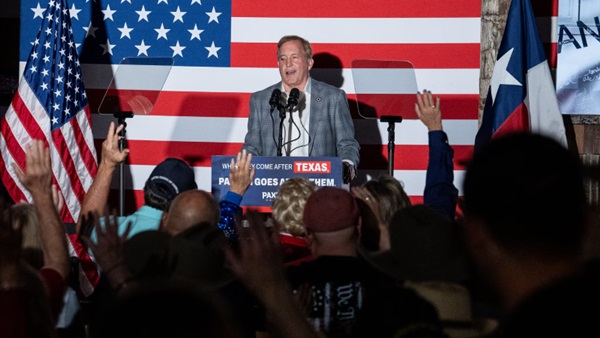
In Texas, Democratic state legislator James Talarico leads Republican Attorney General Ken Paxton by seven percentage points, 50% to 43%.
Texas has not elected a Democratic U.S. senator since 1988, making Talarico's polling advantage especially notable.
Paxton faces substantial unfavorable ratings, with 54% of likely voters viewing him negatively compared with 33% who view him favorably.
Talarico, meanwhile, has a positive net favorability rating of 10 points, despite facing an extensive advertising campaign against him funded largely by Elon Musk.
Some Republican voters have also expressed reservations about Paxton following allegations surrounding his impeachment and personal conduct.
Kansas: Adam Hamilton Challenges Roger Marshall
Kansas presents another unexpected opportunity for Democrats.
Adam Hamilton, a pastor and Democratic Senate nominee, leads incumbent Republican Sen. Roger Marshall by 49% to 44%.
The state has not elected a Democratic senator since 1932, but rising economic pressures have challenged Republican support.
Farmers have expressed concerns about higher diesel prices following the Iran war and the Trump administration's decision to remove import tariffs on foreign beef.
Hamilton has attracted support from 13% of Republicans surveyed, while Marshall has faced criticism over reports involving lawsuits against patients for unpaid medical debt.
Michigan Democrats Maintain Lead Despite Haley Stevens Controversy
Michigan remains one of the most closely watched Senate contests, with Democratic nominee Abdul El-Sayed leading Republican Mike Rogers by 53% to 42%.
El-Sayed has performed particularly well among male voters, a demographic that has historically favored Republicans.
He also leads Rogers on several major policy issues, including immigration.
However, the survey was conducted before a political controversy intensified within Michigan's Democratic Party.
Rep. Haley Stevens, who lost the Democratic primary to El-Sayed, endorsed Rogers on November 1 following disagreements with her former rival.
The endorsement sparked criticism from Democratic leaders and offered Republicans a potential opening in the final days of campaigning.
The political impact remains uncertain, particularly because previous polling overestimated El-Sayed's support during the Democratic primary.
Maine and Ohio Senate Races Favor Democratic Challengers
In Maine, former Democratic state senator Troy Jackson leads incumbent Republican Sen. Susan Collins by 51% to 45%.
Collins, the last remaining Republican senator from New England, faces a challenging political environment in a state where Trump remains unpopular.
Nevertheless, polling history offers a warning against treating her defeat as inevitable. Collins trailed in surveys before the 2020 election but ultimately secured re-election comfortably.
In Ohio, former Democratic Sen. Sherrod Brown leads incumbent Republican Sen. Jon Husted by 49% to 44%.
The Ohio Senate race has attracted approximately $500 million in political spending, with Republicans spending roughly $80 million more on advertising, according to AdImpact.
Despite that financial advantage, Brown maintains a polling lead as Democratic candidates benefit from concerns about inflation and economic management.
Independent, Latino and Young Voters Strengthen Democratic Prospects
The Democratic polling gains appear to reflect changing voter preferences among several important demographic groups.
Democratic candidates lead among independent voters in all seven states surveyed.
The polls also suggest renewed Democratic strength among younger and Latino voters, groups where Trump made gains during the 2024 presidential election.
Republican Senate candidates are receiving support from approximately one-quarter of younger and Latino voters in the surveyed states.
Meanwhile, Republican support among white voters without college degrees stands at 56%, compared with an estimated 66% who supported Trump nationally in 2024.
These findings could indicate changing electoral coalitions, although polling difficulties involving white working-class voters remain a significant source of uncertainty.
Alaska and Iowa Remain Competitive as Election Day Approaches
Not every battleground provides Democrats with a comfortable advantage.
In Alaska, former Democratic Rep. Mary Peltola holds a narrow 48% to 46% lead over incumbent Republican Sen. Dan Sullivan.
Peltola was the only Democratic candidate among the seven states to lose ground compared with the September survey.
Her campaign has also faced scrutiny following reporting that political operatives aligned with her recruited another candidate named Dan J. Sullivan to run as a Republican, potentially drawing votes away from the incumbent. Most polling interviews were completed before that report was published.
In Iowa, Democrat Josh Turek and Republican Rep. Ashley Hinson are virtually tied, with Turek receiving 48% support compared with Hinson's 47%.
Both races remain highly competitive, and their narrow polling differences should not be interpreted as decisive leads.
Can Democrats Win Control of the Senate in 2026?
The final New York Times/Siena polls indicate that Democrats have improved their position in six of the seven surveyed battleground states since September.
The party's gains are particularly significant in Republican-leaning states, where dissatisfaction with Trump's economic policies appears to be influencing voter preferences.
Yet several uncertainties remain.
Voters who made their decisions during the previous month favored Republicans by nine percentage points, suggesting that late momentum could still affect the outcome.
Polling errors, turnout differences and the remaining undecided electorate could also change the final results.
The surveys, based on samples ranging from 610 likely voters in Alaska to 1,215 in Texas, provide a snapshot of voter preferences rather than a definitive election forecast.
With the November 3 midterm elections approaching, Democrats enter the final campaign period with stronger polling numbers and potential opportunities to reshape control of the Senate.
Whether those advantages translate into victories will depend on voter turnout, late campaign developments and the performance of candidates in states that have historically favored Republicans.