Benjamin Netanyahu Offers to Step Down in Proposed Power-Sharing Deal
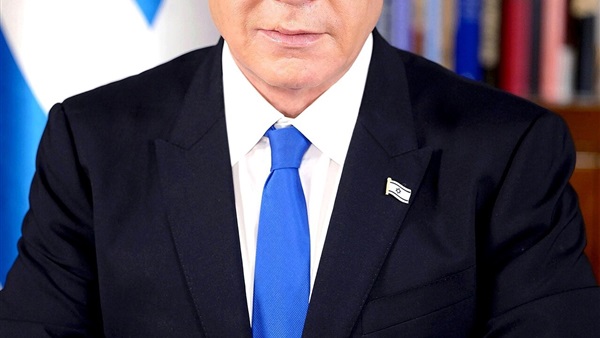
Israeli Prime Minister Benjamin Netanyahu has offered to step down in exchange for a senior position in the next government and an agreement allowing him to return to the premiership, according to The Telegraph.
The last-minute proposal would establish a power-sharing arrangement with his principal political rival, Gadi Eisenkot, who is reportedly close to forming an alternative coalition that could end Netanyahu’s premiership early next week.
The offer represents the clearest indication yet that Israel’s longest-serving prime minister is contemplating the possibility of losing power following the country’s inconclusive general election last month.
Benjamin Netanyahu Proposes Leadership Rotation
Speaking on Saturday, Netanyahu said he would ordinarily expect to lead a national unity government or serve first under a rotating leadership arrangement.
However, citing what he described as existential threats facing Israel and concerns about the ability of an alternative government to address them, he expressed willingness to allow Eisenkot to assume the premiership first.
Under the proposed arrangement, Netanyahu would initially serve as alternate prime minister before returning to the leadership later in the government’s term.
The two political leaders are scheduled to meet on Sunday morning in an attempt to resolve the political deadlock.
Responding to the proposal, Eisenkot confirmed his willingness to negotiate but emphasised that discussions to establish an alternative government were already at an advanced stage.
He revealed that he had submitted a detailed proposal to Netanyahu’s Likud party through a confidential channel the previous week but had received no response.
Eisenkot added that previous attempts to negotiate had been met with refusal and evasion.
Opposition Coalition Moves Closer to Taking Power
Before Netanyahu’s intervention, Eisenkot’s political allies had been preparing for him to become Israel’s next prime minister.
An alternative coalition has gradually taken shape since the general election, with several formal agreements reached in recent days between factions belonging to the so-called “change bloc”.
White House officials were reportedly prepared to arrange a meeting with Israel’s prospective new prime minister once the government had secured parliamentary approval through a vote in the Knesset.
Benjamin Netanyahu, whose political future remains uncertain, was reportedly concerned that only a “miracle” could preserve his premiership.
His latest proposal comes as opposition parties intensify efforts to establish a government capable of securing sufficient parliamentary support without relying on Likud.
Netanyahu Raises Concerns Over Arab Political Participation
Netanyahu presented his power-sharing proposal as an effort to prevent Arab political parties from gaining influence within the next Israeli government.
A record number of Arab lawmakers entered the Knesset following the recent election, and Eisenkot is likely to require some support from Arab representatives to establish a government without Likud.
Netanyahu alleged that certain political factions represented a threat to Israel’s national security, accusing some party members of expressing different positions in Hebrew and Arabic regarding militant organisations.
These allegations were presented as Netanyahu’s justification for pursuing a national unity government rather than as independently established findings.
The Israeli prime minister also declared his readiness to begin immediate and substantive coalition negotiations.
Opposition Leaders Reject Netanyahu’s Proposal
Several opposition figures have warned Eisenkot against accepting the proposed leadership rotation, questioning Netanyahu’s commitment to honouring a power-sharing agreement.
Yair Lapid, co-leader of B’Yachad, the next-largest opposition party, described the proposal as a “transparent con” and accused Netanyahu of repeatedly failing to honour previous political agreements.
Other opposition figures expressed concern that negotiations could be used to undermine Eisenkot’s credibility and disrupt efforts to establish an alternative coalition.
Avigdor Lieberman, leader of the secular right-wing Yisrael Beiteinu party and a longstanding opponent of Netanyahu, has already signed a coalition agreement and appears to have secured responsibility for the defence and justice portfolios.
Meanwhile, Yair Golan, leader of the centre-left Democrats and a former senior military officer, is reportedly positioned to become national security minister alongside responsibility for other portfolios.
Potential Government Could Reshape West Bank Policy
Golan’s prospective appointment could have significant implications for Israeli policy in the occupied West Bank, particularly regarding escalating settler violence.
The Democrats have distinguished themselves among Jewish-led Israeli political parties through their advocacy of Palestinian rights.
According to the original report, Israeli officials are increasingly concerned that settler violence in the West Bank, potentially even more than the situation in Gaza, is damaging Israel’s international standing and long-term security.
Former prime minister Naftali Bennett, the right-leaning joint leader of B’Yachad, is reportedly positioned to become finance minister under the proposed opposition coalition.
However, the possibility remains that Bennett, who served as prime minister between 2021 and 2022, could consider joining a coalition involving Netanyahu.
Knesset Majority Remains the Decisive Challenge
Despite progress in coalition negotiations, the four Jewish-led opposition parties collectively hold only 48 parliamentary seats, falling short of the 61 required to secure a majority in the 120-seat Knesset.
Their prospects could depend on securing support from Ra’am, an Arab-Israeli political party holding eight seats, and United Torah Judaism, an ultra-Orthodox faction with seven seats that previously supported Netanyahu’s government.
Together, these parties could provide the opposition with the necessary parliamentary majority.
However, rather than formally joining the proposed coalition, both factions could potentially support a minority government through an external parliamentary agreement.
Reports circulating on Friday suggested that Ra’am leader Mansour Abbas might formally condemn Hamas as a terrorist organisation on Saturday.
Such a declaration would address a key demand made by Eisenkot and potentially remove a significant obstacle to reaching a coalition agreement. Whether Abbas had issued the declaration remained unconfirmed in the original report.
The coming negotiations could determine whether Benjamin Netanyahu retains a role in Israel’s political leadership through a power-sharing arrangement or whether Eisenkot succeeds in forming an alternative government, bringing Netanyahu’s current premiership to an end.