Strait of Hormuz and Bab el-Mandeb Remain Open as Iran and Houthis Threaten Global Shipping
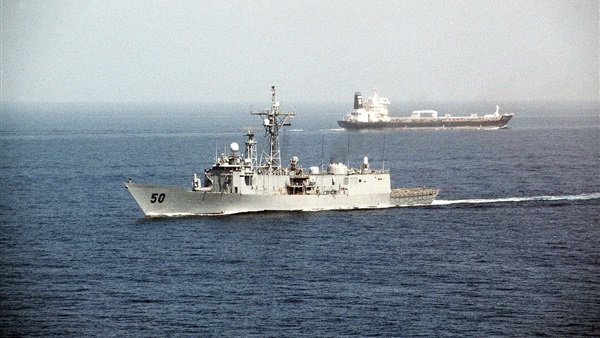
Oil exports and commercial shipping continue through two of the world's most strategic maritime chokepoints, but a potential US naval withdrawal could undermine freedom of navigation and disrupt international trade.
The Strait of Hormuz and Bab el-Mandeb remain operational despite escalating military tensions, attacks on commercial vessels and growing concerns over Iran’s regional influence. While crude oil exports remain close to pre-war levels and container shipping is gradually returning to the Red Sea, the long-term security of both maritime corridors remains uncertain.
In an analysis published by The Telegraph on November 27, 2026, naval commentator Tom Sharpe argues that continued commercial navigation should not be mistaken for lasting maritime security, particularly if the United States reduces its military presence in the region.
Strait of Hormuz: Oil Exports Continue Despite Rising Attacks
Last weekend, an apparent Iranian supertanker named Khat Shekan, meaning “Line Breaker,” appeared on maritime tracking platforms, seemingly passing through the Strait of Hormuz and bypassing the US naval blockade.
However, the vessel had no International Maritime Organization (IMO) identification number, recorded voyage history or supporting satellite imagery. The incident was attributed to a fabricated Automatic Identification System (AIS) signal, misleading some online reporters but reportedly failing to deceive the US Navy.
Beyond electronic deception, the security situation remains concerning. Recent analysis cited by Sharpe indicates that attacks causing significant damage to commercial vessels increased from approximately seven between April and September to seven in October and 10 in November.
On Tuesday, three outbound supertankers associated with Abu Dhabi’s state-owned oil company, ADNOC, were struck while carrying a combined six million barrels of crude oil. Five ADNOC-linked vessels have reportedly been attacked within two weeks.
The company's relatively rapid tanker turnaround makes these incidents particularly costly in terms of replacement shipping capacity.
Nevertheless, crude oil exports through the Strait of Hormuz remain near pre-war levels, with sufficient vessels operating inside the Gulf. Sharpe estimates that between 15 and 20 supertankers would need to sustain damage each month before existing export flows were significantly affected.
The three recently damaged tankers continued their journeys, with their cargoes expected to reach their destinations through ship-to-ship transfers.
Crude oil prices rose by approximately $5 to nearly $95 on Thursday. However, traders attributed the increase primarily to short-covering ahead of the US holiday rather than actual supply disruptions. Freight rates remained unchanged.
US Naval Blockade and the Risk of Military Escalation
The United States continues to maintain a substantial naval presence in the Arabian Sea, including the aircraft carriers USS George H.W. Bush and USS Theodore Roosevelt, alongside approximately a dozen destroyers.
The blockade of Iranian ports has now continued for more than 130 days, amid reports of possible additional military strikes against Iranian nuclear facilities or energy infrastructure.
Attacks targeting Iran’s energy sector could provoke retaliatory action against Gulf oil facilities, potentially creating greater disruption to global energy markets than attacks on commercial tankers alone.
Sharpe questions whether Washington intends to launch a comprehensive military campaign, particularly following the recent departure of USS George Washington from the region.
Although operational fatigue may explain the carrier’s withdrawal, he suggests that future military operations could be more limited and focused.
Bab el-Mandeb: Red Sea Shipping Shows Signs of Recovery
Despite deteriorating security conditions in Yemen, commercial traffic through Bab el-Mandeb, commonly known as the “Gate of Tears,” is showing signs of recovery.
According to Lloyd’s List, the strategic waterway recorded 1,363 vessel transits in October, representing a 17 percent increase compared with September.
Traffic through the Suez Canal increased by 63 percent year-on-year, although it remained approximately one-third below pre-crisis levels.
Container shipping companies that have relied on the longer route around the Cape of Good Hope since late 2023 are gradually returning to the Red Sea.
Maersk’s chief executive informed Egypt’s president on Wednesday that all the company's services would return in the coming months. Three additional routes operated by Maersk and Hapag-Lloyd are expected to resume Red Sea transits from December.
However, this recovery comes despite the Houthis consolidating their territorial influence over the Yemeni side of the maritime passage.
On November 15, Yemeni government forces withdrew to defend Aden, leaving the Houthis in control of the Bab el-Mandeb coastline and Mayyun Island, which divides the strait into two navigational channels.
Houthi Restrictions Leave Commercial Shipping Vulnerable
The increase in maritime traffic appears to reflect a more selective Houthi targeting policy rather than a fundamental improvement in regional security.
Since July, the group has targeted vessels it considers linked to Saudi Arabia while indicating that other commercial ships may pass, provided their governments remain outside the conflict.
Sharpe suggests that the Houthis’ ability to identify vessels may have improved compared with the confrontations of 2023 and 2024.
Shipping companies facing substantial additional costs from rerouting around southern Africa appear increasingly willing to accept these assurances.
Nevertheless, their ability to navigate the waterway effectively depends on conditions imposed by the Houthis, which could be withdrawn at any time.
Meanwhile, hostilities between Saudi Arabia and the Houthis continue. Following coalition strikes on Hodeidah on Wednesday, the group launched attacks targeting Jeddah, Jazan, Riyadh and Ras Tanura, where smoke was reportedly observed above the refinery.
Limited International Naval Protection in the Red Sea
International maritime security operations face growing resource constraints as Washington concentrates much of its available naval strength around Iran and the Strait of Hormuz.
Two US destroyers remain in the Red Sea, capable of supporting regional missile defence and conducting military operations against land-based targets.
The European Union’s Operation Aspides continues to provide maritime protection, although its presence is considerably smaller than in 2024. Its current deployment reportedly includes one French and one Italian warship, with a Dutch frigate expected next month.
Meanwhile, the US- and UK-backed Operation Prosperity Guardian has largely lost momentum, according to Sharpe.
China maintains its 49th naval escort task force in Djibouti, comprising a destroyer, a frigate and a supply vessel. However, Beijing has shown little willingness to intervene militarily.
Sharpe argues that China benefits strategically from avoiding direct involvement while the United States expends its limited stockpiles of advanced munitions.
Yemen Warns of Iran’s Strategic Influence Over Both Waterways
Yemeni military officials regard control of Bab el-Mandeb as a fundamental national and international security priority.
Col Majed Al-Nuzaily, spokesman for Yemen’s armed forces, reaffirmed the government's determination to regain control of the passage and secure the surrounding territory.
“Control of Bab el-Mandeb is at the heart of Iran’s strategy,” Al-Nuzaily said, arguing that influence over both waterways provides Tehran with additional geopolitical leverage.
Yemen’s ambassador to London, Dr Yaseen Saeed Noman, also stressed that maritime security in Bab el-Mandeb extends far beyond Yemen’s national interests, affecting international supply chains, British consumers and commercial seafarers.
He called for international assistance in preventing maritime weapons transfers and restoring Yemeni government authority over the strategic passage.
Britain Faces Calls to Strengthen Its Position on the Houthis
Britain imposed sanctions on the Houthis on Tuesday but has not formally proscribed the group as a terrorist organisation, unlike the United States, Canada, Australia and New Zealand, according to the original analysis.
Concerns that terrorist designation could complicate humanitarian assistance have historically influenced Britain's position.
However, Sharpe argues that the siege of Taiz, detention of United Nations personnel and Houthi control over a critical international shipping corridor warrant a stronger British response.
Could a US Withdrawal End Freedom of Navigation?
The immediate outlook for the Strait of Hormuz suggests continued attacks on tankers, electronic deception, risks to seafarers and potential military escalation.
Should hostilities intensify, Gulf refineries and oil export terminals could become particularly vulnerable, threatening international energy supplies.
In Bab el-Mandeb, a change in Tehran’s policy or further escalation between Saudi Arabia and the Houthis could reverse the recent recovery in container shipping, forcing vessels back around the Cape of Good Hope and adding 10 days or more to affected voyages.
Although the US Navy continues to dominate the regional maritime environment, uncertainty surrounds the duration of its deployment.
Sharpe considers a limited demonstration of military force followed by a withdrawal and declaration of victory a plausible option for US President Donald Trump. The alternative would involve maintaining competing blockades in the hope that Iranian economic pressures outweigh declining American political support for the conflict.
Following the US midterm elections, Sharpe questions whether such a strategy remains sustainable.
Ultimately, the continued operation of both maritime chokepoints does not necessarily guarantee genuine freedom of navigation. A US naval withdrawal could leave Iran and its regional allies with substantially greater influence over two waterways essential to global energy security, commercial shipping and international trade.