Cyber Incidents Rattle Western Economies as AI Security Threats Grow
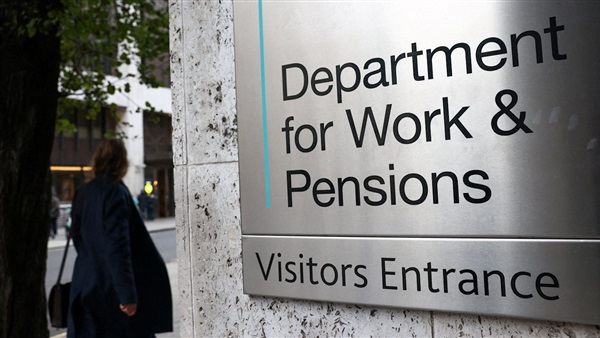
Disruptions affecting the UK’s welfare system, the US Treasury, FIFA and American intelligence agencies have intensified concerns over critical infrastructure vulnerabilities and the growing cybersecurity risks associated with artificial intelligence.
A wave of cyber incidents across Western economies has exposed vulnerabilities in critical digital infrastructure, raising concerns about the ability of governments, businesses and international institutions to withstand increasingly sophisticated cybersecurity threats in the age of artificial intelligence.
The UK government was forced to take much of its benefits system offline on Friday following disruption at the Department for Work and Pensions (DWP), which administers Britain’s £330 billion welfare system.
The incident followed a series of cybersecurity breaches and network disruptions affecting prominent organizations, including the US Treasury, the Central Intelligence Agency (CIA) and FIFA.
The succession of incidents has intensified concerns on both sides of the Atlantic about ageing digital infrastructure, cyberterrorism and the potential for AI-powered cyberattacks.
AI Accelerates the Global Cybersecurity Arms Race
Rapid advances in artificial intelligence are transforming the cybersecurity landscape, creating new opportunities for both attackers and defenders.
AI models can identify software vulnerabilities significantly faster than humans, intensifying competition between organizations seeking to secure their systems and hackers attempting to exploit weaknesses.
Governments and businesses are under growing pressure to identify and patch security vulnerabilities before cybercriminals or state-backed hacking groups can take advantage of them.
Meanwhile, advances in AI’s ability to solve complex mathematical problems have raised concerns among computer scientists that the technology could eventually reverse-engineer calculations underpinning online security.
Rafe Pilling, a senior director at cybersecurity company Sophos, said the concentration of high-profile cyber incidents had increased anxiety about the resilience of digital systems supporting everyday life.
“The cyber threat landscape isn’t just getting more sophisticated. It’s becoming faster, more accessible and more crowded,” Pilling said.
Government Institutions and FIFA Face Cybersecurity Disruptions
Officials at Britain’s Department for Work and Pensions declined to rule out a cyberattack as they worked to restore online welfare services.
The disruption came days after the US Treasury’s Financial Crimes Enforcement Network (FinCEN) announced that it had taken some services offline following a potential cyberattack involving unauthorized access to its systems.
FIFA also suffered a cybersecurity breach during the week, with hackers stealing personal and business information from the international soccer governing body.
Separately, The New York Times reported that the CIA and the US Office of the Director of National Intelligence had recently discovered a cybersecurity breach that exposed certain unclassified information.
Together, these incidents have highlighted the vulnerability of institutions responsible for public services, financial oversight, national intelligence and international sports administration.
Network Outages Highlight Critical Infrastructure Vulnerabilities
Despite the growing number of cyber incidents, not every recent disruption has been attributed to malicious activity.
Network outages affecting Microsoft and the US Federal Aviation Administration (FAA) during the month resulted from efforts to patch software rather than confirmed cyberattacks.
Microsoft’s disruption prevented users from accessing email services, while the FAA outage grounded thousands of flights.
These incidents illustrate the operational challenges facing organizations attempting to strengthen cybersecurity without disrupting essential services.
The urgency surrounding software updates is being driven partly by concerns that cybercriminals and state-sponsored hacking groups could use artificial intelligence to enhance their offensive capabilities.
However, the simultaneous occurrence of cybersecurity breaches and technical outages does not establish that the incidents were connected or involved AI-powered attacks.
AI-Powered Phishing Remains a Primary Cyber Threat
Although artificial intelligence is widely expected to transform cybercrime, cybersecurity researchers say there is currently little evidence that typical hackers are using AI to exploit complex software vulnerabilities.
Instead, AI tools are most commonly being deployed to expand phishing campaigns designed to deceive individuals into disclosing login credentials and other sensitive information.
Such campaigns allow cybercriminals to target larger numbers of individuals and organizations, increasing the pressure on existing cybersecurity defenses.
Nevertheless, experts broadly expect hacking techniques to become more sophisticated and cyberattacks to increase in both number and frequency as artificial intelligence capabilities advance.
The challenge for organizations is therefore not only responding to existing threats but also preparing for emerging risks that could overwhelm conventional security measures.
Western Economies Face Growing Digital Security Challenges
The recent wave of cyber incidents underscores the importance of strengthening digital resilience across government institutions, financial networks, transportation systems and commercial organizations.
As essential public services become increasingly dependent on interconnected digital infrastructure, both malicious attacks and technical failures can produce widespread disruption.
Artificial intelligence offers opportunities to improve vulnerability detection and cybersecurity defenses, but it also has the potential to accelerate the development of more sophisticated threats.
Pilling warned that the coming year would likely place even greater pressure on the digital infrastructure supporting modern societies.
For Western economies, the central challenge will be securing increasingly complex digital systems while maintaining the continuity of essential services—and ensuring that efforts to strengthen cybersecurity keep pace with technological advances.
The document is available for donwload using subscriptions only
DOWNLOAD THE DOCUMENT