US Naval Base in Bahrain Faces Uncertain Future After Iranian Strikes
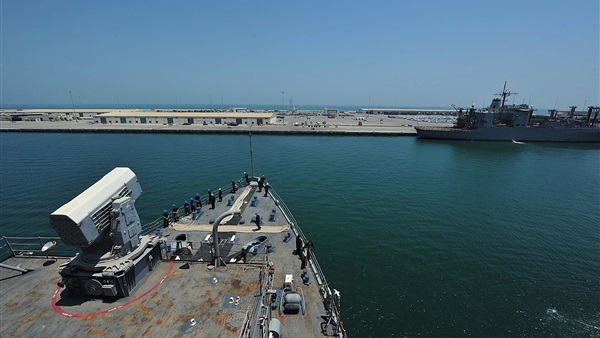
Heavy damage to Naval Support Activity Bahrain, the departure of thousands of Americans and growing public opposition have raised questions about the future of Washington’s military presence in the Persian Gulf.
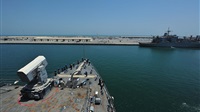
The US naval base in Bahrain faces an uncertain future nine months into the United States’ war with Iran, as extensive damage, personnel evacuations and potential changes to Washington’s regional military strategy threaten a security partnership spanning decades.
Naval Support Activity Bahrain (NSA Bahrain), which served as the headquarters of US Naval Forces Central Command and the US Fifth Fleet, was once home to a thriving American military community. Today, surrounding neighborhoods are largely deserted, local businesses are struggling, and US military officials remain uncertain whether the facility will return to its prewar operations.
The Pentagon is reportedly considering relocating some of its regional forces to Israel and Jordan, raising broader questions about the future of American military influence across the Gulf.
Iranian Strikes Inflict Extensive Damage on Bahrain Naval Base
Bahrain became a target of Iranian retaliation following the outbreak of the US-Israeli war with Iran on February 28, 2026.
Iranian attacks subsequently damaged the American naval facility, energy infrastructure, residential buildings and data centers. The violence resulted in civilian casualties and injuries to Defense Department employees.
According to the Congressional Research Service, damage to the naval base is likely to cost more than $400 million, a financial burden that has received relatively little public acknowledgment from the Trump administration.
Only a small fraction of the American personnel previously stationed in Bahrain remain, while renewed Iranian attacks have further complicated discussions about restoring operations.
Tehran has indicated that Bahrain and other Gulf countries will continue facing pressure until its demands, including the withdrawal of US military forces from the region, are addressed.
A Once-Thriving American Community Disappears
Before the conflict, the US naval base in Bahrain supported a community of more than 8,000 military personnel, dependents and civilian contractors.
American families enjoyed outdoor movie nights, sports leagues, weekend shopping and social gatherings. Restaurants, international franchises and local businesses flourished around the military installation.
Bahrain was also the only US military post in the region where service members were permitted to live with their families.
Despite the kingdom’s proximity to Iran, many Americans regarded Bahrain as a particularly safe and welcoming overseas assignment.
One sailor’s wife, speaking anonymously because of the sensitivity of her husband’s position, described the community as resembling a small town where everyone knew one another.
“Those were the best years of my life,” she told The Washington Post.
A former teacher at the Defense Department-operated school similarly recalled warm relations with Bahrainis and said she had felt safer in Bahrain than at her subsequent posting in Europe.
The outbreak of war abruptly ended that sense of security, leaving thousands of Americans facing evacuation and an uncertain future.
Bahrain’s Longstanding Strategic Partnership With Washington
Bahrain’s relationship with the United States reflects decades of geopolitical cooperation, despite the island nation’s historical, cultural and religious connections with Iran.
Both countries have predominantly Shiite Muslim populations. However, Bahrain is governed by a Sunni ruling family that has traditionally maintained close relations with Western powers.
Following Britain’s departure in 1971, the United States assumed control of the naval facility, which subsequently became a central operational hub during the 1991 Gulf War and the Iraq War beginning in 2003.
In more recent years, the US Fifth Fleet played an important role in Washington’s efforts to deter Iran and its regional allies.
The expanding American presence also transformed surrounding neighborhoods, encouraging investment in housing, education, restaurants and retail businesses.
The Defense Department-operated school counted members of Bahrain’s royal family among its former students, reflecting the close institutional and social relationships that developed over generations.
Pentagon Faces Difficult Decisions Over Future Gulf Military Presence
The future of the US naval base in Bahrain remains unresolved despite months of discussions within the American military establishment.
John W. “Fozzie” Miller, a retired US Navy vice admiral who previously held leadership positions at the facility, said officials had long recognized its vulnerabilities, particularly as Iranian military capabilities developed.
Although military authorities had anticipated the risks of a potential confrontation with Iran, many American families, teachers and civilian contractors received limited warning before the conflict began.
On March 2, the US State Department ordered the departure of nonemergency government personnel and their family members.
Evacuated residents described leaving behind most of their belongings, with some families traveling to neighboring Saudi Arabia and others departing aboard evacuation flights. Some pets were also left behind.
Senior Navy officials have subsequently acknowledged the severity of the damage and indicated that a return to normal operations is unlikely in the immediate future.
Adm. Daryl Caudle, chief of naval operations, indicated in August that the Navy would not return to the facility anytime soon.
Two Navy officials told The Washington Post that discussions about a future presence had only recently begun and that no specific plans had been established.
The Navy declined to discuss its internal deliberations, stating that it had nothing to announce.
Washington Considers Alternatives to Rebuilding the Base
One Navy official suggested that the administrative headquarters functions previously performed in Bahrain could potentially be managed from the United States.
The official pointed to existing arrangements under which US Central Command operates from Tampa, Florida, while the Air Force manages its Middle Eastern operations from South Carolina.
Maintaining a permanent presence in Bahrain has historically demonstrated Washington’s commitment to Gulf security and facilitated direct engagement with regional allies.
However, the official suggested that some diplomatic and military coordination could continue through visits to the region without fully reconstructing the damaged facility.
Bahrain’s government declined to answer specific questions about the base’s future but emphasized that its strategic partnership with Washington spans eight decades.
A government spokesperson said both countries remain engaged in continuous consultations concerning defense cooperation, the American naval presence and regional security.
American Departure Leaves Bahrain’s Local Businesses Struggling
The economic consequences of the military community’s departure have been particularly severe for businesses that depended on American customers.
In Manama, souvenir shops, tailoring businesses, Persian carpet stores and gold merchants have experienced significant declines in commercial activity.
Some businesses have already closed, while others remain uncertain whether they can survive without their former customers.
Ali Asgar, a 42-year-old tailor who began making suits for American personnel in 2000, described the departing military community as an extended family.
“We miss them, and we want them to come back,” he said.
His shop contains signed Navy caps and commemorative coins received from American customers over the years.
Karim Al Sayegh, a gold craftsman who estimates that he is in his 80s, has also experienced a substantial decline in business.
Although uncertain whether Washington or Tehran bears greater responsibility for the conflict, he expressed hope that American customers would eventually return and that commercial life would recover.
For these business owners, the future of the American naval presence is not simply a geopolitical question but an immediate concern affecting their livelihoods.
Growing Opposition Questions US Military Presence in Bahrain
Despite the economic benefits associated with the American military presence, some Bahrainis increasingly question whether hosting US forces has strengthened national security or exposed the kingdom to greater danger.
Bahraini human rights activist Mohammed Abdallah argued that his country was suffering the consequences of American military decisions in the region.
Opposition figures have similarly warned for decades that hosting foreign military installations could involve Bahrain in conflicts over which its population has little influence.
An opposition leader, speaking anonymously because of fears of retaliation, criticized the government's dependence on Western military protection and its distrust of Shiite communities perceived as sympathetic to Iran.
Small protests emerged within some Shiite communities during the early stages of the conflict, with demonstrators mourning the death of Iranian Supreme Leader Ayatollah Ali Khamenei.
Bahraini authorities responded by arresting protesters and prohibiting the circulation of footage documenting Iranian strikes.
Bahrain Faces Human Rights Concerns Amid Wartime Crackdown
Authorities also arrested prominent Shiite clerics, accusing them of collaborating with Iran to undermine Bahrain’s national security.
According to the original report, scores of those detained were subsequently sentenced to life imprisonment.
Their families and legal representatives have rejected the allegations, arguing that the clerics have become caught up in the wider regional conflict.
Sayed Ahmed Alwadaei, director of advocacy at the Britain-based Bahrain Institute for Rights and Democracy, said the public reaction to the American withdrawal demonstrated that many Bahrainis did not believe the US military presence had provided greater security.
He also accused Bahraini authorities of treating criticism of the war as an act of treason.
Meanwhile, a Gulf official speaking anonymously acknowledged that regional governments remain deeply concerned about the future of their military relationship with Washington.
The official expressed hope that American forces, including the US Fifth Fleet, would eventually return in some capacity.
An Uncertain Future for US-Bahrain Security Relations
The future of the US naval base in Bahrain represents a broader test of Washington’s military strategy in the Middle East.
For American military families, the conflict has disrupted a community that many considered home. For Bahraini businesses, the departure has threatened livelihoods built over decades. For government officials and opposition groups, it has intensified competing views about the benefits and risks of foreign military protection.
While both Washington and Manama continue to emphasize their longstanding strategic partnership, no definitive decision has been announced regarding the restoration of the naval facility.
The central question remains whether a permanent American military presence can continue to provide regional security without exposing its host countries to the consequences of wider geopolitical conflicts.