Trump’s China Policy Faces Backlash Over Xi Jinping and Nvidia’s Jensen Huang
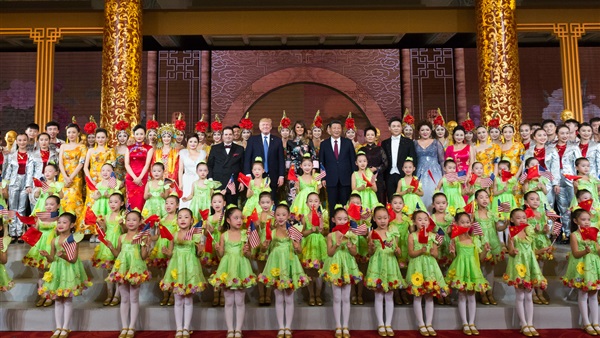
President Donald Trump’s conciliatory approach toward Beijing and support for Nvidia’s chief executive have alarmed national security officials and lawmakers amid intensifying competition for artificial intelligence dominance.
Trump’s China policy is facing renewed scrutiny in Washington after the president embraced Chinese President Xi Jinping and backed Jensen Huang’s return as chief executive of Nvidia, despite concerns raised by US intelligence agencies over potential Chinese espionage.
The developments represent a significant setback for a bipartisan coalition of lawmakers, national security officials and foreign policy strategists who regard China as America’s principal strategic competitor and advocate a more confrontational approach toward Beijing.
However, former US officials and policy experts suggest that Trump’s actions could encourage Republican critics to challenge his administration more openly, while Democrats seek to portray the president as prioritizing corporate interests over national security.
Any renewed confrontation with Beijing would also carry substantial economic risks, given China’s ability to retaliate through trade restrictions and its control over strategically important supply chains.
Trump’s China Policy Challenges a Bipartisan Strategic Consensus
Over the past decade, Washington’s perception of China has undergone a fundamental transformation.
Once widely regarded as a source of affordable consumer goods, investment opportunities and corporate profits, China is increasingly viewed by American policymakers as a potential threat to US economic prosperity, technological leadership and national security.
These concerns have intensified amid growing competition between Washington and Beijing for dominance in artificial intelligence, advanced semiconductor manufacturing and emerging technologies.
Trump himself played a central role in establishing this bipartisan consensus.
During his first presidential term, the White House’s National Security Strategy formally identified China as a strategic competitor and called for stronger resistance to Beijing’s expanding global influence.
The policy represented a significant departure from previous approaches to US-China relations and was largely maintained by President Joe Biden’s administration.
During his 2024 presidential campaign, Trump described China as an American adversary and pledged to reduce economic dependence on Beijing.
However, midway through his second term, his increasingly conciliatory approach toward Xi and support for Huang have raised questions about the administration’s strategic priorities.
Rush Doshi, a former National Security Council adviser on China during the Biden administration, argued that the debate increasingly reflects a conflict between corporate interests and national security considerations rather than conventional divisions between foreign policy hard-liners and advocates of diplomatic engagement.
Economic Pressure Drives Washington Toward Engagement With Beijing
Shortly after returning to office in 2025, Trump imposed tariffs on Chinese imports reaching as high as 20 percent.
Beijing responded with economic countermeasures, including restrictions on exports of critical rare earth materials to the United States.
The administration subsequently moderated its approach, and Trump and Xi reached an economic truce in November 2025.
Since then, the two leaders have met three times. During his recent visit to Shenzhen, Trump described Xi as a friend and praised his leadership.
The administration has also relaxed certain restrictions on advanced semiconductor exports to China, despite objections from officials concerned about the national security implications of providing Beijing with sophisticated American technology.
Meanwhile, US military involvement in the war with Iran has diverted resources from Asia at a time when concerns persist over a potential Chinese invasion of Taiwan.
These developments have reinforced criticism that Trump’s China policy is moving away from strategic confrontation toward economic accommodation and diplomatic engagement.
Evan Medeiros, a Georgetown University professor and former National Security Council official responsible for China policy during the Obama administration, characterized Trump’s approach as substantially more conciliatory than his previous rhetoric suggested.
Nvidia and Jensen Huang Become Central to National Security Debate
The controversy surrounding Nvidia Chief Executive Jensen Huang has further intensified divisions within Washington.
According to the original reporting, US intelligence agencies raised concerns that Huang may have been compromised through an affair with Alice Huang, an executive at Singaporean technology company Megaspeed who was suspected of having links to Chinese intelligence.
Trump nevertheless supported Jensen Huang’s return to Nvidia, downplaying the intelligence concerns.
The allegations have not been established as proof that Huang engaged in espionage or compromised US national security.
Former Republican House Speaker Newt Gingrich strongly criticized Huang’s reinstatement, describing it as a serious national security issue.
The controversy has also exposed divisions within Trump’s administration.
Secretary of State and National Security Adviser Marco Rubio reportedly warned the president about Huang’s relationship with the suspected Chinese intelligence asset.
Rubio has long identified China as America’s leading national security threat but has not publicly commented on Trump’s decision to support Huang’s return to Nvidia.
The dispute underscores growing tensions between commercial priorities in the semiconductor industry and Washington’s efforts to protect sensitive technologies from potential foreign intelligence threats.
Congressional Opposition to Trump’s China Policy Could Intensify
Trump’s increasingly accommodating relationship with Beijing may also generate stronger resistance from Republican lawmakers.
Until recently, Republican China hard-liners in Congress had offered relatively limited opposition to the administration’s changing approach.
However, following significant Republican losses in the 2026 midterm elections, former officials and analysts believe Trump’s weakened political position could encourage lawmakers to pursue more restrictive China policies.
Republican Senator Tom Cotton of Arkansas has called for further congressional investigations into the circumstances surrounding Huang’s relationship with Alice Huang.
Cotton argued that Huang’s return to Nvidia did not resolve the broader national security questions and indicated that Congress would pursue additional restrictions on advanced semiconductor exports.
Democrats may also use the controversy to advance broader investigations into corporate misconduct, corruption and adherence to the rule of law after assuming control of the House of Representatives and Senate in January 2027.
According to Medeiros, growing bipartisan pressure could produce a renewed wave of restrictions targeting Beijing, potentially testing the economic truce that has helped stabilize US-China relations over the past year.
Advanced Semiconductor Export Controls Return to the Forefront
Despite Trump’s conciliatory rhetoric, the administration has recently signaled a willingness to adopt tougher economic measures.
On Wednesday, November 25, Trump threatened additional tariffs against China and several other American trading partners, although the proposed measures had not been implemented.
The administration also announced plans to close a regulatory loophole that had enabled Chinese companies to circumvent restrictions on purchasing the most advanced artificial intelligence chips manufactured by companies such as Nvidia.
Congress is considering further legislation, including the proposed Match Act, which could pressure American allies to introduce additional restrictions on technology exports to China.
The legislation could come before Congress in December 2026.
These developments highlight the continuing importance of semiconductor export controls in the broader competition between Washington and Beijing for artificial intelligence leadership.
However, stricter restrictions could also provoke economic retaliation from China, complicating efforts to balance technological security with commercial interests.
China’s Economic Leverage Limits Washington’s Options
Jessica Chen Weiss, a China specialist and professor at the Johns Hopkins School of Advanced International Studies, warned that Beijing would be unlikely to accept renewed American restrictions without responding.
Weiss, who served as a State Department adviser from 2021 to 2022, argued that political outrage in Washington had not sufficiently accounted for China’s capacity to retaliate economically.
She identified the proposed Match Act as a particularly significant concern for Beijing because it could extend technology restrictions beyond the United States to its international allies.
China’s previous restrictions on rare earth exports demonstrate its ability to exploit American dependence on strategically important materials.
Weiss also recalled the diplomatic crisis surrounding the Chinese surveillance balloon that crossed the United States in 2023, disrupting bilateral relations for months despite what she described as its limited practical significance.
She cautioned that the controversy surrounding Huang, however troubling, should not automatically become the foundation for a broader escalation in US-China relations.
Beijing Prepares for Renewed Strategic Competition
Chinese policymakers appear to recognize that the current period of diplomatic engagement may not represent a permanent transformation in American foreign policy.
Writing in Foreign Affairs, Yun Sun, director of the China Program at the Stimson Center, said Beijing was preparing for renewed turbulence in its relationship with Washington.
According to Sun, there is an emerging consensus among Chinese policymakers that heightened competition and hostility could return as American priorities once Trump leaves office, if not earlier.
Washington continues to contain a substantial community of policymakers, intelligence officials and strategists who remain deeply skeptical of China’s intentions.
Although Trump’s current approach has temporarily reduced their influence, Sun questioned whether their marginalization could be sustained.
The Future of US-China Relations Remains Uncertain
Trump’s China policy increasingly reflects competing pressures involving national security, corporate profitability, technological leadership and economic stability.
While diplomatic engagement with Beijing may reduce immediate trade tensions, it has also exposed significant disagreements within Washington over the long-term implications of Chinese technological and geopolitical influence.
The controversy surrounding Nvidia illustrates the difficulty of separating commercial interests from national security considerations in an increasingly competitive global technology industry.
At the same time, advocates of stronger restrictions must account for Beijing’s economic leverage and the potential consequences of renewed confrontation.
The central question is whether Washington can protect its strategic interests and maintain technological leadership without triggering an economically damaging escalation with China.
Trump’s rapprochement with Xi may have temporarily weakened Washington’s China hard-liners. However, growing congressional opposition and intensifying competition over artificial intelligence suggest that the broader strategic rivalry remains far from resolved.