FIFA Peace Prize Faces Possible Cancellation After Trump’s Inaugural Award
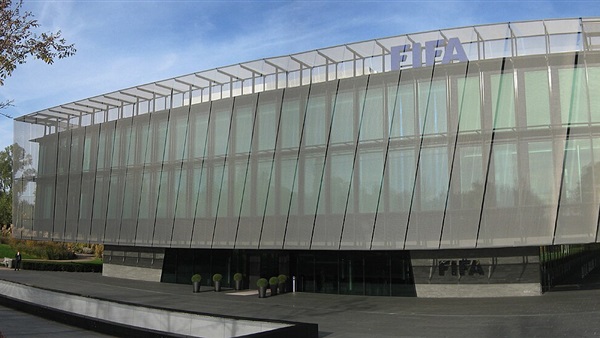
FIFA is reconsidering the future of its controversial peace award amid mounting scrutiny of President Gianni Infantino’s relationship with Donald Trump, questions over institutional transparency and concerns about political interference in global soccer.
The FIFA Peace Prize could be canceled or rebranded less than a year after US President Donald Trump became its inaugural recipient, as soccer’s global governing body reviews the award’s purpose and legitimacy amid growing concerns over FIFA President Gianni Infantino’s close relationship with the American leader.
FIFA has assigned its social responsibility committee to examine the circumstances surrounding the prize’s creation and determine whether it should continue. According to three senior soccer officials who spoke anonymously to The New York Times, the organization is leaning toward discontinuing the award or substantially redefining its purpose.
Two of those officials said the review reflects broader concerns about Infantino’s political relationship with Trump, alongside uncertainty over whether future recipients would be willing to accept the distinction.
FIFA declined to provide further details, stating that a decision would be made “in due course.” The White House did not respond to a request for comment.
FIFA Peace Prize Becomes a Symbol of Infantino’s Controversial Leadership
Infantino introduced the FIFA Peace Prize in 2025 after a Venezuelan activist received that year’s Nobel Peace Prize.
The inaugural award was presented to Trump during the World Cup draw ceremony in Washington in December 2025. The American president described the recognition as “one of the great honors of my life.”
However, the award has subsequently become a focal point of criticism surrounding Infantino’s leadership and his efforts to cultivate close relations with Trump.
The 2026 FIFA World Cup was accompanied by concerns about political interference, particularly after FIFA lifted the suspension of an American player following a telephone conversation between Infantino and Trump.
Further controversy emerged following reports that Infantino had conducted confidential discussions about selling a stake in future tournaments to a private investment fund managed by the brother of Jared Kushner, Trump’s son-in-law.
The proposed arrangement prompted investigations, criticism and calls for Infantino’s resignation.
Infantino has denied wrongdoing and has continued traveling internationally aboard a Qatari private jet to consolidate support ahead of his March 2027 re-election bid.
Discontinuing the peace award could represent a concession to critics who have questioned FIFA’s governance and political independence.
Questions Mount Over the Award’s Creation and Legitimacy
The FIFA Peace Prize has faced criticism over both its political implications and the procedures through which it was established.
Lise Klaveness, president of the Norwegian Football Federation, questioned the award’s institutional legitimacy.
“The prize awarded at the draw in Washington, D.C., last December lacked legitimacy and any basis in FIFA’s statutes and bylaws,” Klaveness said.
According to senior soccer officials cited in the original reporting, the award was developed through a rushed and secretive process, with FIFA personnel given only weeks to organize its presentation.
FIFA had initially considered holding the World Cup draw in Las Vegas but ultimately selected Washington, partly because the location was considered more likely to secure Trump’s attendance.
The trophy was commissioned from two Azerbaijani sculptors, one of whom had a son serving as a FIFA official.
During the ceremony, Infantino presented Trump with a golden medal, a certificate and the trophy, praising the importance of political leadership that promotes public welfare and international safety.
The circumstances surrounding the award’s creation have since intensified questions about transparency, institutional accountability and FIFA’s decision-making procedures.
Infantino’s Relationship With Trump Draws Congressional Scrutiny
In the years preceding the 2026 World Cup, Infantino strengthened his relationship with the American president.
The FIFA chief relocated to the United States two years before the tournament, publicly supported Trump at various events and accompanied him on international trips.
FIFA also signed a $4 million lease for office space at Trump Tower, although the premises have reportedly remained largely unused.
These connections have attracted scrutiny from congressional Democrats.
In July 2026, Representative Jamie Raskin, the leading Democrat on the House Judiciary Committee, launched an investigation into the relationship between FIFA’s president and Trump.
In a letter requesting relevant documents, Raskin characterized the peace award as a fabricated distinction intended to flatter the American president.
FIFA subsequently confirmed that discussions had taken place with the House Judiciary Committee and expressed its willingness to address outstanding questions.
The congressional investigation has added to concerns about whether FIFA’s commercial and institutional decisions have been influenced by Infantino’s political relationships.
UEFA Increases Pressure on FIFA Over Political Independence
Criticism of the FIFA Peace Prize has also intensified within international soccer.
Several FIFA officials have reportedly expressed frustration over the award’s creation, with concerns increasing as Infantino’s relationship with Trump attracted greater public and political scrutiny.
UEFA, European soccer’s governing body, cited the peace award in a letter sent to FIFA in October 2026 requesting explanations regarding Infantino’s relationship with the US president.
On October 15, FIFA formally instructed its social responsibility committee to evaluate the award’s merits and future.
The committee is chaired by Zaw Zaw, president of the Myanmar Football Federation and a businessman previously included on US sanctions lists over his alleged support for Myanmar’s military junta.
Zaw Zaw did not respond to a request for comment.
The review comes at a sensitive moment for FIFA as it faces questions about governance standards, transparency and the relationship between international sports administration and political power.
Infantino Remains the Favorite Ahead of FIFA’s Presidential Election
Despite the controversies surrounding his leadership, Infantino remains the leading candidate to secure another four-year term as FIFA president in March 2027.
His position is supported by the heads of most national soccer federations, many of which depend heavily on FIFA for financial assistance.
This institutional support has helped Infantino maintain a strong position despite criticism from European soccer officials and other stakeholders.
Nevertheless, abandoning or restructuring the peace award could allow FIFA to address one of the most visible controversies associated with his relationship with Trump ahead of the presidential election.
FIFA Could Replace Peace Prize With a Soccer-Focused Award
One option under consideration would transform the FIFA Peace Prize into a distinction recognizing individuals who have made significant contributions to soccer rather than honoring political figures for their perceived contributions to international peace.
According to the three senior soccer officials, both cancellation and rebranding remain possible outcomes.
A final decision could be announced on December 15, 2026, when the FIFA Council is scheduled to meet in Qatar.
Until then, Trump remains the award’s first and only recipient.
Whether FIFA ultimately abandons the prize or gives it a different purpose, the review highlights broader concerns about the organization’s political independence and institutional credibility.
What was introduced as a recognition of international peace has instead become a subject of debate over governance, political influence and accountability within the world's most powerful soccer organization.