UK Police Faith Toolkit Sparks Debate Over Guidance on Muslim Communities
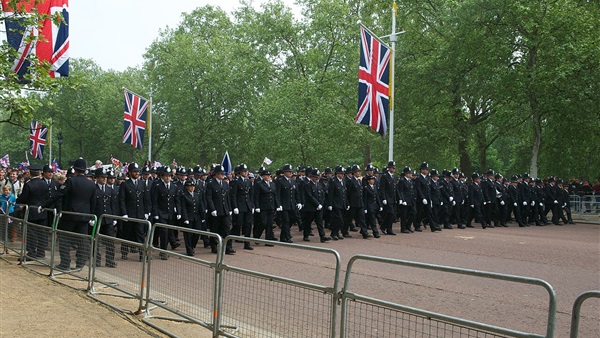
Female police officers are advised to consider cultural sensitivities when interacting with Muslim men, prompting criticism from political leaders over equality in law enforcement.
The UK Police Faith Toolkit has sparked controversy after officers were advised to consider religious and cultural factors when interacting with members of the opposite sex in Muslim households and mosques. The guidance has prompted renewed debate over religious accommodation, policing impartiality and equality before the law.
Published by the National Police Chiefs’ Council (NPCC), the document provides practical recommendations for officers working with 23 different faiths and beliefs across Britain.
Police Faith Toolkit Advises Officers on Religious Sensitivities
According to a report published by The Telegraph on November 27, 2026, the section dedicated to Islam is longer and more detailed than those covering other religious communities.
Officers visiting Muslim households and mosques are advised to dress modestly, avoid entering areas designated for members of the opposite sex and avoid using police dogs in Muslim spaces.
The guidance also recommends considering cultural sensitivities during physical interactions and verbal communication.
“Cultural factors should be considered when interacting with the opposite sex,” the document states, adding that an officer of the same sex may be better placed to communicate with a Muslim individual in certain circumstances.
The recommendations do not establish an absolute prohibition on female officers speaking to Muslim men. However, critics have questioned whether such guidance could undermine consistent policing practices.
Differences in Guidance Across Religious Communities
The Police Faith Toolkit primarily provides information about religious beliefs, cultural sensitivities, appropriate conduct in places of worship, treatment of deceased individuals and religious objections to post-mortem examinations.
Similar recommendations concerning modest clothing and gender-specific spaces appear in sections covering other religions.
Female officers are advised to dress modestly when visiting Buddhist temples, while both male and female officers are encouraged to respect gender-separated areas in Orthodox synagogues.
However, the section covering Islam includes additional guidance on reporting anti-Muslim hate incidents. According to The Telegraph, equivalent reporting recommendations are absent from sections dedicated to other religious communities, including Judaism.
The document identifies terrorist attacks and international political events, including elections, as periods when Muslim communities may face increased vulnerability to hate crime.
It also recommends that forensic examinations involving deceased Muslim women should ideally be conducted by female professionals of the same faith, reflecting Islamic religious practices.
Political Leaders Criticise Religious Policing Guidance
Reform UK leader Nigel Farage condemned the recommendations, describing them as evidence of what he considers institutional “two-tier policing”.
Farage argued that religious and cultural accommodation should not compromise gender equality or the principle that everyone is subject to the same laws. He called for the guidance to be withdrawn and those responsible for it to be dismissed.
Shadow home secretary Chris Philp also criticised the toolkit, arguing that police officers should treat individuals equally regardless of religion or ethnicity.
Philp called for the document to be withdrawn alongside the Police Race Action Plan. He maintained that his previous requests to the NPCC and two Labour home secretaries to remove similar guidance had been ignored until the murder of Henry Nowak.
Conservative leader Kemi Badenoch has also previously raised concerns about alleged disparities in law enforcement involving minority communities.
These accusations remain politically contested and do not, by themselves, establish that police forces systematically apply different legal standards to religious groups.
Anti-Semitic Hate Crime Raises Questions Over Equal Treatment
The controversy comes amid continuing concerns about religiously motivated hate crime across Britain.
According to the Community Security Trust (CST), an organisation dedicated to protecting Jewish communities from anti-Semitism and terrorism, 1,926 anti-Semitic hate incidents were recorded in the United Kingdom during the first six months of 2026.
The absence of equivalent hate crime reporting recommendations for Jewish communities within the toolkit has raised questions about consistency in the guidance provided to officers.
The debate also follows several controversial policing incidents.
In 2025, West Midlands Police reportedly used false intelligence to encourage Birmingham City Council to prohibit Maccabi Tel Aviv supporters from attending a football match against Aston Villa, amid concerns about reactions to the Israeli team within Birmingham’s Muslim community.
The murder of Henry Nowak also generated public outrage and violent protests after police handcuffed him following an allegation of racism made by his killer, Vickrum Digwa.
The case subsequently prompted debate over religious exemptions permitting Sikhs to carry ceremonial knives.
Religious Organisations Helped Develop the Police Faith Toolkit
The guidance was developed through collaboration between the College of Policing, the NPCC and national organisations representing police officers and staff from different religious and social backgrounds.
Rachel Kearton, former chief constable of Suffolk Constabulary and the NPCC’s chair for race, inclusion, religion and belief, emphasised the importance of understanding the cultural and religious environments in which officers operate.
In the document’s introduction, Kearton argued that cooperation with faith communities could improve policing effectiveness and strengthen protection for vulnerable individuals.
Organisations involved in developing the toolkit included:
- Police Chaplaincy UK
- Christian Police Association
- National Black Police Association
- National LGBT+ Police Network
- National Sikh Police Association
- National Association of Muslim Police
- British Association for Women in Policing
- Police Pagan Association
The document covers a broad range of religious traditions, including Islam, Christianity, Judaism, Buddhism, Sikhism, Scientology, Zoroastrianism, the Baháʼí Faith, Rastafarianism and paganism.
Pagan Religious Practices and Legal Questions
The Police Pagan Association also contributed to the guidance, providing information about religious practices and ceremonial objects used by different pagan traditions.
The toolkit identifies several religious implements, including the Wiccan Athame, the Druidic Boline and the Heathen Seax.
It suggests that pagans may have a legal defence when carrying such objects for religious purposes.
However, The Telegraph questioned the legal certainty of this advice, noting that members of pagan communities have previously called for a specific religious exemption.
The issue highlights the importance of distinguishing between cultural recommendations, statutory exemptions and legal defences that may depend on individual circumstances.
NPCC Defends Guidance and Reaffirms Equality Before the Law
Responding to the criticism, the National Police Chiefs’ Council maintained that religious and cultural awareness does not supersede legal obligations or operational policing responsibilities.
“Policing serves and protects everyone regardless of faith, background or belief. The law applies equally to all,” an NPCC spokesman said.
The council explained that the toolkit was designed to help officers communicate effectively with increasingly diverse communities and that the same development process had been followed for all 23 faiths and beliefs.
It also stressed that Britain's policing-by-consent model depends on public confidence, cooperation and effective relationships between law enforcement and local communities.
According to the NPCC, greater cultural understanding can encourage individuals to report crimes, cooperate with investigations and seek assistance when necessary.
The organisation reaffirmed its commitment to impartial decision-making, fair treatment and inclusive public services.
The controversy surrounding the Police Faith Toolkit reflects a broader debate over how British law enforcement should balance religious sensitivities with operational independence, gender equality and consistent application of the law. The central question remains whether cultural accommodation strengthens public trust without compromising the fundamental principle of equal treatment.