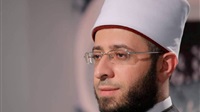
How Did the Islamic Mind Resist Closure?
The history of Islamic thought was never a straight line,
but rather a field of tension and struggle
between two currents:
one that feared the question,
and another that believed faith cannot be complete without it.
At the heart of this struggle, thinkers and jurists emerged
who refused to allow Sharia to become an instrument of restraint
or religion to become a cover for despotism.
When the Gate of Ijtihad Was Closed
With the transformation of rule from consultation to domination,
the space for freedom shrank,
the value of opinion declined,
and disagreement shifted from a form of richness to a source of danger.
In such an atmosphere, the question was no longer welcomed.
It became a doorway to suspicion,
and sometimes to punishment.
Yet despite this,
the intellect did not fade.
Public Interest… The Gateway to Freedom
Jurists such as Najm al-Din al-Tufi
advanced a bold proposal that restored the centrality of the human being.
In his conception, the jurisprudence of public interest—maslaha—
was not a marginal consideration
but a supreme objective.
When conflict arises, the confirmed public interest is given priority,
as the spirit of legislation,
not its contradiction.
Through this approach, the door was reopened to reason,
ijtihad regained its standing,
and the texts were liberated from rigid interpretation.
Ibn Khaldun… Deconstructing Authority
Then came Ibn Khaldun,
who offered an unprecedented reading of human civilization.
He did not sanctify authority,
nor did he justify despotism.
Instead, he exposed its mechanisms.
He linked the decline of states
to the ظلم of rulers,
the suppression of opinion,
and the transformation of rule into domination.
In doing so, he offered an indirect defense
of human freedom
as a condition for the survival of the state.
Why Did the Reformist Current Fail?
Not because its arguments were weak,
but because it confronted:
• a political authority that feared awareness
• a religious establishment that feared losing its monopoly
• and a public long exhausted by fear
Yet despite this,
the reformist current remained present,
passing from generation to generation,
until the great moment of reform finally emerged.
Muhammad Abduh
Muhammad Abduh was not an isolated phenomenon,
but the fruit of a long path
of defending reason,
ijtihad,
and freedom of opinion.
Thus his project did not begin from nothing.
Rather, it gathered the threads of that tradition
and posed once again the fundamental question:
How can faith remain free
in an age of fear?
To be continued.
Cairo: five in the evening, according to the time of Al-Mahrousa.