


US-Iran Truce Strategy: Abdel Rahim Ali Unpacks Trump’s “Open Ceasefire” in Shadow Maps
Thursday 30/April/2026 - 12:00 AM
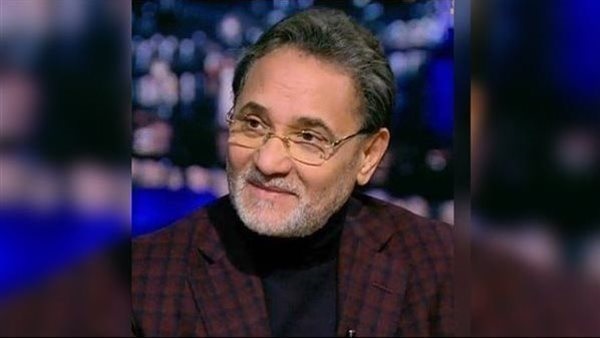
Hossam El-Hadad
In the debut episode of Shadow Maps aired on April 29, 2026, Egyptian analyst Abdel Rahim Ali presented a detailed interpretation of the US-Iran truce strategy, arguing that the decision by Donald Trump to extend an open-ended ceasefire with Iran reflects a calculated geopolitical maneuver rather than a retreat.
Ali framed the US-Iran truce strategy as a form of “smart exhaustion,” suggesting that Washington is leveraging time itself as a strategic weapon. His analysis departs from prevailing narratives that portrayed the truce as a concession to Tehran, instead positioning it as a multidimensional pressure mechanism designed to weaken Iran structurally without immediate military escalation.
Deconstructing the US-Iran Truce Strategy
Strategic Delay as Pressure
Ali argued that the US-Iran truce strategy hinges on what he described as “active procrastination.” Rather than signaling de-escalation, the ceasefire transforms time into leverage—allowing the United States to intensify pressure on Iran across political, economic, and psychological fronts.
This approach, he noted, enables Washington to avoid triggering national unity within Iran, which could occur in the event of direct military confrontation.
Internal Fractures Within Iran
A central pillar of the US-Iran truce strategy involves amplifying internal divisions within the Iranian political system. According to Ali, the prolonged truce deepens tensions between pragmatic factions seeking diplomatic solutions and hardline elements within the security establishment.
He pointed to growing instability in Iran’s leadership structure, referencing pressures on key decision-making centers and the broader uncertainty affecting governance dynamics. These conditions, he argued, create an environment where internal contradictions can intensify over time.
Military Readiness Behind Diplomatic Language
Despite the outward appearance of calm, Ali emphasized that the US-Iran truce strategy includes sustained military mobilization. He cited the deployment of major US naval assets, including the USS George H. W. Bush, alongside reinforcements from elite airborne and marine units.
This buildup, he argued, places US forces in a position of immediate readiness, enabling a rapid shift from deterrence to direct action if political conditions change.
Psychological and Economic Exhaustion
Ali described the US-Iran truce strategy as a campaign of continuous strain. By maintaining Iran in a constant state of high alert, the United States imposes significant financial and operational costs.
He noted that sustained military readiness—operating around the clock—places pressure on Iran’s economy while also contributing to psychological fatigue among its leadership and armed forces. This environment increases the likelihood of strategic miscalculations.
Expanding Pressure Beyond the Strait of Hormuz
The analysis highlighted a shift from regional containment to global economic pressure. Rather than focusing solely on the Strait of Hormuz, the US-Iran truce strategy extends enforcement measures across international waters.
Ali explained that targeting Iranian oil shipments globally aims to restrict financial flows, exacerbating domestic economic challenges and intensifying internal dissatisfaction.
Shaping the Global Narrative
Another dimension of the US-Iran truce strategy involves controlling international perception. By initiating the ceasefire, Washington positions itself as advocating stability, while placing the burden of escalation on Tehran.
Ali argued that this narrative shift reduces Iran’s ability to leverage threats against global shipping routes, effectively aligning international stakeholders—including Europe and China—against potential Iranian actions.
The Pakistan Factor: Mediation or Intelligence Channel?
Ali devoted significant attention to the role of Asim Munir, whose multi-day visit to Tehran preceded the ceasefire extension.
He suggested that the visit functioned less as a diplomatic mediation effort and more as an intelligence-gathering mission. According to Ali, insights from this engagement provided Washington with a clearer picture of Iran’s internal divisions, reinforcing confidence in the effectiveness of the US-Iran truce strategy.
Challenging the Narrative of Iranian Victory
Ali directly addressed claims that Iran had achieved a strategic victory through the ceasefire. He rejected this interpretation, arguing that limited military responses do not offset deeper structural vulnerabilities.
He pointed to reported intelligence breaches, the loss of key personnel, and the erosion of regional deterrence networks as indicators of systemic weakness. In this context, he described narratives of victory as largely symbolic and disconnected from broader geopolitical realities.
A War of Attrition Across Multiple Fronts
In concluding his analysis, Ali characterized the current phase of the conflict as a multi-layered campaign spanning economic, military, psychological, and diplomatic domains.
The US-Iran truce strategy, he argued, leaves Tehran facing two difficult options: engage in negotiations from a weakened position or endure mounting internal pressures that could destabilize the system over time.
Strategic Patience as a Weapon
The first episode of Shadow Maps positions the US-Iran truce strategy as a sophisticated example of modern geopolitical conflict—one where time, perception, and internal dynamics are as decisive as military القوة.
Ali’s analysis underscores a broader shift in how major powers conduct confrontation, favoring prolonged strategic pressure over immediate confrontation, and redefining the boundaries between war and diplomacy in the Middle East.
