


US-Iran Truce Strategy: How Trump’s Ceasefire Redefines War Through Economic and Psychological Pressure
Thursday 30/April/2026 - 12:43 AM
Ahmed Seif El-din
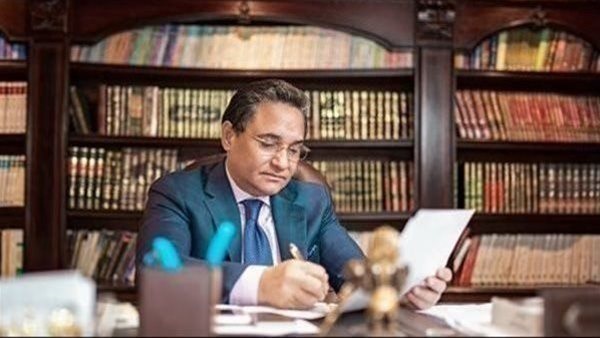
The US-Iran truce strategy has entered a new phase, according to Egyptian analyst Abdel Rahim Ali, who argued in the first episode of Shadow Maps that Donald Trump’s decision to extend the ceasefire reflects a deliberate shift from direct confrontation to long-term attrition.
Ali described the US-Iran truce strategy as a comprehensive framework that replaces immediate military escalation with sustained economic, psychological, and political pressure.
From Battlefield to Economic Warfare
Central to the US-Iran truce strategy is the transformation of conflict into economic warfare. Ali outlined how maritime restrictions and expanded monitoring of Iranian vessels have intensified pressure on Iran’s oil exports.
By extending enforcement beyond the Strait of Hormuz, the strategy effectively globalizes economic containment. This, he argued, reduces Iran’s capacity to generate revenue while increasing its financial vulnerability.
Permanent Alert as a Strategic Burden
Ali highlighted the role of uncertainty in the US-Iran truce strategy, noting that the absence of a clear timeline forces Iran into a continuous state of military readiness.
This condition, he explained, creates a costly cycle of vigilance, where the expectation of a sudden strike imposes sustained operational strain. The result is a gradual erosion of capacity without direct engagement.
Military Presence Without Immediate War
Despite the ceasefire, Ali emphasized that the US-Iran truce strategy is underpinned by a significant US military presence. Deployments include aircraft carriers, advanced air assets, and amphibious units positioned to respond rapidly if needed.
This dual approach—restraint combined with readiness—ensures that deterrence remains credible while avoiding the risks of immediate escalation.
Internal Iranian Dynamics Under Pressure
The US-Iran truce strategy also targets Iran’s internal political landscape. Ali pointed to divisions between state institutions and security forces, particularly the Islamic Revolutionary Guard Corps.
He argued that these tensions are compounded by leadership challenges involving Mojtaba Khamenei, contributing to delays and inconsistencies in decision-making.
Controlling the Diplomatic Narrative
Ali noted that the US-Iran truce strategy allows Washington to maintain a narrative of pursuing peace. By keeping the ceasefire open-ended, the United States positions itself as a stabilizing actor, while shifting responsibility for escalation onto Iran.
This framing, he said, enhances US standing among allies and reduces domestic political pressure.
Rejecting Claims of Iranian Advantage
Responding to critics, Ali dismissed assertions that the ceasefire benefits Iran. He cited reported damage to military infrastructure, reduced deterrence capabilities, and increasing international isolation as indicators of strategic loss.
He argued that the US-Iran truce strategy systematically weakens Iran’s position over time, particularly through sustained economic constraints.
Time and Power: The Core Equation
Ali challenged the idea that time inherently benefits one side, stating that in the US-Iran truce strategy, time favors the actor with greater structural power.
In this case, he argued, the United States leverages its economic and military advantages to convert prolonged duration into cumulative pressure.
A New Model of Conflict
The US-Iran truce strategy, as presented by Ali, reflects a broader evolution in modern conflict. Rather than decisive battles, it relies on prolonged pressure across multiple domains—economic, military, and psychological.
In this framework, the ceasefire is not an end to confrontation but a redefinition of how it is conducted, with time emerging as the central instrument of power.
